Best Touchless Bathroom Faucets for Hygiene and Convenience
Affiliate Disclosure: HomeGear Guide is reader-supported. When you buy through links on our site, we may earn an affiliate commission at no extra cost to you. We do not accept paid product placements or sponsor-biased reviews.
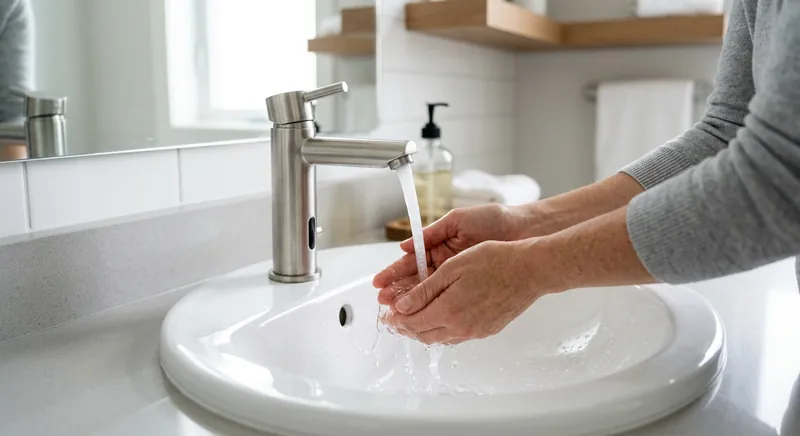
A touchless bathroom faucet turns on and off with a wave of your hand, eliminating the need to touch handles with dirty or wet hands. What started as a commercial restroom feature has become increasingly popular in homes, and for good reason — touchless faucets reduce the spread of germs, save water by shutting off automatically, and add a modern, high-tech feel to the bathroom. But choosing one involves considerations that traditional faucets do not require. Sensor range, power source (battery vs. AC), activation speed, water flow rate, and finish all affect how the faucet performs in daily use. This guide compares the main options and explains what to look for.
Quick Answer
For most homeowners, a battery-powered touchless bathroom faucet with a 6-inch sensor range, adjustable flow rate of 0.5 to 1.2 GPM, and a chrome or brushed nickel finish is the best choice because it combines germ-free operation with water savings of 30 to 50 percent, easy installation without electrical wiring, and a traditional appearance that fits most bathroom decors. Battery-powered models are simpler to install than AC-powered versions and typically run 6 to 12 months on 4 AA batteries. A 6-inch sensor range is optimal because it activates reliably when hands approach but does not trigger from passing movement. The main trade-off is convenience versus maintenance, as battery models require periodic battery replacement while AC models need a power adapter or wiring. An automatic timeout of 30 to 60 seconds prevents water waste if something blocks the sensor. A manual override feature is essential for when sensors fail or batteries die.
Top Picks at a Glance
Battery-Powered Touchless Faucet
AC-Powered Touchless Faucet
Touchless Faucet with Temp Control
Budget Touchless Faucet
Product Comparison
| Product | Best For | Power Source | Sensor Range | Activation Time | Price Range | Details |
|---|---|---|---|---|---|---|
Battery-Powered Touchless Faucet Best Overall | Home bathrooms without nearby electrical wiring | 4–6 AA batteries | 4–8 inches | 0.5–1 second | $80–$200 | View Review ↓ |
AC-Powered Touchless Faucet Best for Commercial Use | High-traffic bathrooms and commercial settings | AC (120V via adapter) | 4–10 inches (adjustable) | 0.3–0.5 seconds | $150–$350 | View Review ↓ |
Touchless Faucet with Temp Control Best for Temperature Control | Users who want adjustable water temperature without touching handles | Battery or AC | 4–8 inches | Mixing valve or digital panel | $180–$400 | View Review ↓ |
Budget Touchless Faucet Best Value | Touchless convenience at the lowest cost | 4 AA batteries | 3–6 inches | 0.5–1.5 seconds | $50–$100 | View Review ↓ |
Battery-Powered Touchless Faucet
Best Overall- Best For:
- Home bathrooms without nearby electrical wiring
- Power Source:
- 4–6 AA batteries
- Sensor Range:
- 4–8 inches
- Activation Time:
- 0.5–1 second
- Price Range:
- $80–$200
AC-Powered Touchless Faucet
Best for Commercial Use- Best For:
- High-traffic bathrooms and commercial settings
- Power Source:
- AC (120V via adapter)
- Sensor Range:
- 4–10 inches (adjustable)
- Activation Time:
- 0.3–0.5 seconds
- Price Range:
- $150–$350
Touchless Faucet with Temp Control
Best for Temperature Control- Best For:
- Users who want adjustable water temperature without touching handles
- Power Source:
- Battery or AC
- Sensor Range:
- 4–8 inches
- Activation Time:
- Mixing valve or digital panel
- Price Range:
- $180–$400
Budget Touchless Faucet
Best Value- Best For:
- Touchless convenience at the lowest cost
- Power Source:
- 4 AA batteries
- Sensor Range:
- 3–6 inches
- Activation Time:
- 0.5–1.5 seconds
- Price Range:
- $50–$100
Detailed Product Reviews & Specifications
Battery-Powered Touchless Faucet
A touchless bathroom faucet powered by batteries housed under the sink. The infrared sensor activates water flow when hands are detected within range and shuts off automatically when hands are removed. No electrical wiring is needed, making it easy to install in any bathroom.
Pros
- •No electrical wiring required — runs on batteries
- •Works in any bathroom regardless of outlet availability
- •Easy installation similar to a standard faucet
- •Automatic shut-off saves water
Cons
- •Batteries need periodic replacement (typically 6–12 months)
- •Sensor performance may degrade as batteries weaken
- •Battery compartment takes up under-sink space
Key Specifications
AC-Powered Touchless Faucet
A touchless faucet powered by a direct AC electrical connection under the sink. Provides consistent power without battery changes, making it ideal for high-traffic bathrooms, commercial restrooms, or homes with an available outlet under the sink.
Pros
- •No battery replacements needed
- •Consistent sensor performance without power degradation
- •Suitable for high-traffic and commercial use
- •Often includes adjustable settings via control box
Cons
- •Requires an electrical outlet under the sink
- •Installation is more complex — may need an electrician
- •Higher cost than battery-powered models
Key Specifications
Touchless Faucet with Temp Control
A touchless faucet with a manual or electronic temperature control that lets you set the water temperature without touching the faucet. Some models use a mixing valve with a temperature lever, while others use a digital control panel.
Pros
- •Allows temperature adjustment without touching the faucet
- •Mixing valve prevents scalding by limiting max temperature
- •Ideal for households with children or elderly users
- •Often includes both touchless and manual override modes
Cons
- •More expensive than basic touchless models
- •Temperature control adds installation complexity
- •Mixing valve requires both hot and cold supply lines
Key Specifications
Budget Touchless Faucet
An affordable touchless faucet with basic sensor activation and battery power. Provides the core benefits of touchless operation — no handles to touch and automatic shut-off — without premium features like temperature control or adjustable sensor range.
Pros
- •Lowest cost for touchless functionality
- •Battery-powered — no wiring needed
- •Automatic shut-off saves water
- •Simple installation for DIYers
Cons
- •Basic sensor with limited range
- •No temperature control — cold water only on some models
- •Build quality and finish may be lower than premium models
Key Specifications
Sensor Range and Activation Time
The sensor is the heart of a touchless faucet. Sensor range determines how close your hands need to be to trigger the water — typically 4 to 8 inches. A shorter range means you need to get closer, which can feel less responsive. A longer range is more convenient but can cause false activations if objects or movements near the sink trigger the sensor unintentionally.
Activation time is how quickly water starts flowing after the sensor detects your hands. Premium models activate in 0.3–0.5 seconds, which feels nearly instant. Budget models may take up to 1.5 seconds, which can feel sluggish. If you have used commercial touchless faucets and found them frustratingly slow, look for a model with activation time under 1 second.
Power Source: Battery vs. AC
Battery-powered faucets use 4–6 AA batteries housed in a compartment under the sink. They require no electrical wiring and can be installed in any bathroom. Battery life typically ranges from 6 months to 2 years depending on usage. The main downside is that batteries need replacement, and if they die, the faucet stops working until they are replaced.
AC-powered faucets connect to a standard electrical outlet under the sink via an adapter. They never need battery changes and provide consistent sensor performance. The catch is that they require a GFCI-protected outlet under the sink, which most residential bathrooms do not have. Installing an outlet requires an electrician and adds to the total cost. For most homes, battery power is the more practical choice.
Water Flow Rate and Temperature Control
Touchless faucets typically have lower flow rates than traditional faucets — usually 1.0–1.5 GPM compared to 1.5–2.2 GPM for standard bathroom faucets. The lower flow is by design: since the water shuts off automatically when hands are removed, less water is wasted, and the lower flow rate amplifies the water savings. This makes touchless faucets inherently water-efficient.
Temperature control is a key consideration. Basic touchless faucets may connect to cold water only, providing no warm water option. Models with a mixing valve connect to both hot and cold supply lines and allow you to set a temperature. Some premium models use a digital temperature display and controls. If warm water is important — especially for handwashing in cold months — make sure the model you choose includes a mixing valve or temperature control.
Finish and Installation
Touchless faucets are available in the same finishes as traditional faucets: chrome, brushed nickel, matte black, oil-rubbed bronze, and stainless steel. Choose a finish that matches your other bathroom hardware for a coordinated look. Chrome is the most common and most affordable. Matte black and brushed nickel are popular for modern bathrooms.
Installation is similar to a standard faucet replacement but includes the additional step of mounting the sensor control box and (for battery models) the battery compartment under the sink. The control box connects to the water supply lines and the faucet. Most touchless faucets include all needed mounting hardware and adapters. If your bathroom has standard supply lines, installation is a manageable DIY project. If you need to add an electrical outlet for an AC-powered model, hire an electrician.
Frequently Asked Questions
Yes. Touchless faucets save water in two ways: they have lower flow rates (typically 1.0–1.5 GPM vs. 1.5–2.2 GPM for standard faucets) and they shut off automatically when hands are removed, eliminating the water wasted while soaping hands or reaching for a towel. Studies have shown touchless faucets can reduce bathroom water use by 30–50%.
Final Verdict
A battery-powered touchless faucet is the best overall choice for most homes because it requires no electrical wiring and can be installed in any bathroom. For commercial settings or homes with an existing under-sink outlet, an AC-powered model eliminates battery maintenance and provides consistent performance. A touchless faucet with temperature control is the right pick for families who need warm water and scald protection. For anyone who wants to try touchless operation at minimal cost, a budget model provides the core benefits — no touching and automatic shut-off — without premium features. Whatever model you choose, the water savings and hygiene benefits make a touchless faucet a worthwhile bathroom upgrade.
Lisa Park
Kitchen & Bathroom Editor
Lisa covers kitchen and bathroom fixtures, water filtration, and accessibility products for HomeGear Guide. Her work focuses on the details that make daily-use spaces more functional and safer for all members of the household.
Related Articles & Buying Guides
 Bathroom Improvement
Best Shower Heads for Every Bathroom and Budget
Handheld, high-pressure, rain, and water-saving shower heads each suit different needs. Compare flow rate, spray patterns, and WaterSense certification before you buy.
 Bathroom Improvement
Best Bathroom Vanities Under $500 for Style and Storage
Single sink, compact, double sink, and floating vanities under $500 each fit different bathroom layouts. Compare size, sink type, storage, and construction quality.
 Bathroom Improvement
Best Bathroom Exhaust Fans for Moisture and Odor Control
CFM rating, noise level in sones, and humidity sensors are the key factors in choosing a bathroom fan. Compare standard, ultra-quiet, humidity-sensing, and budget options.
 Bathroom Improvement
Best Bidet Toilet Seats for Comfort and Hygiene
Electric bidet seats with tank or instant heaters, non-electric attachments, and premium models with air dryers each offer different benefits. Compare features before you buy.
Get Smarter About Your Home
Receive practical buying guides, product comparisons, maintenance tips and home project ideas from HomeGear Guide.
You can unsubscribe at any time.