Best Bathroom Exhaust Fans for Moisture and Odor Control
Affiliate Disclosure: HomeGear Guide is reader-supported. When you buy through links on our site, we may earn an affiliate commission at no extra cost to you. We do not accept paid product placements or sponsor-biased reviews.
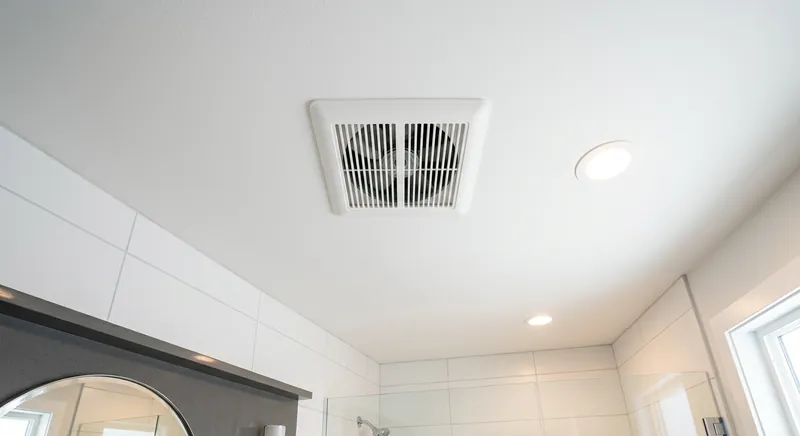
A bathroom exhaust fan does more than clear odors — it removes the moisture that causes mold, mildew, and peeling paint. Without proper ventilation, a single hot shower can leave enough humidity in a bathroom to support mold growth on walls, ceilings, and grout. The right exhaust fan sized correctly for your bathroom will protect your home and keep the air fresh. But not all fans are equal. CFM capacity, noise level, and features like humidity sensors and integrated lighting vary widely, and choosing the wrong fan means either a bathroom that never quite dries out or a fan that is too loud to want to use.
Quick Answer
For most homeowners, a bathroom exhaust fan rated at 80 to 110 CFM with a sone rating of 1.5 or lower and a built-in humidity sensor is the best choice because it properly ventilates a standard 50 to 80 square foot bathroom, operates quietly enough to use without annoyance, and automatically activates when humidity rises without needing manual switching. The rule for sizing is 1 CFM per square foot of bathroom area, so an 80 square foot bathroom needs at least 80 CFM. A sone rating of 1.5 or lower is considered quiet, while ratings above 4 sones are loud enough to discourage use. The main trade-off is noise versus power, as higher CFM fans typically produce more noise, though premium models with acoustic insulation and dual fans achieve both. Humidity sensor models are worth the 20 to 40 dollar premium because they run exactly as long as needed. LED lighting is a valuable combined feature.
Top Picks at a Glance
Standard Bathroom Fan with Light
Ultra-Quiet Bathroom Fan
Humidity-Sensing Fan
Budget Bathroom Fan
Product Comparison
| Product | Best For | CFM Rating | Noise Level | Light | Price Range | Details |
|---|---|---|---|---|---|---|
Standard Bathroom Fan with Light Best Overall | Reliable ventilation and overhead lighting in one unit | 70–110 CFM | 2.0–3.5 sones | Integrated LED or bulb socket | $40–$100 | View Review ↓ |
Ultra-Quiet Bathroom Fan Best for Noise | Quiet operation in bedrooms and ensuite bathrooms | 80–130 CFM | 0.3–1.0 sones | Optional (with or without) | $80–$180 | View Review ↓ |
Humidity-Sensing Fan Best for Automatic | Automatic ventilation without manual switching | 80–120 CFM | 1.0–2.5 sones | Built-in humidity sensor | $70–$160 | View Review ↓ |
Budget Bathroom Fan Best Value | Basic ventilation at the lowest cost | 50–80 CFM | 3.0–4.5 sones | None | $20–$50 | View Review ↓ |
Standard Bathroom Fan with Light
Best Overall- Best For:
- Reliable ventilation and overhead lighting in one unit
- CFM Rating:
- 70–110 CFM
- Noise Level:
- 2.0–3.5 sones
- Light:
- Integrated LED or bulb socket
- Price Range:
- $40–$100
Ultra-Quiet Bathroom Fan
Best for Noise- Best For:
- Quiet operation in bedrooms and ensuite bathrooms
- CFM Rating:
- 80–130 CFM
- Noise Level:
- 0.3–1.0 sones
- Light:
- Optional (with or without)
- Price Range:
- $80–$180
Humidity-Sensing Fan
Best for Automatic- Best For:
- Automatic ventilation without manual switching
- CFM Rating:
- 80–120 CFM
- Noise Level:
- 1.0–2.5 sones
- Light:
- Built-in humidity sensor
- Price Range:
- $70–$160
Budget Bathroom Fan
Best Value- Best For:
- Basic ventilation at the lowest cost
- CFM Rating:
- 50–80 CFM
- Noise Level:
- 3.0–4.5 sones
- Light:
- None
- Price Range:
- $20–$50
Detailed Product Reviews & Specifications
Standard Bathroom Fan with Light
A ceiling-mounted exhaust fan with an integrated light fixture. Combines ventilation and illumination in a single unit, making it a practical choice for bathrooms that need both and have limited ceiling space for separate fixtures.
Pros
- •Combines fan and light in one ceiling unit
- •Adequate CFM for standard-size bathrooms
- •Widely available and easy to find replacement parts
- •Straightforward installation for replacement jobs
Cons
- •Moderate noise level on some models
- •Light bulb type may be limited to specific base
- •Grille style is basic compared to decorative options
Key Specifications
Ultra-Quiet Bathroom Fan
A bathroom fan engineered for low noise operation, typically rated at 1.0 sone or below. Uses improved motor design, insulated housing, and aerodynamic fan blades to minimize sound while maintaining airflow.
Pros
- •Very quiet operation — often below 1.0 sone
- •Does not disturb sleeping household members
- •Good CFM capacity despite low noise
- •Often includes multiple speed settings
Cons
- •Higher cost than standard fans
- •May require a larger housing for sound insulation
- •Installation may need a wider ceiling opening
Key Specifications
Humidity-Sensing Fan
A bathroom fan with a built-in humidity sensor that automatically turns on when moisture levels rise and turns off after the humidity returns to normal. Eliminates the need to remember to turn the fan on and off manually.
Pros
- •Automatically activates when humidity rises
- •Continues running after the shower to clear remaining moisture
- •Prevents mold by ensuring consistent ventilation
- •Reduces reliance on user habit
Cons
- •Higher cost than standard fans
- •Sensor may need occasional cleaning to stay accurate
- •May activate in humid weather even without shower use
Key Specifications
Budget Bathroom Fan
A straightforward, no-frills bathroom exhaust fan that provides basic ventilation at an affordable price. Simple design with a standard motor and basic grille — no light, no sensor, just airflow.
Pros
- •Lowest cost option for bathroom ventilation
- •Simple design with few components to fail
- •Easy to install as a replacement
- •Available in multiple sizes for different bathrooms
Cons
- •Louder than premium models
- •No light or sensor features
- •Motor may have a shorter lifespan than higher-end models
Key Specifications
Sizing Your Fan: CFM Rating
CFM (cubic feet per minute) measures how much air the fan can move. A fan that is too small for your bathroom will not remove moisture fast enough, while an oversized fan wastes energy and can create uncomfortable drafts. The general rule is to provide at least 1 CFM per square foot of bathroom floor area. For a standard 5 x 8 foot bathroom (40 square feet), a 50 CFM fan is the minimum. For larger bathrooms of 100 square feet or more, look for 100–150 CFM fans.
Bathroom size is not the only factor. A bathroom with a jetted tub or a shower used by multiple family members in succession generates more moisture and may benefit from a higher CFM rating. If your bathroom has a high ceiling, the fan needs to move more air to effectively clear the larger volume.
CFM Quick Reference
Bathrooms up to 50 sq ft: minimum 50 CFM. Bathrooms 50–100 sq ft: 1 CFM per square foot (e.g., 80 CFM for an 80 sq ft bathroom). Bathrooms over 100 sq ft: add 50 CFM for each toilet, shower, or tub in the room. These are guidelines — local building codes may have specific requirements.
Noise Level: Understanding Sones
Fan noise is measured in sones. One sone is roughly equivalent to the sound of a quiet refrigerator running. Lower sone ratings mean quieter operation. A fan rated at 4.0 sones is noticeably loud and may be disruptive, while a fan at 0.5 sones is nearly silent — you may not even hear it running.
For a main bathroom used regularly, a noise level of 2.0 sones or below is comfortable. For an ensuite or bathroom adjacent to a bedroom, look for 1.0 sone or lower. The quietest fans on the market operate below 0.5 sones. Noise level and CFM are related — a fan that moves more air through a small duct will be louder. Ultra-quiet fans achieve their low noise through better motor design, insulated housings, and larger ducts that reduce air resistance.
Lights, Sensors, and Other Features
Many bathroom fans include an integrated light, which is practical for bathrooms with limited ceiling fixtures. LED lights are the most efficient and longest-lasting option. Some models also include a night light feature for low-level illumination after dark.
Humidity-sensing fans are increasingly popular because they automate ventilation. The sensor detects rising moisture and turns the fan on automatically, then runs it for a preset time after humidity returns to normal. This is especially useful in households where people forget to turn the fan on, which is a leading cause of bathroom moisture problems.
Other features to consider include a heater function for warming the bathroom in cold months, multiple speed settings for adjusting airflow, and motion-sensor activation that turns the fan on when someone enters the bathroom.
Installation Considerations
Replacing an existing fan is generally a straightforward DIY project if the new fan fits the existing ceiling opening and duct. New installation in a bathroom that has never had a fan requires running ductwork to an exterior vent, cutting a ceiling opening, and wiring the fan to a switch — this is a more involved project that may require a professional.
Always vent a bathroom fan to the exterior of the house, never into the attic or between floor joists. Venting moist air into an enclosed space will cause mold, wood rot, and insulation damage. Use rigid metal duct rather than flexible duct when possible — it provides better airflow and is less prone to kinking and clogging.
Frequently Asked Questions
A general rule is 1 CFM per square foot of bathroom floor area. A 40-square-foot bathroom needs at least 50 CFM, an 80-square-foot bathroom needs about 80 CFM, and a 100+ square-foot bathroom needs 100–150 CFM. Local building codes may have specific requirements, so check before installing.
Final Verdict
A standard bathroom fan with an integrated light offers the best combination of practicality and value for most homeowners, providing ventilation and ceiling illumination in one unit. If noise is a concern — especially for a bathroom near a bedroom — an ultra-quiet fan rated at 1.0 sone or below is worth the extra cost. Humidity-sensing fans are the best choice for households where people forget to turn the fan on, since they automate the ventilation that prevents mold. For a small or guest bathroom that needs basic ventilation at minimal cost, a budget fan gets the job done, though it will be louder. Size the fan correctly for your bathroom, vent it to the exterior, and use rigid duct for best performance.
Lisa Park
Kitchen & Bathroom Editor
Lisa covers kitchen and bathroom fixtures, water filtration, and accessibility products for HomeGear Guide. Her work focuses on the details that make daily-use spaces more functional and safer for all members of the household.
Related Articles & Buying Guides
 Bathroom Improvement
Best Shower Heads for Every Bathroom and Budget
Handheld, high-pressure, rain, and water-saving shower heads each suit different needs. Compare flow rate, spray patterns, and WaterSense certification before you buy.
 Bathroom Improvement
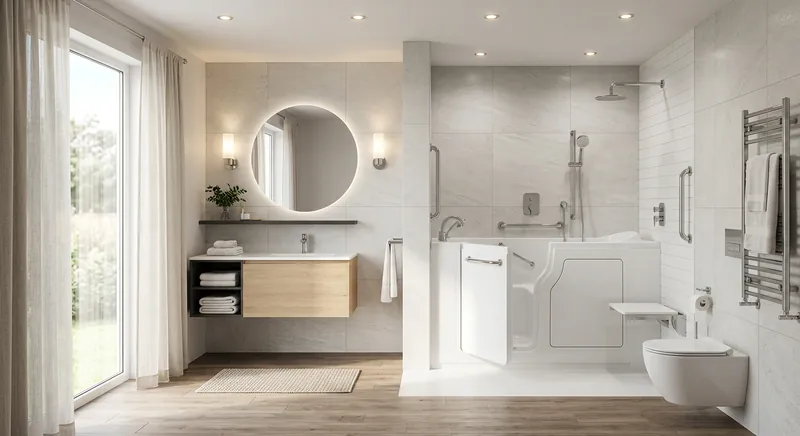
Best Walk-In Tubs for Safe and Comfortable Bathing
Walk-in tubs make bathing safer and more accessible. Compare soaking, hydrotherapy, compact, and wheelchair-accessible models by door type, size, drain speed, and installation needs.
 Bathroom Improvement
Best Bathroom Vanities Under $500 for Style and Storage
Single sink, compact, double sink, and floating vanities under $500 each fit different bathroom layouts. Compare size, sink type, storage, and construction quality.
 Bathroom Improvement
Best Touchless Bathroom Faucets for Hygiene and Convenience
Battery-powered, AC-powered, temperature-control, and budget touchless faucets each suit different needs. Compare sensor range, power source, flow rate, and finish.
Get Smarter About Your Home
Receive practical buying guides, product comparisons, maintenance tips and home project ideas from HomeGear Guide.
You can unsubscribe at any time.