Best Walk-In Tubs for Safe and Comfortable Bathing
Affiliate Disclosure: HomeGear Guide is reader-supported. When you buy through links on our site, we may earn an affiliate commission at no extra cost to you. We do not accept paid product placements or sponsor-biased reviews.
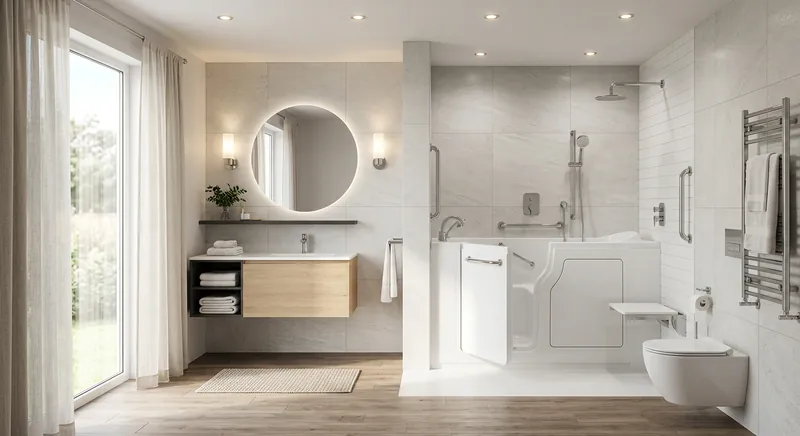
A walk-in tub can restore independence and peace of mind for anyone who finds stepping over a standard tub wall difficult or unsafe. With a low threshold entry, a water-tight door, and built-in seating, a walk-in tub reduces fall risk and makes bathing comfortable again. But choosing one is not as simple as picking the first model you see. Door swing direction, tub dimensions, hydrotherapy options, drain speed, and installation requirements all affect whether a particular tub will work in your bathroom and meet your needs. This guide breaks down the key differences so you can make an informed decision.
Quick Answer
For most homeowners, a right-hand door swing walk-in tub with a 26 to 27 inch width, built-in seating, and basic hydrotherapy jets is the best choice because it fits in a standard 60-inch tub space, provides safe entry with an inward-swinging door, and offers therapeutic water jets at a reasonable price point of 2,500 to 5,000 dollars. The door swing direction is the most critical dimension decision, as inward-swinging doors require enough clearance inside the tub while outward-swinging doors require bathroom floor space. Drain speed is a common complaint, as walk-in tubs hold 40 to 50 gallons and can take 8 to 15 minutes to drain before you can open the door. Fast-drain systems are worth the premium. The main trade-off is features versus cost, as models with air jets, heated seats, and chromatherapy can exceed 10,000 dollars. Measure your bathroom door width to ensure the tub can be delivered and installed.
Top Picks at a Glance
Soaking Walk-In Tub
Air-Jet Walk-In Tub
Compact Walk-In Tub
Wheelchair-Accessible Tub
Product Comparison
| Product | Best For | Door Type | Hydrotherapy | Price Range | Details |
|---|---|---|---|---|---|
Soaking Walk-In Tub Best Overall | Safe, comfortable soaking without hydrotherapy complexity | Inward-swinging | None (soaking only) | $2,000–$5,000 | View Review ↓ |
Air-Jet Walk-In Tub Best Hydrotherapy | Therapeutic massage and improved circulation | Inward or outward-swinging | Air-jet massage | $3,500–$7,500 | View Review ↓ |
Compact Walk-In Tub Best for Small Bathrooms | Small bathrooms with limited floor space | Inward-swinging | Optional (soaking or air-jet) | $1,800–$4,500 | View Review ↓ |
Wheelchair-Accessible Tub Best for Accessibility | Users who transfer from a wheelchair | Outward-swinging | Optional (soaking, air, or combo) | $4,000–$9,000 | View Review ↓ |
Soaking Walk-In Tub
Best Overall- Best For:
- Safe, comfortable soaking without hydrotherapy complexity
- Door Type:
- Inward-swinging
- Hydrotherapy:
- None (soaking only)
- Price Range:
- $2,000–$5,000
Air-Jet Walk-In Tub
Best Hydrotherapy- Best For:
- Therapeutic massage and improved circulation
- Door Type:
- Inward or outward-swinging
- Hydrotherapy:
- Air-jet massage
- Price Range:
- $3,500–$7,500
Compact Walk-In Tub
Best for Small Bathrooms- Best For:
- Small bathrooms with limited floor space
- Door Type:
- Inward-swinging
- Hydrotherapy:
- Optional (soaking or air-jet)
- Price Range:
- $1,800–$4,500
Wheelchair-Accessible Tub
Best for Accessibility- Best For:
- Users who transfer from a wheelchair
- Door Type:
- Outward-swinging
- Hydrotherapy:
- Optional (soaking, air, or combo)
- Price Range:
- $4,000–$9,000
Detailed Product Reviews & Specifications
Soaking Walk-In Tub
A standard soaking walk-in tub with a low step-in threshold, inward-swinging door, and built-in contoured seat. Provides a deep soak without the added cost and maintenance of jetted hydrotherapy systems.
Pros
- •Simple design with fewer components to maintain
- •Lower cost than hydrotherapy models
- •Deep soak depth for full-body immersion
- •Built-in safety seat and grab bar
Cons
- •No hydrotherapy jets or air massage
- •Inward-swinging door requires interior clearance
- •Standard drain speed means longer wait to exit
Key Specifications
Air-Jet Walk-In Tub
A walk-in tub equipped with air jets that deliver a gentle, full-body massage. Air-jet systems are easier to clean and maintain than water jets, and the massage can help soothe sore muscles and joints.
Pros
- •Air jets provide gentle therapeutic massage
- •Easier to clean and maintain than water jets
- •Helps improve circulation and relax muscles
- •Often includes heated backrest and seat
Cons
- •Higher cost than soaking models
- •Requires a dedicated electrical circuit
- •Jets add complexity to the system
Key Specifications
Compact Walk-In Tub
A space-saving walk-in tub designed to fit into tight bathroom layouts. Shorter and narrower than standard models, it can often replace an existing standard tub without major structural changes.
Pros
- •Fits bathrooms where standard walk-in tubs cannot
- •Often fits existing tub footprint
- •Lower water volume means faster fill and drain
- •Still provides seated soaking and safety features
Cons
- •Less interior room for larger users
- •Fewer optional features available
- •May feel tight for extended soaking
Key Specifications
Wheelchair-Accessible Tub
A walk-in tub with an outward-swinging door and a wider opening designed for wheelchair transfer. Includes a higher seat that reduces the distance a user needs to lower themselves, making transfers easier and safer.
Pros
- •Outward-swinging door allows direct transfer from wheelchair
- •Higher seat height reduces transfer effort
- •Wider door opening for easier entry
- •ADA-compliant design features
Cons
- •Highest price category
- •Outward-swinging door needs bathroom floor clearance
- •May require professional structural assessment
Key Specifications
Door Type: Inward vs. Outward Swing
The door is the most important design element of a walk-in tub, and its swing direction affects both bathroom layout and user experience. Most standard walk-in tubs have an inward-swinging door, which saves bathroom floor space because the door opens into the tub interior. Inward-swinging doors are also self-sealing — water pressure pushes the door tighter against its seal as the tub fills.
Outward-swinging doors are less common but are essential for wheelchair users and for bathrooms with limited interior clearance. Because the door opens outward, the user can approach the tub directly from a wheelchair and slide onto the seat without needing to step around a door. The trade-off is that you need unobstructed floor space in front of the tub for the door to open.
Seal and Leak Considerations
Both inward and outward doors use a rubber or silicone gasket to create a water-tight seal. Inward-swinging doors benefit from water pressure pushing the seal tighter as the tub fills. Outward-swinging doors use a latching mechanism to compress the seal, and the seal should be inspected periodically for wear. A properly maintained seal on either door type will last for years.
Sizing and Fit for Your Bathroom
Walk-in tubs come in a range of sizes, from compact models that fit a 26-inch-wide space to full-size models that require 30 inches or more of width. Before shopping, measure your bathroom carefully — not just the tub footprint but also the distance to adjacent fixtures, walls, and the door.
Also consider the user's height and build. A compact tub may save space but feel cramped for a taller person. Check the interior seat width and depth, and make sure the user can sit comfortably with room to move. A tub that is too small defeats the purpose of comfortable, safe bathing.
Hydrotherapy Features
Walk-in tubs offer three main hydrotherapy options: soaking (no jets), air jets, and water jets (whirlpool). A soaking tub is the simplest and most affordable — it provides a deep, warm bath without mechanical features. Air jets push air through small ports to create a gentle, full-body massage that is easy on the skin and easy to clean. Water jets (whirlpool) move bath water through larger nozzles for a deeper, more targeted massage but require more maintenance and are not recommended if you use bath oils.
Air-jet systems are the most popular hydrotherapy choice for walk-in tubs because they offer therapeutic benefits with less cleaning complexity. Many air-jet models also include a heated seat and backrest, which keeps the user warm while the tub fills and drains.
Drain Speed and Installation Requirements
One of the most common complaints about walk-in tubs is the time spent waiting for the tub to drain before the door can be opened. You cannot open the door while water is in the tub. Standard walk-in tubs can take 8–15 minutes to drain fully. Some models include a fast-drain system with a larger drain opening and dedicated pump that can reduce drain time to 3–5 minutes. If waiting is a concern, look for a model with a fast-drain feature.
Installation is more involved than a standard tub replacement. Walk-in tubs are heavier, especially when filled, and may require reinforced floor structure. Hydrotherapy models need a dedicated GFCI-protected electrical circuit. Plumbing may need to be reconfigured for the tub's drain and fill valve locations. Professional installation is strongly recommended — most manufacturers require it to validate the warranty.
Safety & Compliance Notice
Walk-in tubs involve plumbing, electrical, and structural modifications. Professional assessment and installation are strongly recommended.
Frequently Asked Questions
Fill time depends on your home's water pressure and the tub's capacity, typically ranging from 10–20 minutes. Drain time is usually 8–15 minutes for standard models and 3–5 minutes for models with a fast-drain system. You must wait for the tub to drain before opening the door.
Final Verdict
For most buyers, a soaking walk-in tub provides the essential safety and comfort benefits at the most reasonable cost. If therapeutic massage is important, an air-jet model offers the best balance of hydrotherapy and low maintenance. Compact models are the right choice for small bathrooms, and wheelchair-accessible tubs with outward-swinging doors are essential for users who transfer from a chair. Whatever model you choose, factor in installation costs — plumbing, electrical, and structural work — and use a qualified professional. The tub itself is only as good as the installation behind it.
Lisa Park
Kitchen & Bathroom Editor
Lisa covers kitchen and bathroom fixtures, water filtration, and accessibility products for HomeGear Guide. Her work focuses on the details that make daily-use spaces more functional and safer for all members of the household.
Related Articles & Buying Guides
 Bathroom Improvement
Best Shower Heads for Every Bathroom and Budget
Handheld, high-pressure, rain, and water-saving shower heads each suit different needs. Compare flow rate, spray patterns, and WaterSense certification before you buy.
 Accessibility & Senior Home Products
Best Grab Bars for Bathroom Safety and Stability
Compare ADA-compliant bathroom grab bars by weight capacity, grip diameter, non-slip textures, and secure stud mounting to make showers and tubs safe for all ages.
 Accessibility & Senior Home Products
Best Shower Chairs for Safe and Comfortable Bathing
Adjustable, folding, bariatric, and wall-mounted shower chairs each solve a different bathing safety need. Compare weight capacity, height adjustment, backrest, and drainage before you buy.
 Bathroom Improvement
Best Bathroom Exhaust Fans for Moisture and Odor Control
CFM rating, noise level in sones, and humidity sensors are the key factors in choosing a bathroom fan. Compare standard, ultra-quiet, humidity-sensing, and budget options.
Get Smarter About Your Home
Receive practical buying guides, product comparisons, maintenance tips and home project ideas from HomeGear Guide.
You can unsubscribe at any time.