Best Kitchen Cabinet Paints for a Durable Finish
Affiliate Disclosure: HomeGear Guide is reader-supported. When you buy through links on our site, we may earn an affiliate commission at no extra cost to you. We do not accept paid product placements or sponsor-biased reviews.
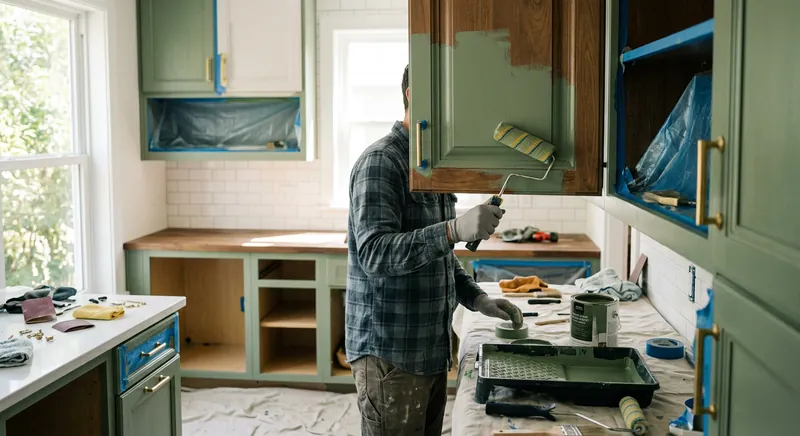
Painting kitchen cabinets is one of the most cost-effective ways to transform a kitchen without replacing the cabinetry. But kitchen cabinets take more abuse than almost any other painted surface in a home. They are touched daily, exposed to grease and moisture, and subjected to frequent cleaning. The paint you choose must be durable enough to handle this, and not all paints labeled for cabinets are equal. The right choice depends on your priorities for durability, ease of application, VOC content, and budget.
Quick Answer
For most homeowners, a water-based acrylic-alkyd cabinet paint with a hard cure finish, low VOC content, and self-leveling properties is the best choice because it provides a factory-like finish that resists chipping, peeling, and grease stains, dries to a durable surface in 24 hours, and cleans up with soap and water rather than mineral spirits. Acrylic-alkyd hybrids combine the durability of traditional oil-based paint with the easy cleanup and low odor of water-based paint, making them the best overall option for cabinet painting. A dedicated cabinet enamel is worth the premium over general-purpose paint because it is formulated for the frequent handling and cleaning that cabinets endure. The main trade-off is durability versus application difficulty, as oil-based paints provide the hardest finish but require longer dry times and emit strong odors. A primer designed for glossy surfaces is essential regardless of the topcoat choice. Allow 7 to 10 days for full cure before heavy use.
Top Picks at a Glance
Alkyd Enamel Cabinet Paint
Water-Based Cabinet Paint
All-in-One Cabinet Paint Kit
Budget Acrylic Cabinet Paint
Product Comparison
| Product | Best For | Base Type | Cure Time | VOC Content | Price Range | Details |
|---|---|---|---|---|---|---|
Alkyd Enamel Cabinet Paint Best Overall | Maximum durability and a smooth factory-like finish | Alkyd (oil-modified) | 7–21 days to full hardness | Moderate to high | $45–$70 per gallon | View Review ↓ |
Water-Based Cabinet Paint Best Low-VOC | Low-odor, low-VOC cabinet refinishing | Water-based acrylic enamel | 7–14 days to full hardness | Low | $35–$55 per gallon | View Review ↓ |
All-in-One Cabinet Paint Kit Best for Convenience | Simplified process with included primer and tools | Water-based acrylic | 7–14 days to full hardness | Low | $60–$120 per kit | View Review ↓ |
Budget Acrylic Cabinet Paint Best Value | Budget-friendly cabinet refresh | Acrylic latex | 7–21 days to full hardness | Low | $25–$40 per gallon | View Review ↓ |
Alkyd Enamel Cabinet Paint
Best Overall- Best For:
- Maximum durability and a smooth factory-like finish
- Base Type:
- Alkyd (oil-modified)
- Cure Time:
- 7–21 days to full hardness
- VOC Content:
- Moderate to high
- Price Range:
- $45–$70 per gallon
Water-Based Cabinet Paint
Best Low-VOC- Best For:
- Low-odor, low-VOC cabinet refinishing
- Base Type:
- Water-based acrylic enamel
- Cure Time:
- 7–14 days to full hardness
- VOC Content:
- Low
- Price Range:
- $35–$55 per gallon
All-in-One Cabinet Paint Kit
Best for Convenience- Best For:
- Simplified process with included primer and tools
- Base Type:
- Water-based acrylic
- Cure Time:
- 7–14 days to full hardness
- VOC Content:
- Low
- Price Range:
- $60–$120 per kit
Budget Acrylic Cabinet Paint
Best Value- Best For:
- Budget-friendly cabinet refresh
- Base Type:
- Acrylic latex
- Cure Time:
- 7–21 days to full hardness
- VOC Content:
- Low
- Price Range:
- $25–$40 per gallon
Detailed Product Reviews & Specifications
Alkyd Enamel Cabinet Paint
An alkyd enamel paint that cures to a hard, smooth finish that resists chipping, scratching, and cleaning chemicals. The closest thing to a factory cabinet finish in a can.
Pros
- •Hard, durable finish resists wear
- •Self-leveling for a smooth appearance
- •Excellent adhesion to properly prepared surfaces
- •Handles frequent cleaning well
Cons
- •Higher VOC content and strong odor
- •Longer cure time before full hardness
- •Requires mineral spirits for cleanup
Key Specifications
Water-Based Cabinet Paint
A water-based acrylic or latex enamel formulated for cabinets. Offers good durability with low odor and easy soap-and-water cleanup, making it a practical choice for occupied homes.
Pros
- •Low odor and low VOC content
- •Easy soap-and-water cleanup
- •Dries quickly between coats
- •Available in wide range of colors
Cons
- •Slightly less hard than alkyd enamel
- •May show brush marks without careful application
- •Requires primer on many surfaces
Key Specifications
All-in-One Cabinet Paint Kit
A complete cabinet painting kit that includes primer, paint, and application tools in one package. Designed to simplify the process for DIYers by providing everything needed in matched quantities.
Pros
- •Includes primer and paint matched for compatibility
- •Simplifies product selection for DIYers
- •Often includes applicator tools
- •Instructions tailored to the kit contents
Cons
- •Limited color selection
- •Kit quantities may not cover large kitchens
- •Paint quality may not match standalone products
Key Specifications
Budget Acrylic Cabinet Paint
A basic acrylic paint that can be used on cabinets with proper primer and preparation. The most affordable option, though it requires more effort to achieve a durable finish.
Pros
- •Lowest price point
- •Wide color availability
- •Low odor and easy cleanup
- •Available at most hardware stores
Cons
- •Less durable than dedicated cabinet enamels
- •More prone to chipping and wear
- •Requires high-quality primer for adhesion
Key Specifications
Oil-Based vs. Water-Based Cabinet Paint
Cabinet paints come in two main categories: oil-based (including alkyd enamels) and water-based (acrylic and latex enamels). Oil-based and alkyd paints cure to a harder, more durable finish that better resists the wear cabinets receive. They also tend to self-level, which produces a smoother surface with fewer brush marks.
Water-based paints have lower odor, lower VOC content, and clean up with soap and water. They dry faster between coats and are easier to work with in occupied homes. The trade-off is that they do not cure as hard as oil-based paints and may require more care in application to avoid visible brush marks.
Modern alkyd hybrids offer a middle ground. They are sometimes called water-based alkyds because they clean up with water but cure to a harder finish than standard acrylics. These combine low odor with better durability, making them a popular choice for cabinet projects.
Durability and Self-Leveling Properties
Durability is the most important property for cabinet paint. Cabinets are touched, bumped, splashed, and cleaned frequently. A paint that chips or scratches easily will look worn within months. Alkyd enamels and high-quality water-based enamels formulated for cabinets are the best choices for durability.
Self-leveling refers to a paint's ability to smooth out brush marks and roller texture as it dries. This property matters for cabinets because the doors and drawer fronts are viewed at close range and any texture is visible. Alkyd enamels self-level well, while water-based paints vary more in this regard.
For the smoothest finish, consider spraying rather than brushing. A paint sprayer eliminates brush marks entirely and produces a finish that rivals factory cabinetry. If you brush, use a high-quality synthetic brush and apply thin, even coats.
Achieving a Smooth Finish by Brush
If you are brushing rather than spraying, use a high-quality synthetic bristle brush designed for smooth finishes. Apply paint in the direction of the wood grain, maintain a wet edge, and do not over-brush. Apply thin coats and let each one dry fully before adding the next. Two to three thin coats produce a better result than one thick coat.
Preparation and Primer
No cabinet paint will perform well without proper preparation. Clean the cabinets thoroughly with a degreaser to remove kitchen grease and oil. Sand the surfaces lightly to scuff the existing finish and create a surface the primer can grip. Fill any dents or damage with wood filler and sand smooth.
Primer is essential, especially if you are painting over a stained or varnished surface. A high-quality adhesion primer bonds to the existing finish and provides a surface the paint can stick to. For stained cabinets that may bleed through, use a stain-blocking primer to prevent tannin discoloration.
Remove all hardware and label each door and drawer so you can reinstall them in the right place. Painting is much easier if you can lay the doors flat on a work surface rather than painting them in place.
Cure Time and VOC Content
There is a difference between dry time and cure time. Paint may feel dry to the touch in a few hours, but it takes days to weeks to fully cure to maximum hardness. During the cure period, the paint is vulnerable to chipping, scratching, and sticking. Be gentle with cabinets for at least the first week after painting.
VOCs (volatile organic compounds) are chemicals released by paint as it dries and cures. Oil-based and alkyd paints have higher VOC content and produce stronger odor. Water-based paints have lower VOCs and less odor. If you are living in the home during the project, low-VOC water-based paints are more comfortable to work with.
Ventilation is important regardless of paint type. Open windows, run fans, and consider wearing a respirator when spraying or working with high-VOC products.
Frequently Asked Questions
Yes. Lightly sanding the existing finish creates a surface that primer and paint can adhere to. You do not need to sand down to bare wood, but you do need to scuff the glossy surface so the new finish bonds properly. Skipping this step is the most common reason cabinet paint fails.
Final Verdict
For the most durable and professional-looking result, an alkyd enamel cabinet paint is the best choice. It cures to a hard, smooth finish that handles daily wear and cleaning better than any other option. If odor and VOCs are a concern, a high-quality water-based cabinet enamel offers good durability with easier cleanup and lower fumes. An all-in-one kit simplifies the process for DIYers who want matched products and instructions. Budget acrylic paint can work but requires excellent preparation and primer, and the finish will not last as long. Whatever paint you choose, thorough cleaning, sanding, and priming are what ultimately determine whether the finish lasts for years or fails within months.
Lisa Park
Kitchen & Bathroom Editor
Lisa covers kitchen and bathroom fixtures, water filtration, and accessibility products for HomeGear Guide. Her work focuses on the details that make daily-use spaces more functional and safer for all members of the household.
Related Articles & Buying Guides
 Kitchen Improvement
Best Kitchen Faucets for Everyday Use and Cleanup
Pull-down, pull-out, and touchless kitchen faucets each suit different sinks and habits. Compare spray functions, finishes, height, and reach.
 Kitchen Improvement
Best Kitchen Organization Products for a Clutter-Free Space
Pull-out cabinet organizers, tiered shelves, drawer dividers, and over-door racks each solve different kitchen storage problems. Compare options.
 Kitchen Improvement
Best Garbage Disposals for Kitchen Waste
From 1/3 HP budget units to 1 HP heavy-duty models, garbage disposals vary in power, noise, and grind quality. Compare continuous and batch feed options.
 Kitchen Improvement
Best Under-Sink Water Filters for Clean Drinking Water
Multi-stage, carbon block, and ultra-filtration under-sink systems each target different contaminants. Compare flow rate, filter life, and installation.
Get Smarter About Your Home
Receive practical buying guides, product comparisons, maintenance tips and home project ideas from HomeGear Guide.
You can unsubscribe at any time.