Best Under-Sink Water Filters for Clean Drinking Water
Affiliate Disclosure: HomeGear Guide is reader-supported. When you buy through links on our site, we may earn an affiliate commission at no extra cost to you. We do not accept paid product placements or sponsor-biased reviews.
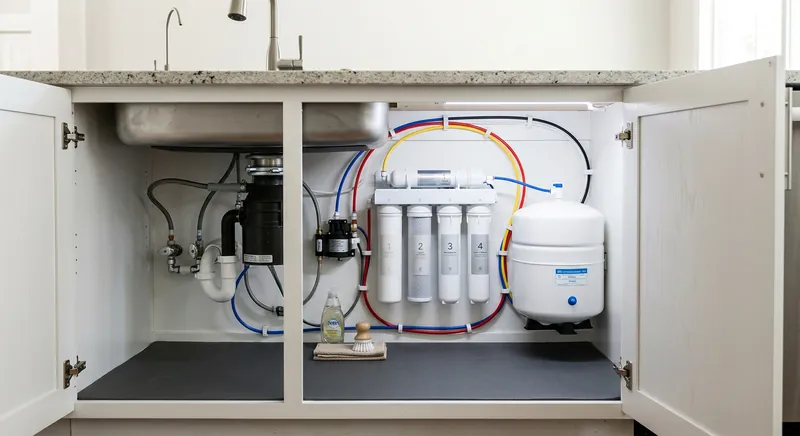
An under-sink water filter provides filtered drinking water directly from a dedicated faucet or your main tap without taking up counter space. Unlike pitcher filters, under-sink systems can use multiple filtration stages and handle larger volumes of water. The right system depends on what contaminants you want to remove, how much space you have under the sink, and whether you want a separate dedicated faucet.
Quick Answer
For most homeowners, a multi-stage under-sink water filter with carbon block and sediment filtration, a 0.5 GPM flow rate, and a dedicated dispenser faucet in the 100 to 250 dollar range is the best choice because it removes chlorine, lead, cysts, and volatile organic compounds while preserving beneficial minerals, fits in the limited space under most sinks, and provides filtered water without occupying counter space. Multi-stage systems with 3 to 5 filter stages remove a broader range of contaminants than single-stage filters. A 0.5 GPM flow rate is adequate for filling glasses and pots, though 1.0 GPM models are available for less waiting. The main trade-off is filtration thoroughness versus flow rate, as more filtration stages reduce water pressure. Filter replacement cost is an ongoing expense of 60 to 120 dollars per year. Check your water quality report to determine which contaminants you need to target before selecting a system.
Top Picks at a Glance
Multi-Stage Under-Sink Filter
Under-Sink Filter with Dedicated Faucet
Carbon Block Under-Sink Filter
Ultra-Filtration System
Product Comparison
| Product | Best For | Filtration Stages | Flow Rate | Filter Life | Price Range | Details |
|---|---|---|---|---|---|---|
Multi-Stage Under-Sink Filter Best Overall | General water quality improvement | 3–5 stages | 1.5–2 gallons per minute | 6–12 months | $120–$250 | View Review ↓ |
Under-Sink Filter with Dedicated Faucet Best for Convenience | Filtered water on demand at a separate tap | 2–4 stages | 1–1.5 gallons per minute | 6–12 months | $100–$220 | View Review ↓ |
Carbon Block Under-Sink Filter Best Budget | Budget filtration for taste and odor | 1-stage (carbon block) | 1.5–2 gallons per minute | 3–6 months | $40–$90 | View Review ↓ |
Ultra-Filtration System Best for Fine Filtration | Fine filtration without wastewater | 3–4 stages with UF membrane | 1–1.5 gallons per minute | 12–24 months (membrane) | $150–$300 | View Review ↓ |
Multi-Stage Under-Sink Filter
Best Overall- Best For:
- General water quality improvement
- Filtration Stages:
- 3–5 stages
- Flow Rate:
- 1.5–2 gallons per minute
- Filter Life:
- 6–12 months
- Price Range:
- $120–$250
Under-Sink Filter with Dedicated Faucet
Best for Convenience- Best For:
- Filtered water on demand at a separate tap
- Filtration Stages:
- 2–4 stages
- Flow Rate:
- 1–1.5 gallons per minute
- Filter Life:
- 6–12 months
- Price Range:
- $100–$220
Carbon Block Under-Sink Filter
Best Budget- Best For:
- Budget filtration for taste and odor
- Filtration Stages:
- 1-stage (carbon block)
- Flow Rate:
- 1.5–2 gallons per minute
- Filter Life:
- 3–6 months
- Price Range:
- $40–$90
Ultra-Filtration System
Best for Fine Filtration- Best For:
- Fine filtration without wastewater
- Filtration Stages:
- 3–4 stages with UF membrane
- Flow Rate:
- 1–1.5 gallons per minute
- Filter Life:
- 12–24 months (membrane)
- Price Range:
- $150–$300
Detailed Product Reviews & Specifications
Multi-Stage Under-Sink Filter
A multi-stage under-sink filter that combines sediment, carbon, and specialty media to reduce a wide range of contaminants. The most versatile option for households wanting better-tasting, cleaner water from a single system.
Pros
- •Reduces multiple contaminant types
- •Good flow rate for daily use
- •Long filter life between changes
- •Can connect to main tap or dedicated faucet
Cons
- •Larger housing takes under-sink space
- •Higher upfront cost than single-stage
- •Filter changes involve multiple cartridges
Key Specifications
Under-Sink Filter with Dedicated Faucet
An under-sink filter that installs with its own dedicated faucet mounted next to your main tap. Keeps filtered water separate from unfiltered water so you only use filter capacity for drinking and cooking.
Pros
- •Separate faucet preserves filter life
- •Filtered water is clearly distinguishable
- •Does not restrict main tap flow
- •Clean installation look
Cons
- •Requires a hole for the dedicated faucet
- •Adds a fixture to the sink deck
- •Dedicated faucet may have lower flow
Key Specifications
Carbon Block Under-Sink Filter
A single-stage carbon block filter that reduces chlorine, taste, and odor at a low price. The simplest and most affordable under-sink option for households whose main concern is better-tasting water.
Pros
- •Lowest cost under-sink option
- •Simple single-cartridge replacement
- •Improves taste and odor noticeably
- •Compact housing saves space
Cons
- •Limited contaminant reduction
- •Does not remove dissolved solids
- •Shorter filter life in high-use homes
Key Specifications
Ultra-Filtration System
An ultra-filtration (UF) system that uses a fine membrane to reduce particles, bacteria, and some viruses without producing wastewater like reverse osmosis. A strong choice where water quality concerns go beyond taste.
Pros
- •Fine filtration without wastewater
- •Removes particles and microbes
- •No storage tank required
- •Maintains minerals in water
Cons
- •Higher cost than carbon filters
- •Does not remove dissolved solids like RO
- •Membrane replacement is more expensive
Key Specifications
Filtration Stages and Contaminant Removal
Under-sink filters use one or more filtration stages, each targeting different contaminants. A sediment pre-filter captures large particles and extends the life of downstream filters. A carbon stage reduces chlorine, taste, odor, and some chemicals. Specialty media can target specific contaminants like lead or scale.
A single-stage carbon filter is enough if your concern is chlorine taste and odor. If you want to reduce a broader range of contaminants, a multi-stage system with sediment, carbon, and specialty media is the better choice.
It is important to know what is actually in your water before choosing a filter. Check your annual water quality report from your utility, or use a home water test kit. A filter that is not certified to remove a specific contaminant may not address it, regardless of how many stages it has.
Flow Rate and Filter Life
Flow rate determines how quickly filtered water comes out of the tap. Most under-sink filters deliver 1 to 2 gallons per minute, which is adequate for filling glasses and pots. Systems with more filtration stages generally have lower flow rates because water passes through more resistance.
Filter life varies by system and usage. Carbon filters typically last 3 to 6 months. Multi-stage systems may have filters that last 6 to 12 months. Ultra-filtration membranes can last 1 to 2 years. Longer filter life means lower long-term maintenance costs but higher upfront system cost.
Compare the cost of replacement filters, not just the system price. A cheap system with expensive, short-lived filters can cost more over a few years than a pricier system with affordable, long-lasting cartridges.
NSF Certification and What It Means
NSF International tests and certifies water filters against specific standards. NSF/ANSI 42 covers aesthetic effects like chlorine, taste, and odor. NSF/ANSI 53 covers health effects like lead, cysts, and certain chemicals. NSF/ANSI 401 covers emerging contaminants including some pharmaceuticals.
A filter labeled "NSF certified" has been tested to meet a specific standard. The key is to check which standard it is certified for. A filter certified only to NSF 42 will improve taste but will not protect you from lead or microbial contaminants.
Do not rely on vague claims like "removes contaminants" without certification. Look for the specific NSF standard number and the list of contaminants the filter is certified to reduce.
Installation Complexity
Most under-sink filters connect to the cold water line under the sink and either send filtered water to your main tap or to a dedicated faucet. Basic plumbing skills and a few tools are usually enough for installation.
Systems with a dedicated faucet require a hole in the sink or countertop. If your sink has an extra hole from a removed soap dispenser, you can use it. Otherwise, drilling may be required, which is easier on a stainless steel sink than a cast iron or composite one.
Consider the space under your sink. Multi-stage systems and those with storage tanks take up significant room. Measure the available space and check that the system you choose fits alongside your water supply lines, garbage disposal, and other under-sink items.
Frequently Asked Questions
Under-sink filters typically use carbon and sediment media to reduce chlorine, taste, odor, and some contaminants. Reverse osmosis (RO) uses a semi-permeable membrane to remove dissolved solids, heavy metals, and a wider range of contaminants. RO is more thorough but produces wastewater and requires a storage tank. If your concern is taste and chlorine, an under-sink filter is simpler and cheaper.
Final Verdict
For most households, a multi-stage under-sink filter offers the best balance of contaminant reduction, flow rate, and maintenance. If you want filtered water from a separate tap, a system with a dedicated faucet keeps filter life focused on drinking water. A carbon block filter is the most affordable option if your only concern is chlorine taste and odor. For fine filtration of particles and microbes without the wastewater of reverse osmosis, an ultra-filtration system is a strong choice. Before buying, check your water quality report and match the filter certification to the contaminants you need to address.
Lisa Park
Kitchen & Bathroom Editor
Lisa covers kitchen and bathroom fixtures, water filtration, and accessibility products for HomeGear Guide. Her work focuses on the details that make daily-use spaces more functional and safer for all members of the household.
Related Articles & Buying Guides
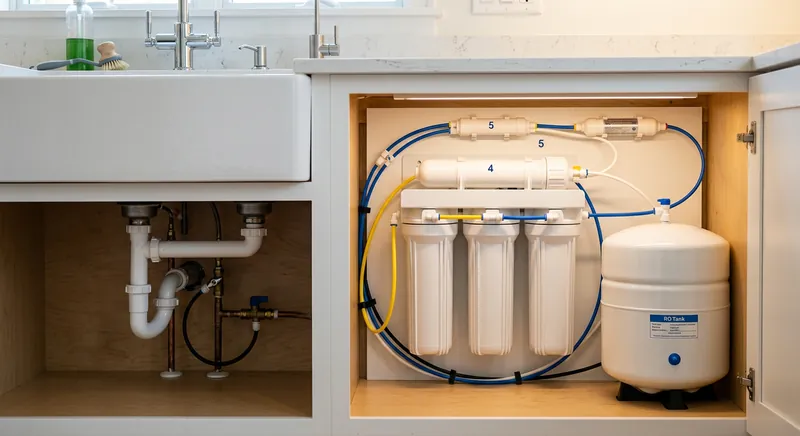 Kitchen Improvement
Best Reverse Osmosis Systems for Pure Drinking Water
4-stage to 6-stage RO systems vary in filtration, flow rate, and wastewater ratio. Compare tank and tankless models with remineralization options.
 Kitchen Improvement
Best Kitchen Faucets for Everyday Use and Cleanup
Pull-down, pull-out, and touchless kitchen faucets each suit different sinks and habits. Compare spray functions, finishes, height, and reach.
 Kitchen Improvement
Best Garbage Disposals for Kitchen Waste
From 1/3 HP budget units to 1 HP heavy-duty models, garbage disposals vary in power, noise, and grind quality. Compare continuous and batch feed options.
 Kitchen Improvement
Best Kitchen Organization Products for a Clutter-Free Space
Pull-out cabinet organizers, tiered shelves, drawer dividers, and over-door racks each solve different kitchen storage problems. Compare options.
Get Smarter About Your Home
Receive practical buying guides, product comparisons, maintenance tips and home project ideas from HomeGear Guide.
You can unsubscribe at any time.