Best Reverse Osmosis Systems for Pure Drinking Water
Affiliate Disclosure: HomeGear Guide is reader-supported. When you buy through links on our site, we may earn an affiliate commission at no extra cost to you. We do not accept paid product placements or sponsor-biased reviews.
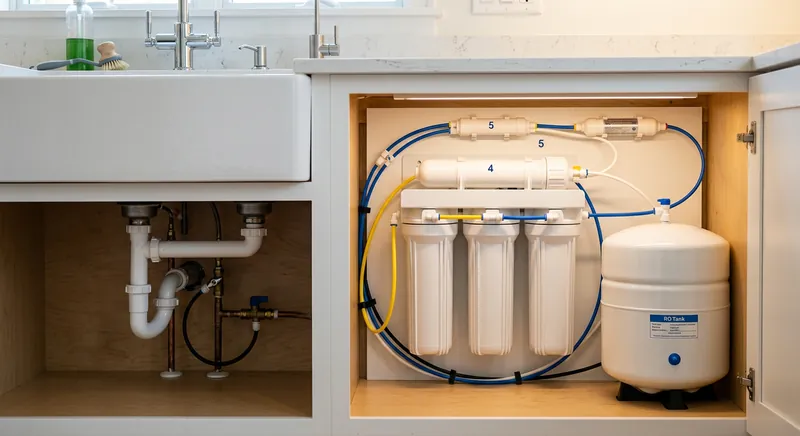
Reverse osmosis (RO) is the most thorough water filtration method available for home use. It forces water through a semi-permeable membrane that removes dissolved solids, heavy metals, and contaminants that carbon and sediment filters cannot catch. The trade-offs are a slower flow rate, wastewater from the filtration process, and the need for either a storage tank or a tankless design. Understanding these factors helps you choose an RO system that fits your kitchen and water needs.
Quick Answer
For most homeowners, a 4-stage or 5-stage tankless reverse osmosis system with a 50 to 100 GPD membrane, a carbon pre-filter, and a remineralization post-filter is the best choice because it removes 99 percent of dissolved solids including lead, arsenic, and fluoride while producing enough daily water for a family of 4, and eliminates the bulky storage tank that traditional RO systems require under the sink. Tankless RO systems are 50 to 70 percent smaller than tank-based systems and produce water on demand rather than storing it, which prevents bacterial growth in the tank. A remineralization stage adds back calcium and magnesium for improved taste, as pure RO water can taste flat. The main trade-off is filtration speed versus waste ratio, as tankless systems produce water faster but may have a higher wastewater ratio of 2 to 1 versus 1 to 1 for tank systems. A UV sterilizer stage is worth adding for well water.
Top Picks at a Glance
5-Stage RO System with Tank
Tankless RO System
6-Stage RO with Remineralization
Budget 4-Stage RO System
Product Comparison
| Product | Best For | Stages | Flow Rate | Wastewater Ratio | Price Range | Details |
|---|---|---|---|---|---|---|
5-Stage RO System with Tank Best Overall | Comprehensive filtration for most homes | 5 (sediment, carbon, RO, polish) | 50–75 gallons per day | 3:1 to 4:1 | $150–$300 | View Review ↓ |
Tankless RO System Best for Space | Space-saving installation without a tank | 4–5 stages | 400–600 gallons per day | 1.5:1 to 2:1 | $250–$500 | View Review ↓ |
6-Stage RO with Remineralization Best for Taste | Great-tasting water with added minerals | 6 (5-stage plus remineralization) | 50–75 gallons per day | 3:1 to 4:1 | $180–$350 | View Review ↓ |
Budget 4-Stage RO System Best Value | Essential RO filtration at a lower cost | 4 (sediment, carbon, RO, polish) | 50 gallons per day | 3:1 to 4:1 | $100–$180 | View Review ↓ |
5-Stage RO System with Tank
Best Overall- Best For:
- Comprehensive filtration for most homes
- Stages:
- 5 (sediment, carbon, RO, polish)
- Flow Rate:
- 50–75 gallons per day
- Wastewater Ratio:
- 3:1 to 4:1
- Price Range:
- $150–$300
Tankless RO System
Best for Space- Best For:
- Space-saving installation without a tank
- Stages:
- 4–5 stages
- Flow Rate:
- 400–600 gallons per day
- Wastewater Ratio:
- 1.5:1 to 2:1
- Price Range:
- $250–$500
6-Stage RO with Remineralization
Best for Taste- Best For:
- Great-tasting water with added minerals
- Stages:
- 6 (5-stage plus remineralization)
- Flow Rate:
- 50–75 gallons per day
- Wastewater Ratio:
- 3:1 to 4:1
- Price Range:
- $180–$350
Budget 4-Stage RO System
Best Value- Best For:
- Essential RO filtration at a lower cost
- Stages:
- 4 (sediment, carbon, RO, polish)
- Flow Rate:
- 50 gallons per day
- Wastewater Ratio:
- 3:1 to 4:1
- Price Range:
- $100–$180
Detailed Product Reviews & Specifications
5-Stage RO System with Tank
A 5-stage reverse osmosis system with a storage tank that combines sediment, carbon, RO membrane, and post-carbon filtration. The standard configuration for thorough home water purification.
Pros
- •Thorough 5-stage filtration process
- •Storage tank ensures water is ready on demand
- •Reduces a wide range of dissolved contaminants
- •Well-established and widely supported design
Cons
- •Storage tank takes under-sink space
- •Slower fill rate than tankless systems
- •Periodic tank sanitizing recommended
Key Specifications
Tankless RO System
A tankless reverse osmosis system that filters water on demand without a storage tank. Frees up under-sink space and eliminates the risk of tank-related contamination.
Pros
- •No storage tank saves space
- •Water on demand without waiting for tank refill
- •No risk of tank contamination
- •Often has a better wastewater ratio
Cons
- •Higher upfront cost
- •Requires consistent water pressure
- •More complex internal components
Key Specifications
6-Stage RO with Remineralization
A 6-stage RO system that adds a remineralization stage to put healthy minerals back into the water after filtration. Produces water that tastes better than standard RO output, which can taste flat.
Pros
- •Remineralization improves taste
- •Healthier mineral content in filtered water
- •Reduces the flat taste common to RO water
- •Same thorough filtration as 5-stage systems
Cons
- •Additional stage adds maintenance
- •Remineralization filter needs periodic replacement
- •Slightly higher overall cost
Key Specifications
Budget 4-Stage RO System
A 4-stage reverse osmosis system that covers the essential filtration steps at a lower price. Fewer stages mean lower cost and simpler maintenance while still providing RO-level purification.
Pros
- •Lowest cost among RO systems
- •Fewer filters to replace
- •Simpler maintenance schedule
- •Still provides membrane-level filtration
Cons
- •Fewer pre-filtration stages may shorten membrane life
- •No remineralization stage
- •Basic components compared to premium models
Key Specifications
How Reverse Osmosis Works
Reverse osmosis forces water under pressure through a semi-permeable membrane with pores so small that dissolved solids, heavy metals, and many contaminants cannot pass through. The clean water that makes it through is called permeate. The water that carries away the rejected contaminants is called brine or wastewater.
Because the membrane is so fine, the filtration process is slow. A typical residential RO membrane produces 50 to 75 gallons per day, which is not fast enough for on-demand use. That is why most RO systems include a storage tank that holds a reserve of filtered water.
Tankless RO systems solve the speed problem with a more powerful membrane and pump that can filter water fast enough for on-demand use, but they cost more and require adequate water pressure to work.
RO Stages and What Each Does
A standard RO system uses multiple stages. A sediment pre-filter captures particles that could clog the membrane. A carbon pre-filter removes chlorine, which can damage the RO membrane over time. The RO membrane itself removes dissolved solids and contaminants. A post-carbon filter polishes the water and improves taste before it reaches the tap.
Systems with 5 stages typically split the carbon filtration into two stages for better chlorine reduction. 6-stage systems add a remineralization stage that puts calcium and magnesium back into the water. 4-stage systems combine or omit a stage to reduce cost.
More stages generally mean better pre-filtration and longer membrane life, but also more filters to replace. The RO membrane is the most expensive component, so protecting it with good pre-filtration saves money in the long run.
Why Pre-Filtration Matters
The RO membrane is the heart of the system and the most expensive part to replace. Chlorine and sediment in incoming water can damage or clog the membrane, shortening its life. Good pre-filtration removes these threats before water reaches the membrane, extending its lifespan from 2 years to 5 or more.
Tank vs. Tankless RO Systems
Tank-based RO systems store filtered water in a pressurized tank under the sink. When you open the faucet, water flows from the tank. The tank typically holds 2 to 4 gallons, which is enough for normal use but can run out during heavy use, requiring a wait for refill.
Tankless RO systems filter water on demand without a storage tank. They free up under-sink space and eliminate the risk of tank contamination, but they require adequate water pressure and cost more upfront.
Choose a tank-based system if you have space and want a proven, affordable design. Choose tankless if under-sink space is tight or you want continuous filtered water without a refill wait.
Wastewater Ratio and Maintenance Costs
RO systems produce wastewater as part of the filtration process. The wastewater ratio is the amount of water sent to the drain for every gallon of filtered water produced. Traditional systems have a ratio of 3:1 or 4:1, meaning 3 or 4 gallons go down the drain for every gallon of clean water. Tankless and newer systems can achieve ratios of 1.5:1 or 2:1, which is significantly more efficient.
If water conservation is important to you, look for a system with a low wastewater ratio. Some homeowners route the wastewater to a garden or laundry, though this requires additional plumbing.
Maintenance costs come from filter replacements. Sediment and carbon filters need replacement every 6 to 12 months. The RO membrane lasts 2 to 5 years depending on water quality and pre-filtration. Remineralization filters need replacement every 6 to 12 months. Calculate annual maintenance costs before buying so you are not surprised later.
Frequently Asked Questions
Traditional tank-based RO systems have a wastewater ratio of 3:1 to 4:1, meaning 3 to 4 gallons go to the drain for every gallon of filtered water. Tankless and newer efficient systems can achieve ratios of 1.5:1 to 2:1. If water waste is a concern, look for a system with a low wastewater ratio.
Final Verdict
A 5-stage RO system with a storage tank is the best choice for most households. It provides thorough filtration, a proven design, and reasonable cost. If under-sink space is tight, a tankless system eliminates the tank and offers better water efficiency, though at a higher price. For better taste, a 6-stage system with remineralization adds back the minerals that RO removes. A budget 4-stage system covers the essentials at a lower cost but may require more frequent membrane replacement. Consider the wastewater ratio and annual filter replacement costs, not just the upfront price, when making your decision.
Lisa Park
Kitchen & Bathroom Editor
Lisa covers kitchen and bathroom fixtures, water filtration, and accessibility products for HomeGear Guide. Her work focuses on the details that make daily-use spaces more functional and safer for all members of the household.
Related Articles & Buying Guides
 Kitchen Improvement
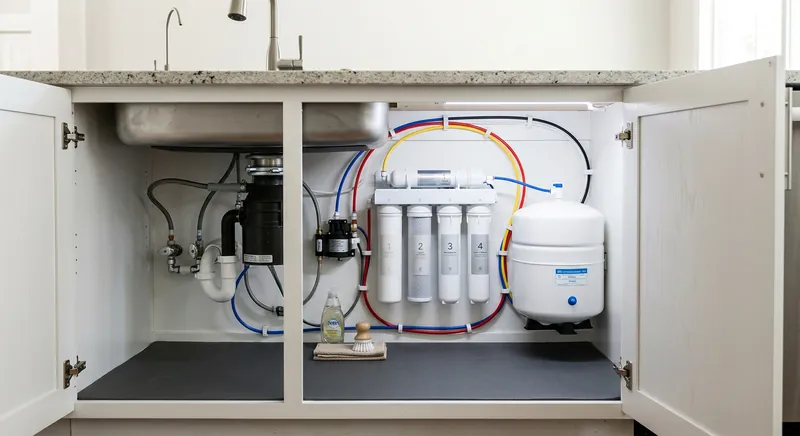
Best Under-Sink Water Filters for Clean Drinking Water
Multi-stage, carbon block, and ultra-filtration under-sink systems each target different contaminants. Compare flow rate, filter life, and installation.
 Kitchen Improvement
Best Kitchen Faucets for Everyday Use and Cleanup
Pull-down, pull-out, and touchless kitchen faucets each suit different sinks and habits. Compare spray functions, finishes, height, and reach.
 Kitchen Improvement
Best Garbage Disposals for Kitchen Waste
From 1/3 HP budget units to 1 HP heavy-duty models, garbage disposals vary in power, noise, and grind quality. Compare continuous and batch feed options.
 Kitchen Improvement
Best Kitchen Organization Products for a Clutter-Free Space
Pull-out cabinet organizers, tiered shelves, drawer dividers, and over-door racks each solve different kitchen storage problems. Compare options.
Get Smarter About Your Home
Receive practical buying guides, product comparisons, maintenance tips and home project ideas from HomeGear Guide.
You can unsubscribe at any time.