How to Pressure Wash a Concrete Driveway Without Damaging It
Affiliate Disclosure: HomeGear Guide is reader-supported. When you buy through links on our site, we may earn an affiliate commission at no extra cost to you. We do not accept paid product placements or sponsor-biased reviews.
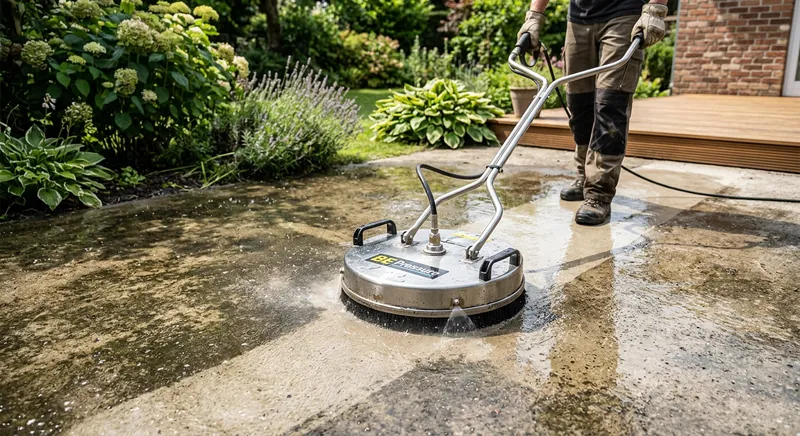
A clean concrete driveway improves curb appeal and removes years of embedded oil, dirt, algae, and tire marks. Pressure washing is the fastest way to get a driveway looking new again, but it is also one of the easiest surfaces to damage if you use the wrong settings or technique. Too much pressure or the wrong nozzle can etch permanent lines into concrete, blow out mortar joints, and send debris flying at dangerous speeds. Based on our research into manufacturer specifications and concrete cleaning best practices, the right approach comes down to four decisions: choosing the correct PSI, selecting the right nozzle, using proper technique, and avoiding common mistakes that cause damage.
Quick Answer
To pressure wash a concrete driveway safely, use 2,800 to 3,500 PSI with a 25-degree green nozzle, keep the wand 12 to 18 inches from the surface, and work in consistent overlapping passes. A surface cleaner attachment is the best investment for flat concrete — it cleans evenly without the streaking that a wand produces, and it keeps the spray contained. Apply a concrete detergent before washing and let it dwell for 5 to 10 minutes to break down oil and grime. Never use a 0-degree red nozzle on concrete — it can etch visible lines into the surface. Never use more than 3,500 PSI on residential concrete, as higher pressure can damage the surface paste layer. Start with lower pressure and a wider spray angle, then increase only if the grime does not come off.
Choosing the Right PSI for Concrete
Concrete is a hard material, but it is not indestructible. The surface layer of concrete — called the paste — can be etched or damaged by excessive pressure. Based on our research, 2,800 to 3,500 PSI is the ideal range for cleaning residential concrete driveways. This range is powerful enough to remove embedded oil, dirt, and algae but not so powerful that it risks etching the surface.
Electric pressure washers typically max out at 2,400 PSI, which is adequate for light surface dirt and algae but may struggle with deep oil stains. Gas pressure washers in the 2,700 to 3,100 PSI range handle most driveway cleaning effectively. Heavy-duty gas models producing 3,200 to 4,000 PSI can clean faster but require more care — at those pressures, holding the wand too close or using too narrow a nozzle can etch the surface.
If your pressure washer has adjustable pressure, start at the lowest setting that effectively cleans the surface. You can always increase pressure, but you cannot undo etching. A practical test: start at 18 inches from the surface with a 25-degree nozzle. If the grime comes off, you have enough pressure. If not, move 6 inches closer or increase the pressure setting incrementally.
Selecting the Right Nozzle
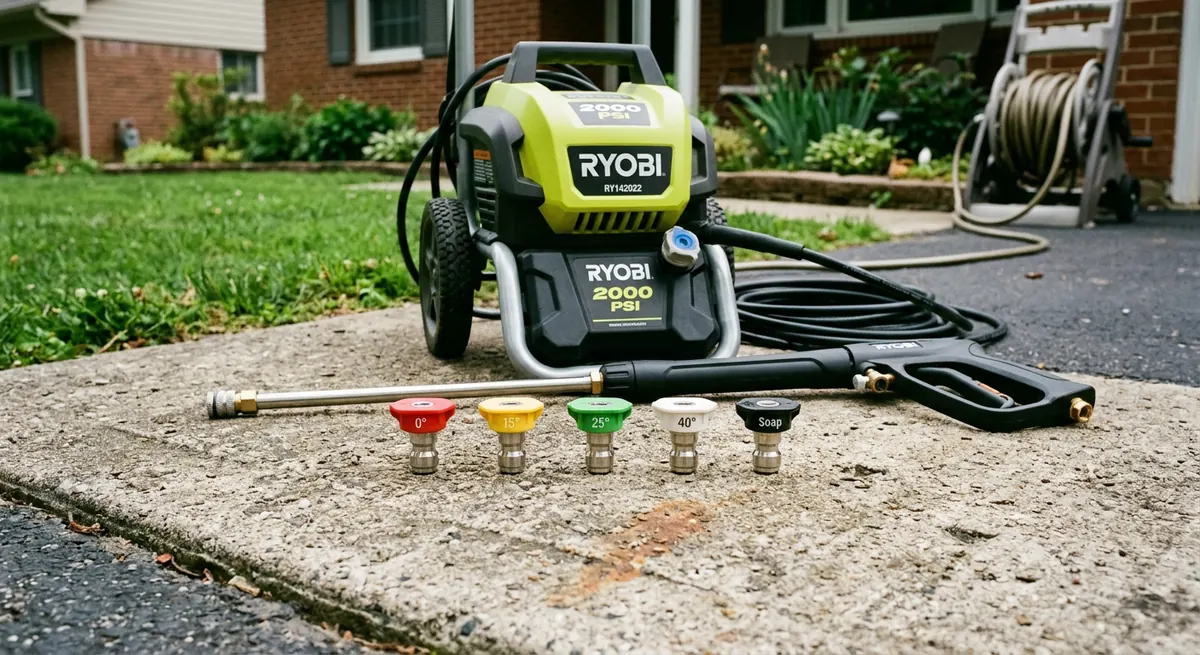
The nozzle you choose has as much impact on cleaning power and safety as the PSI itself. Pressure washer nozzles are color-coded by spray angle, and using the wrong one is the most common cause of concrete damage. For driveway cleaning, the 25-degree green nozzle is the best all-around choice. It provides a balance of cleaning force and coverage area that removes grime without concentrating the spray into a damaging pinpoint.
The 15-degree yellow nozzle is more aggressive and can be used for stubborn oil stains or heavily soiled areas, but it requires more care — keep it moving and at least 12 inches from the surface. The 40-degree white nozzle is too gentle for most driveway grime but can be used for rinsing or for light surface dirt. The 0-degree red nozzle should never be used on concrete — it concentrates the full pressure into a pinpoint stream that can etch visible lines, cut through the surface paste, and cause injury.
A surface cleaner attachment is the best option for flat concrete. It uses two or more nozzles mounted on a spinning bar inside a housing that keeps the spray contained. This produces even, streak-free cleaning without the wand marks that hand-held nozzles leave behind. Surface cleaners also reduce overspray and debris scatter, making them safer and faster for large flat areas.
Proper Pressure Washing Technique
Preparation is the first step. Sweep the driveway to remove loose debris. Apply a concrete-specific detergent using the soap nozzle (black) or a pump sprayer, and let it dwell for 5 to 10 minutes. Detergent breaks down oil and grime so the pressure washer does less work, which means you can use lower pressure and reduce the risk of damage. Do not let the detergent dry on the surface — reapply if needed to keep it wet.
When washing, keep the wand 12 to 18 inches from the surface and work in consistent, overlapping passes. Move the wand steadily from one side to the other, overlapping each pass by 4 to 6 inches to avoid streaking. Work from the highest point of the driveway toward the lowest so that dirty water flows away from the cleaned area. Maintain a consistent distance — varying the wand height creates uneven cleaning and visible streaks.
For oil stains, pre-treat with a concrete degreaser and let it dwell for 10 to 15 minutes before washing. Scrub stubborn stains with a stiff brush and degreaser, then rinse with the pressure washer. For algae or mold, a bleach-based concrete cleaner kills the growth at the root and prevents rapid regrowth. Rinse thoroughly after washing — residual detergent can leave a film that attracts dirt.
Common Mistakes That Damage Concrete
The most common mistake is using too much pressure or too narrow a nozzle. A 0-degree red nozzle at 3,000 PSI can etch permanent lines into concrete in seconds. These lines are not just cosmetic — they expose the aggregate beneath the surface paste and create channels that collect water and dirt, accelerating deterioration. Always start with the widest nozzle that gets the job done.
Another common error is holding the wand too close to the surface. At 3 inches, even a 25-degree nozzle at 2,800 PSI can damage the surface paste. Keep the wand at least 12 inches away and move closer only if needed. Moving closer increases pressure exponentially — halving the distance roughly quadruples the pressure at the surface.
Skipping the detergent step is a mistake that leads to using more pressure than necessary. Detergent does the chemical work of breaking down grime so you do not have to rely on brute force. Without detergent, you will need higher pressure or a narrower nozzle to achieve the same result, increasing the risk of damage. Always use a concrete-specific detergent — household bleach or dish soap can damage the pressure washer pump or leave residue.
Finally, pressure washing in freezing temperatures is risky. Water that enters micro-cracks in the concrete can freeze and expand, widening the cracks. Pressure wash when temperatures are above 40°F and no freeze is expected within 24 hours.
Pressure Washer PSI Calculator & Surface Rating Tool
Determine the safe PSI, GPM, and nozzle tip color for your specific exterior surface without causing wood gouging or concrete etching.
Frequently Asked Questions
2,800 to 3,500 PSI is the safe and effective range for residential concrete driveways. This range removes embedded dirt, oil, and algae without damaging the surface. Electric pressure washers at 2,000 to 2,400 PSI can clean light surface grime but may struggle with deep stains. Never use more than 3,500 PSI on residential concrete, as higher pressure can etch the surface paste layer.
Final Verdict
To pressure wash a concrete driveway safely and effectively, use 2,800 to 3,500 PSI with a 25-degree green nozzle, keep the wand 12 to 18 inches from the surface, and work in overlapping passes. Apply a concrete detergent before washing and let it dwell to break down grime. A surface cleaner attachment is the best investment for flat concrete — it cleans evenly without streaking and reduces the risk of damage. Never use a 0-degree nozzle on concrete, never exceed 3,500 PSI on residential surfaces, and always start with lower pressure and a wider spray angle before increasing. With the right settings and technique, a dirty driveway can look new again in an afternoon without risking permanent damage.
Sarah Mitchell
Home Improvement Editor
Sarah writes about home improvement products, tools, and materials for HomeGear Guide. Her work focuses on comparing product features, use cases, and practical buying considerations for homeowners.
Related Articles & Buying Guides
 Tools & DIY Equipment
Best Pressure Washers for Home Cleaning
Compare electric and gas pressure washers by PSI, flow rate, cleaning units, and pump types to find the right tool for cars, siding, decks, and concrete.
 Tools & DIY Equipment
What PSI Pressure Washer Do I Need?
Match pressure washer PSI, GPM, and spray nozzles to your cleaning task. Learn safe pressure ratings for vehicles, wood decks, vinyl siding, and concrete.
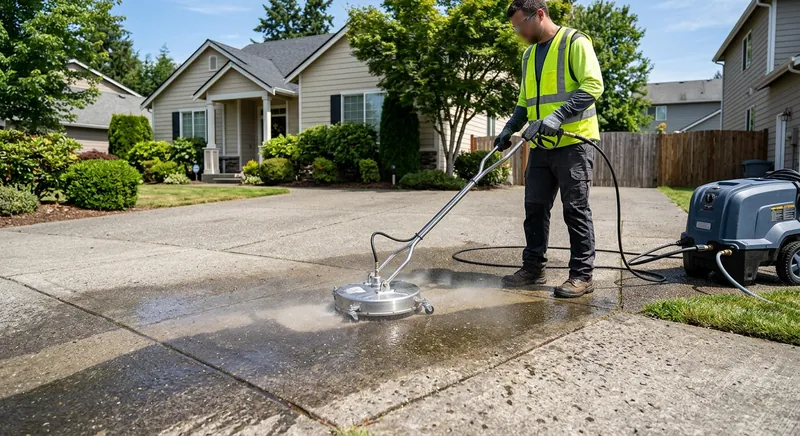
Lawn & Outdoor EquipmentBest Pressure Washer Surface Cleaners for Flat Surfaces
Compare 12" to 24" pressure washer surface cleaners for flat surfaces. Find the right diameter, PSI compatibility, and cleaning width for your driveway and patio.
 Tools & DIY Equipment
Best Wet/Dry Vacuums for Home and Garage
Compare 5-gallon to 12-gallon wet/dry vacuums by capacity, horsepower, and hose diameter. Find the right shop vacuum for liquid and dry cleanup.
Get Smarter About Your Home
Receive practical buying guides, product comparisons, maintenance tips and home project ideas from HomeGear Guide.
You can unsubscribe at any time.