What PSI Pressure Washer Do I Need?
Affiliate Disclosure: HomeGear Guide is reader-supported. When you buy through links on our site, we may earn an affiliate commission at no extra cost to you. We do not accept paid product placements or sponsor-biased reviews.
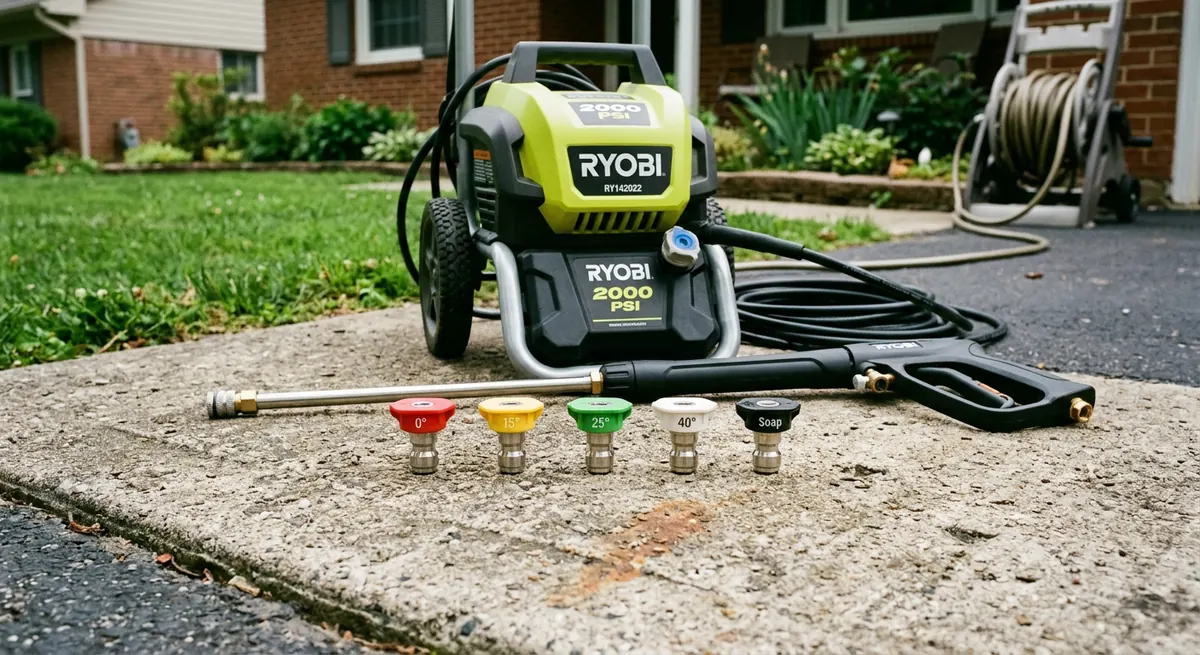
When it comes to pressure washing, more pressure is not always better. Using excessive PSI on the wrong surface can cause thousands of dollars in permanent, irreversible damage: stripping the clear coat off automotive paint, raising and gouging soft wood fibers on cedar decks, forcing water behind vinyl lap siding into wall insulation, or blasting away the fine 'cream layer' of fresh concrete. Sarah Mitchell provides an authoritative engineering guide detailing safe PSI thresholds, nozzle dispersion dynamics, and why water volume (GPM) matters more than pressure for fast cleaning.
Quick Answer
The safe PSI required depends strictly on surface material hardness: For vehicle washing, use 1,200 to 1,500 PSI paired with a wide 40° white nozzle held at least 15 inches away. For softwood decks (cedar, pressure-treated pine), stay strictly between 1,200 and 1,500 PSI with a 25° green nozzle to avoid splintering wood grain. For vinyl siding and composite decking, 1,500 to 2,000 PSI safely lifts algae without forcing water behind siding seams. For brick, stone, and pavers, 2,000 to 3,000 PSI removes deep moss. For unsealed concrete driveways, 2,800 to 3,500 PSI with a 15° yellow nozzle or rotary surface cleaner extracts ground-in oil. Never use a pressure washer on asphalt shingles.
Master Surface PSI & Nozzle Reference Matrix
Before turning on your pressure washer, consult this comprehensive reference matrix to select the safe working pressure, flow rate, and nozzle color for your specific exterior material:
Automotive & Vehicles: 1,200 – 1,500 PSI | 1.2 – 1.6 GPM | 40° White Nozzle | Minimum 15-inch standoff distance.
Softwood Decks & Fences (Cedar, Redwood, Pine): 1,200 – 1,500 PSI | 1.4 – 1.8 GPM | 25° Green or 40° White Nozzle | Minimum 12-inch standoff with the wood grain.
Hardwood Decks (Ipe, Teak) & Composite Decking: 1,500 – 1,800 PSI | 1.4 – 2.0 GPM | 25° Green Nozzle | Minimum 12-inch standoff.
Vinyl & Aluminum Lap Siding: 1,500 – 2,000 PSI | 1.5 – 2.2 GPM | 25° Green or 40° White Nozzle | Spray downward at an angle to avoid laps.
Stucco & Painted Exterior Trim: 1,200 – 1,500 PSI | 1.2 – 1.8 GPM | 40° White Nozzle | Hold at 18 inches; never dwell in one spot.
Brick, Masonry, and Concrete Pavers: 2,000 – 2,800 PSI | 2.0 – 2.5 GPM | 25° Green Nozzle | Avoid blasting crumbling historic mortar joints.
Unsealed Concrete Driveways & Sidewalks: 2,800 – 3,500 PSI | 2.3 – 3.0 GPM | 15° Yellow Nozzle or Rotary Turbo Nozzle | Safe on cured concrete > 1 year old.
Heavy Commercial Equipment & Paint Stripping: 3,500 – 4,000 PSI | 2.5 – 3.5 GPM | 0° Red or 15° Yellow Nozzle | Industrial paint and rust removal only.
Nozzle Degrees and Standoff Distance: The Physics of Water Velocity
The PSI rating listed on your pressure washer is measured at the pump outlet. The actual impact pressure that strikes the surface is governed entirely by the spray nozzle's fan angle and your standoff distance.
A 0° Red Nozzle concentrates 100% of the stream into a pinpoint stream. At 12 inches, this jet delivers enough hydraulic cutting force to bore holes in wood and blast mortar out of brickwork. By contrast, a 40° White Nozzle spreads the same volume across a wide fan, dispersing the kinetic energy safely over a broad area.
Furthermore, water velocity decreases exponentially with distance. Doubling your standoff distance from 6 inches to 12 inches reduces the impact force per square inch by roughly 75%. Always begin spraying with your wand held 2 feet away from the surface, stepping in smoothly until cleaning action begins.
Why GPM Matters More Than PSI for Deep Cleaning Speed
Contractors understand that GPM (Gallons per Minute) is the true metric of cleaning efficiency. PSI breaks the dirt loose; GPM flushes it away.
Consider this practical comparison: If you use an electric pressure washer producing 3,000 PSI at 1.1 GPM, you must sweep the wand back and forth repeatedly in narrow 2-inch paths. If you use a gas machine producing 2,800 PSI at 2.5 GPM, you can sweep in wide 8-inch paths at twice the walking speed.
Calculate your equipment's Cleaning Units (CU = PSI x GPM) using our Pressure Washer PSI Calculator to accurately estimate project completion times.
Irreversible Surface Damage Thresholds: Mistakes to Avoid
Be aware of these critical thresholds where high pressure causes irreversible property damage:
1. Wood Pulping & Furring (>1,500 PSI): Softwood cellular structure collapses under high pressure, tearing wood fibers into a fuzzy, pulpy texture that requires extensive belt-sanding to repair.
2. Concrete Cream Layer Etching (>3,500 PSI): The smooth top layer of concrete (the 'cream') can be permanently eroded by intense pressure, exposing rough gravel aggregate underneath that traps future dirt.
3. Asphalt Shingle Granule Loss (ANY PSI): NEVER use a pressure washer on asphalt roof shingles. The high-velocity stream blasts off protective mineral granules, immediately voiding manufacturer warranties and cutting roof lifespan by 50%. Clean roofs using chemical soft-wash methods only.
4. Forcing Water Behind Siding: Always spray vinyl and aluminum lap siding downward. Spraying upward drives high-pressure water under lap joints, soaking interior fiberglass batt insulation and causing hidden wall mold.
Pressure Washer PSI Calculator & Surface Rating Tool
Determine the safe PSI, GPM, and nozzle tip color for your specific exterior surface without causing wood gouging or concrete etching.
Safety & Compliance Notice
High pressure wands can propel small rocks and debris at high velocity. Always wear ANSI-certified wrap-around safety goggles. Never attempt to adjust or change quick-connect spray tips while the spray trigger is locked or pressurized.
Frequently Asked Questions
Yes, but ONLY if you step back at least 24 to 30 inches and use the wide 40° white nozzle. Alternatively, install an adjustable pressure regulator or dial down the throttle on gas machines to achieve a safe 1,200 to 1,500 PSI.
Final Verdict
For general around-the-house cleaning (cars, siding, decks), 1,500 to 2,000 PSI is the sweet spot that provides thorough cleaning without surface damage. For concrete driveways, sidewalks, and masonry restoration, 2,800 to 3,400 PSI is required to extract embedded algae and tire marks. Always verify nozzle tip angle and test on an inconspicuous corner before spraying main areas.
Sarah Mitchell
Home Improvement Editor
Sarah writes about home improvement products, tools, and materials for HomeGear Guide. Her work focuses on comparing product features, use cases, and practical buying considerations for homeowners.
Related Articles & Buying Guides
 Tools & DIY Equipment
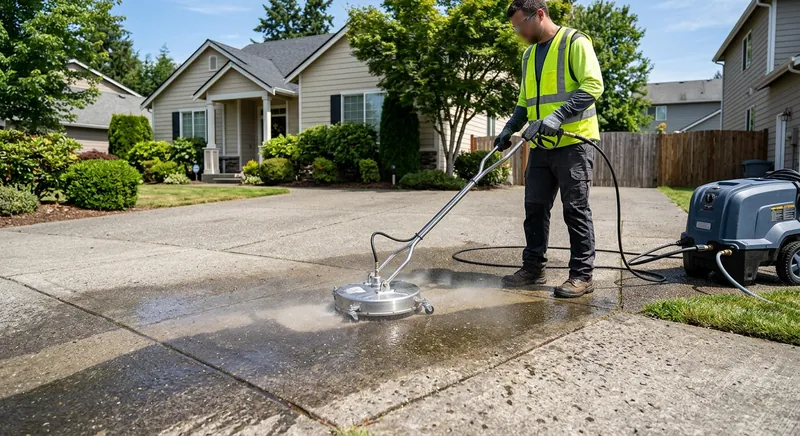
Best Pressure Washers for Home Cleaning
Compare electric and gas pressure washers by PSI, flow rate, cleaning units, and pump types to find the right tool for cars, siding, decks, and concrete.
 Tools & DIY Equipment
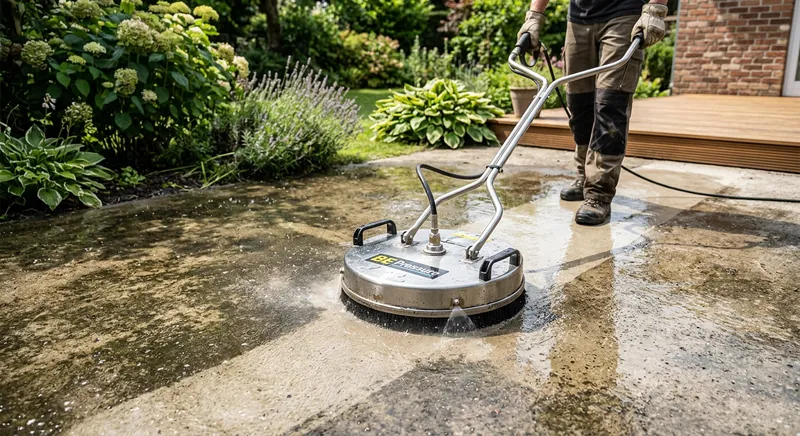
How to Pressure Wash a Concrete Driveway Without Damaging It
Pressure washing a concrete driveway requires the right PSI, nozzle, and technique. Learn how to clean effectively without etching or damaging the surface.
Lawn & Outdoor EquipmentBest Pressure Washer Surface Cleaners for Flat Surfaces
Compare 12" to 24" pressure washer surface cleaners for flat surfaces. Find the right diameter, PSI compatibility, and cleaning width for your driveway and patio.
 Tools & DIY Equipment
Best Wet/Dry Vacuums for Home and Garage
Compare 5-gallon to 12-gallon wet/dry vacuums by capacity, horsepower, and hose diameter. Find the right shop vacuum for liquid and dry cleanup.
 Tools & DIY Equipment
Ladder Safety for Homeowners: Choosing and Using the Right Ladder
Ladder falls are a leading cause of home injury. Learn how to choose the right ladder, set it up safely, work safely at height, and avoid the most common mistakes.
Get Smarter About Your Home
Receive practical buying guides, product comparisons, maintenance tips and home project ideas from HomeGear Guide.
You can unsubscribe at any time.