Ladder Safety for Homeowners: Choosing and Using the Right Ladder
Affiliate Disclosure: HomeGear Guide is reader-supported. When you buy through links on our site, we may earn an affiliate commission at no extra cost to you. We do not accept paid product placements or sponsor-biased reviews.
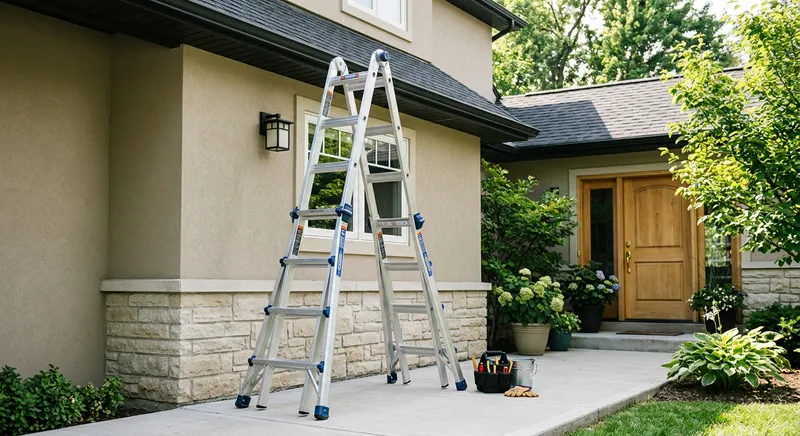
Ladder falls are one of the most common causes of serious home injury, and the vast majority of these accidents are preventable. According to the Consumer Product Safety Commission, emergency rooms treat more than 500,000 ladder-related injuries each year in the United States. Most of these injuries result from using the wrong ladder for the task, setting the ladder up incorrectly, or overreaching while on the ladder. Based on our research into ladder safety standards from the American Ladder Institute and CPSC guidance, safe ladder use comes down to four decisions: choosing the right ladder for the job, setting it up correctly, working safely while on it, and avoiding the common mistakes that cause falls.
Quick Answer
For safe ladder use at home, choose a ladder that is the right height and duty rating for your task, set it up on level ground at the correct angle (75 degrees for extension ladders, or a 4:1 ratio of height to base distance), maintain three points of contact while climbing, and never overreach. For indoor tasks near electrical sources, use a fiberglass ladder — it is non-conductive. For outdoor tasks requiring high reach, use an extension ladder sized to your working height plus 3 to 4 feet. Always inspect a ladder before use for cracks, loose rungs, or damaged feet. Never stand on the top rung or top cap of a stepladder, and never use an aluminum ladder near electrical wiring or power lines.
Choosing the Right Ladder for the Task
The first step in ladder safety is selecting a ladder that is appropriate for the height, weight, and environment of your task. Ladder height determines your working reach. For a stepladder, your maximum standing height is typically 2 feet below the ladder height, and your reach extends about 4 feet above that. A 6-foot stepladder provides a standing height of about 4 feet and a reach of about 10 feet — sufficient for standard 8-foot ceilings. For an extension ladder, the usable height is roughly 3 feet less than the extended length due to overlap and setup angle. A 24-foot extension ladder provides about 21 feet of usable reach, suitable for a single-story home.
Duty rating specifies the maximum weight the ladder supports, including the person plus tools and materials. Type II (225 lbs) is for light household use, Type I (250 lbs) is for general-purpose use, and Type IA (300 lbs) is for heavy-duty use. For safety margin, choose a ladder rated at least one level above your body weight plus tools. A 200-pound person carrying 30 pounds of tools should use at least a Type I (250 lbs) ladder, and a Type IA (300 lbs) is safer.
Material matters for safety. Aluminum ladders are lightweight and affordable but conduct electricity — never use them near electrical wiring, panels, or power lines. Fiberglass ladders are non-conductive and are the correct choice for any work near electrical sources, including changing light fixtures and working near service drops. Steel ladders are durable and heavy, typically used in industrial settings. For most homeowners, a fiberglass stepladder is the safest all-around choice because it eliminates the electrical risk entirely.
Setting Up a Ladder Safely
For a stepladder, open the ladder fully and ensure the spreader bars are locked. Place the ladder on level, firm ground — never on a soft surface, a drop cloth, or an elevated platform. If the ground is uneven, do not prop the ladder on blocks or boards. Instead, reposition to a level surface or use a ladder leveler accessory designed for the purpose. Never set a stepladder on a table, counter, or other elevated surface to gain height.
For an extension ladder, the correct setup angle is approximately 75 degrees, which translates to a 4:1 ratio — for every 4 feet of ladder height from the ground to the support point, the base should be 1 foot away from the wall. Setting the base too close makes the ladder top-heavy and prone to tipping backward. Setting it too far makes the ladder prone to sliding out at the base. Use the stand-off or stabilizer attachment when working on gutters to prevent damage and improve stability.
Inspect every ladder before use. Check for cracks in the rails or rungs, loose or missing fasteners, damaged or worn feet, and bent or dented components. A damaged ladder should be removed from service immediately — do not attempt to repair structural damage. Clean mud, grease, or oil from the rungs and feet before climbing. Ensure the area around the base is clear of tools, cords, and debris that could cause a tripping hazard.
Working Safely on a Ladder
Maintain three points of contact at all times while climbing and descending — either two hands and one foot, or two feet and one hand. This means carrying tools in a tool belt or hoisting them with a rope, not in your hands while climbing. Face the ladder while climbing and descending — never climb or descend facing away from the ladder.
Never overreach. Keep your body centered between the side rails of the ladder. If you need to reach something that requires leaning more than a few inches beyond the rail, climb down and reposition the ladder. Overreaching shifts your center of gravity outside the ladder base and is one of the most common causes of falls. A good rule: if your belt buckle is outside the side rail, you are overreaching.
Never stand on the top rung or top cap of a stepladder — these are not designed to support a person and the lack of handhold makes a fall nearly certain. On an extension ladder, do not stand above the third rung from the top. For any ladder, do not exceed the duty rating. If you need to carry heavy items up a ladder, consider a rope and pulley system or a second person to hand items up while you maintain three points of contact.
Common Ladder Safety Mistakes to Avoid
Using an aluminum ladder near electrical wiring is one of the most dangerous mistakes a homeowner can make. Aluminum is an excellent conductor, and contact with a live wire can cause fatal electrocution. Always use a fiberglass ladder for any work near electrical sources, including changing light fixtures, working near breaker panels, and outdoor work near overhead service lines.
Setting an extension ladder at the wrong angle is another common error. Too steep and the ladder can tip backward. Too shallow and the base can slide out. Use the 4:1 ratio and the rail-touch method: stand with your toes against the base of the ladder and extend your arms straight out. If your fingertips just touch the rung at shoulder height, the angle is correct.
Placing a ladder on uneven or unstable ground is a frequent cause of falls. Never use bricks, boards, or blocks to level a ladder. If the ground is uneven, move to a level spot or use a ladder leveler. Setting a stepladder on an elevated surface like a table or scaffold to gain extra height is extremely dangerous and should never be done.
Finally, working alone on a ladder without anyone nearby is risky. If you fall, no one will know. Whenever possible, have someone hold the ladder base or at least be aware that you are working at height. If you must work alone, keep your phone within reach and let someone know you are using a ladder.
Safety & Compliance Notice
Ladder falls are a leading cause of home injury. Always inspect a ladder before use, set it on stable level ground, maintain three points of contact while climbing, and never stand on the top rung or top cap. Never use an aluminum ladder near electrical wiring or power lines.
Frequently Asked Questions
An extension ladder should be set at approximately 75 degrees, which is a 4:1 ratio — for every 4 feet of ladder height from the ground to the support point, the base should be 1 foot away from the wall. Use the rail-touch method: stand with your toes against the ladder base and extend your arms straight out. If your fingertips just touch the rung at shoulder height, the angle is correct.
Final Verdict
Ladder safety comes down to choosing the right ladder, setting it up correctly, and working within its limits. Select a ladder with the appropriate height and duty rating for your task, and use fiberglass whenever working near electrical sources. Set extension ladders at a 4:1 angle ratio and stepladders on level ground with spreader bars locked. Maintain three points of contact while climbing, never overreach beyond the side rails, and never stand on the top rung or top cap. Inspect every ladder before use, and never use a damaged ladder. Most ladder accidents are preventable — the right ladder, set up correctly, used within its limits, eliminates the vast majority of fall risks.
Sarah Mitchell
Home Improvement Editor
Sarah writes about home improvement products, tools, and materials for HomeGear Guide. Her work focuses on comparing product features, use cases, and practical buying considerations for homeowners.
Related Articles & Buying Guides
Tools & DIY EquipmentBest Ladders for Home Projects and Maintenance
Compare step, extension, and multi-position ladders by height, weight rating, and material. Find the right ladder for safe home maintenance and projects.
 Tools & DIY Equipment
Best Tool Sets for Homeowners
Compare 100-piece to 200-piece home tool sets and power tool combo kits. Learn what essentials to look for and which sets offer the best value for homeowners.
 Tools & DIY Equipment
Best Cordless Drills for Home Projects
Compare 12V and 20V cordless drills with brushless and brushed motors. Find the right balance of power, weight, and battery platform for your home projects.
 Tools & DIY Equipment
Best Pressure Washers for Home Cleaning
Compare electric and gas pressure washers by PSI, flow rate, cleaning units, and pump types to find the right tool for cars, siding, decks, and concrete.
Get Smarter About Your Home
Receive practical buying guides, product comparisons, maintenance tips and home project ideas from HomeGear Guide.
You can unsubscribe at any time.