Best Adjustable Beds for Seniors: Comfort, Positioning, and Accessibility
Affiliate Disclosure: HomeGear Guide is reader-supported. When you buy through links on our site, we may earn an affiliate commission at no extra cost to you. We do not accept paid product placements or sponsor-biased reviews.
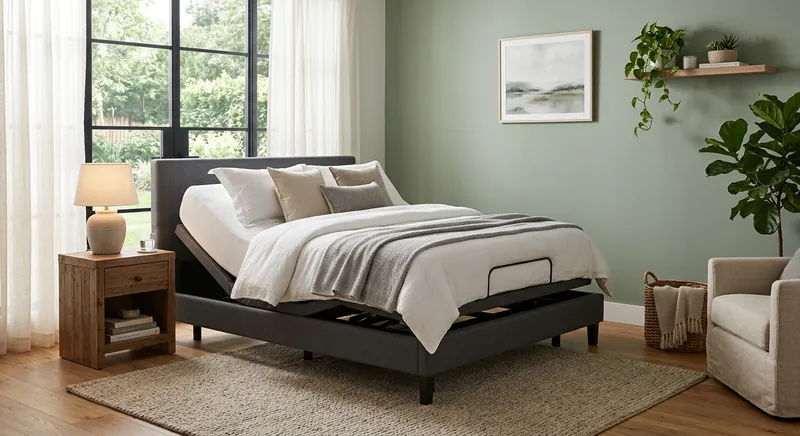
An adjustable bed lets a senior raise their head, raise their legs, or both — at the touch of a remote. That capability is more than a luxury for older adults. Elevating the head can help with acid reflux, snoring, and breathing. Elevating the legs can help with circulation, swelling, and back pain. And the ability to adjust position without stacking pillows or struggling to sit up in bed can make a real difference in daily comfort and independence. But adjustable beds vary in how they articulate, what preset positions they offer, whether they include massage, how they handle nightstand access (the wall-hugger feature), how much weight they support, and what mattresses they work with. Matching the bed to the senior's needs, the room, and the mattress is what makes the purchase worthwhile.
Quick Answer
For most seniors, a split-king adjustable bed base with independent head and foot articulation, a 3-position wireless remote, wall-hugger technology, and a 700 to 850 pound total weight capacity is the best choice because split-king bases allow each side of the bed to adjust independently for couples with different needs, wall-hugger technology keeps the nightstand within reach as the head raises, and the weight capacity ensures long-term durability. A split-king requires two Twin XL mattresses, which is the standard for adjustable beds. The main trade-off is functionality versus cost, as a basic head-and-foot adjustable base costs 500 to 1,200 dollars for a Queen, while full-featured models with presets, massage, under-bed lighting, and anti-snore positions cost 1,500 to 3,500 dollars. Zero-gravity preset positioning that elevates both head and legs simultaneously is the most beneficial feature for circulation and back pain. Head-only articulation beds are the budget option at 300 to 600 dollars. Ensure mattress compatibility, as memory foam and latex work best while innerspring mattresses are generally not compatible.
Top Picks at a Glance
Split-King Adjustable Bed
Queen Adjustable Bed with Massage
Adjustable Bed with Preset Positions
Budget Adjustable Bed Frame
Product Comparison
| Product | Best For | Size | Articulation | Remote | Price Range | Details |
|---|---|---|---|---|---|---|
Split-King Adjustable Bed Best Overall | Couples who want independent positioning on each side | Split King (two twin-XL bases) | Head and foot (independent per side) | Dual wireless remotes | $1,200–$3,000 | View Review ↓ |
Queen Adjustable Bed with Massage Best for Comfort | Single users or couples who want comfort and massage features | Queen (60 x 80 inches) | Head and foot (together) | Wireless with massage controls | $600–$1,800 | View Review ↓ |
Adjustable Bed with Preset Positions Best for Convenience | One-touch positioning for common needs | Queen or King | Head and foot with presets | Wireless with preset buttons | $700–$2,000 | View Review ↓ |
Budget Adjustable Bed Frame Best Value | Basic head and foot adjustment at the lowest cost | Twin XL, Queen, or King | Head and foot (basic) | Wireless (basic controls) | $300–$700 | View Review ↓ |
Split-King Adjustable Bed
Best Overall- Best For:
- Couples who want independent positioning on each side
- Size:
- Split King (two twin-XL bases)
- Articulation:
- Head and foot (independent per side)
- Remote:
- Dual wireless remotes
- Price Range:
- $1,200–$3,000
Queen Adjustable Bed with Massage
Best for Comfort- Best For:
- Single users or couples who want comfort and massage features
- Size:
- Queen (60 x 80 inches)
- Articulation:
- Head and foot (together)
- Remote:
- Wireless with massage controls
- Price Range:
- $600–$1,800
Adjustable Bed with Preset Positions
Best for Convenience- Best For:
- One-touch positioning for common needs
- Size:
- Queen or King
- Articulation:
- Head and foot with presets
- Remote:
- Wireless with preset buttons
- Price Range:
- $700–$2,000
Budget Adjustable Bed Frame
Best Value- Best For:
- Basic head and foot adjustment at the lowest cost
- Size:
- Twin XL, Queen, or King
- Articulation:
- Head and foot (basic)
- Remote:
- Wireless (basic controls)
- Price Range:
- $300–$700
Detailed Product Reviews & Specifications
Split-King Adjustable Bed
A split-king adjustable bed consists of two twin-XL adjustable bases placed side by side under a single king mattress (or two twin-XL mattresses). Each side articulates independently, so one partner can raise their head while the other stays flat. The most flexible option for couples with different positioning needs.
Pros
- •Each side adjusts independently for different positioning needs
- •Accommodates couples where one needs the head raised and the other does not
- •Often includes dual massage with independent control
- •Works with two twin-XL mattresses or a split-king mattress
Cons
- •Highest cost among adjustable bed options
- •Requires two twin-XL mattresses or a specialized split-king mattress
- •Two bases side by side can create a gap in the middle
Key Specifications
Queen Adjustable Bed with Massage
A queen-size adjustable bed with head and foot articulation and a built-in massage function. The massage typically offers multiple modes (head, foot, full-body) and intensity levels. Provides the comfort and therapeutic features many seniors want in a single, standard-size bed.
Pros
- •Built-in massage for head, foot, or full-body
- •Queen size fits standard bedrooms and bedding
- •Head and foot articulation for comfortable positioning
- •Massage can help with circulation and muscle relaxation
Cons
- •Both sides move together — no independent positioning
- •Massage is vibration-based, not mechanical kneading
- •Massage motors add to the cost and complexity
Key Specifications
Adjustable Bed with Preset Positions
An adjustable bed with programmable preset positions — typically zero-gravity, anti-snore (head raised), TV watching (slight head and knee elevation), and flat. Presets let the user reach a comfortable position with a single button press rather than adjusting the head and foot separately each time.
Pros
- •One-button presets for common positions like zero-gravity and anti-snore
- •Eliminates the need to manually fine-tune the head and foot
- •Anti-snore preset can help with sleep apnea and breathing
- •Often includes programmable memory positions
Cons
- •More expensive than basic adjustable frames
- •Presets may not suit every user's preferred angles
- •Additional electronics add complexity
Key Specifications
Budget Adjustable Bed Frame
An entry-level adjustable bed frame that provides the core benefit — head and foot articulation at the touch of a remote — without premium features like massage or programmable presets. The most affordable way to get an adjustable bed.
Pros
- •Lowest cost for adjustable bed functionality
- •Provides head and foot articulation for positioning
- •Simple remote with basic up and down controls
- •Works with compatible mattresses in standard sizes
Cons
- •No massage or preset position features
- •Fewer features and lower weight capacity than premium models
- •Motor may be noisier than higher-end models
Key Specifications
Head and Foot Articulation
The core function of an adjustable bed is articulation — the ability to raise the head section, the foot section, or both. Head articulation helps with sitting up in bed (for reading, watching TV, or eating), and it can help with acid reflux, snoring, and breathing by keeping the upper body elevated. Foot articulation raises the legs, which can help with circulation, reduce leg swelling, and relieve lower back pressure.
Most adjustable beds articulate the head and foot sections independently, so the user can raise the head without raising the feet, or vice versa. The range of motion varies — some beds can raise the head nearly vertical, while others have a more limited range. For seniors who need to sleep with the head elevated for medical reasons, check the maximum head elevation angle before purchasing.
Zero-Gravity and Preset Positions
Many adjustable beds include preset positions. Zero-gravity elevates the head and legs to a position that simulates weightlessness, which can relieve back pressure and improve circulation. Anti-snore raises the head to open the airway. TV position raises the head slightly and bends the knees for comfortable watching. Presets are convenient but not essential — a basic bed can reach the same positions with manual adjustment.
Wall-Hugger Design and Nightstand Access
A wall-hugger adjustable bed is engineered to keep the user near the wall and near their nightstand as the head of the bed rises. On a non-wall-hugger bed, raising the head section slides the user away from the wall and away from the nightstand, which means the remote, lamp, water glass, or phone on the nightstand become out of reach.
For seniors, wall-hugger design is particularly valuable because reaching for items on the nightstand is a common need — medication, water, the remote, a phone. A wall-hugger bed keeps those items within reach even when the head is elevated. Most mid-range and premium adjustable beds include this feature, but it is worth confirming before purchasing, especially on budget models.
Weight Capacity and Mattress Compatibility
Weight capacity matters for both safety and motor longevity. Adjustable beds are rated for the combined weight of the mattress and the sleeper(s). A queen bed rated for 500 lbs needs to support a 100 lb mattress plus a 400 lb sleeper, or two 200 lb sleepers. Choose a bed rated comfortably above the expected load — operating near the limit strains the motors and shortens the bed's life.
Mattress compatibility is critical. Adjustable beds require flexible mattresses that can bend with the articulation. Memory foam, latex, and hybrid mattresses without rigid border wires are compatible. Traditional innerspring mattresses with a rigid border wire around the edge are NOT compatible — they will not bend and can be damaged. Some mattress manufacturers sell adjustable-bed-compatible versions of their mattresses. Always confirm the mattress is rated for adjustable base use before pairing them.
Massage, Remote Control, and Additional Features
Massage is a common feature on mid-range and premium adjustable beds. The massage is typically vibration-based, built into the head and foot sections, with multiple modes and intensity levels. It is gentle and relaxing rather than deep-tissue — think of it as a soothing vibration, not a professional massage. For circulation and relaxation, many users find it pleasant, but it should not be expected to replace therapeutic massage.
The remote control is the user's interface with the bed. Wireless remotes are standard, and some models include backlit buttons for nighttime use. Split-king models include two remotes for independent control. Additional features to consider include under-bed lighting for nighttime navigation, USB charging ports on the base, and battery backup so the bed can be lowered to flat during a power outage. For seniors, under-bed lighting and battery backup are particularly useful.
Safety & Compliance Notice
Consult a healthcare provider about whether an adjustable bed is appropriate for specific conditions such as acid reflux, circulation issues, or sleep apnea. An adjustable bed is not a substitute for prescribed medical treatment.
Frequently Asked Questions
Only if the mattress is flexible enough to bend with the bed's articulation. Memory foam, latex, and hybrid mattresses without a rigid border wire are typically compatible. Traditional innerspring mattresses with a border wire are NOT compatible — they will not bend and can be damaged. Always check the mattress manufacturer's compatibility with adjustable bases before pairing them.
Final Verdict
A split-king adjustable bed is the best overall choice for couples because each side articulates independently, letting each person position their half of the bed without affecting the other — though it requires two twin-XL mattresses. For single users or couples who do not need independent positioning, a queen adjustable bed with massage delivers comfort and therapeutic features in a standard size. An adjustable bed with preset positions offers the convenience of one-touch positioning for common needs like reducing snoring and elevating legs. A budget adjustable bed frame provides the core head and foot articulation at the lowest cost, without premium features. Whatever you choose, confirm the mattress is compatible with adjustable bases, check the weight capacity covers the mattress plus the sleeper(s), and look for a wall-hugger design that keeps the nightstand within reach. Consult a healthcare provider about whether an adjustable bed can help with specific conditions like reflux, circulation, or sleep apnea.
Lisa Park
Kitchen & Bathroom Editor
Lisa covers kitchen and bathroom fixtures, water filtration, and accessibility products for HomeGear Guide. Her work focuses on the details that make daily-use spaces more functional and safer for all members of the household.
Related Articles & Buying Guides
 Accessibility & Senior Home Products
Best Lift Chair Recliners for Standing and Reclining with Ease
Infinite-position, 3-position, heavy-duty, and compact lift chairs each suit different users and rooms. Compare weight capacity, recline positions, power mechanism, and upholstery before you buy.
 Accessibility & Senior Home Products
Best Stair Lifts for Safe Navigation of Home Stairs
Straight rail, curved rail, heavy-duty, and compact stair lifts each suit different staircases and users. Compare track type, weight capacity, battery backup, and installation needs.
 Accessibility & Senior Home Products
Best Mobility Scooters for Independence and Everyday Use
Travel, mid-size, heavy-duty, and foldable mobility scooters each suit different lifestyles. Compare weight capacity, battery range, turning radius, and disassembly before you buy.
 Accessibility & Senior Home Products
Best Shower Chairs for Safe and Comfortable Bathing
Adjustable, folding, bariatric, and wall-mounted shower chairs each solve a different bathing safety need. Compare weight capacity, height adjustment, backrest, and drainage before you buy.
Get Smarter About Your Home
Receive practical buying guides, product comparisons, maintenance tips and home project ideas from HomeGear Guide.
You can unsubscribe at any time.