Best Stair Lifts for Safe Navigation of Home Stairs
Affiliate Disclosure: HomeGear Guide is reader-supported. When you buy through links on our site, we may earn an affiliate commission at no extra cost to you. We do not accept paid product placements or sponsor-biased reviews.
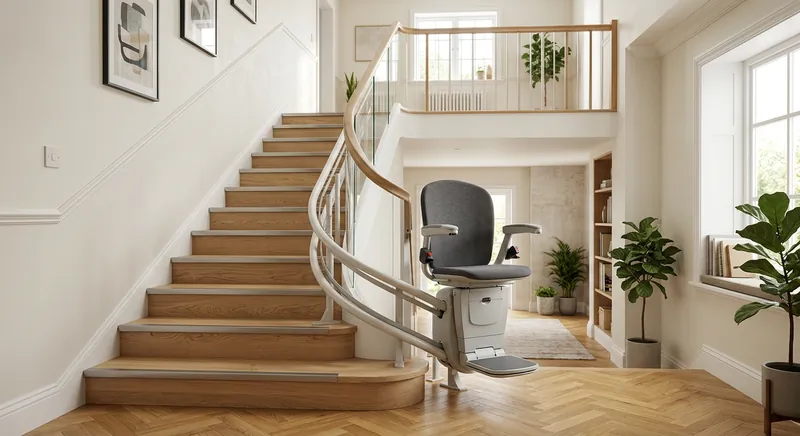
A stair lift can keep someone safely in the home they love when stairs become a barrier. By carrying a seated user up and down the staircase at a gentle, controlled speed, a stair lift removes the strain and fall risk that come with climbing steps — especially for anyone dealing with arthritis, limited mobility, or recovery from surgery. But a stair lift is not a one-size-fits-all purchase. The shape of your staircase is the single biggest factor: a straight run calls for a completely different track than a staircase with a landing, a curve, or multiple flights. Beyond that, weight capacity, battery backup, seat design, and the installation process all determine whether a particular lift will work for the person using it and the home it lives in. This guide breaks down the options so you can make an informed decision.
Quick Answer
For most homeowners, a straight-rail stair lift with a 300-pound weight capacity, battery backup, foldable seat, and joystick or toggle control is the best choice because straight-rail lifts cost 50 to 60 percent less than curved-rail custom tracks, install in 2 to 4 hours, and handle the most common staircase configuration found in homes. A 300-pound capacity covers 90 percent of users, while 350 to 400-pound capacity models are available for larger individuals at a 500 to 1,000 dollar premium. Battery backup is essential because it ensures the lift continues operating during a power outage, typically for 10 to 15 trips. The main trade-off is staircase shape versus cost, as curved or multi-flight staircases require custom tracks costing 8,000 to 15,000 dollars versus 2,500 to 5,000 for straight rails. Swivel seats that rotate at the top landing are a critical safety feature for safe exit. Professional installation is recommended.
Top Picks at a Glance
Straight Rail Stair Lift
Curved Rail Stair Lift
Heavy-Duty Stair Lift
Compact Stair Lift
Product Comparison
| Product | Best For | Track Type | Weight Capacity | Seat | Price Range | Details |
|---|---|---|---|---|---|---|
Straight Rail Stair Lift Best for Straight Stairs | Straight staircases with no turns or intermediate landings | Straight rail (cut to length) | 275–350 lbs (model-dependent) | Powered swivel, folding armrests | $2,000–$5,000 | View Review ↓ |
Curved Rail Stair Lift Best for Curved Stairs | Staircases with curves, corners, landings, or spiral sections | Custom curved rail | 275–350 lbs (model-dependent) | Powered swivel, folding armrests | $5,000–$12,000 | View Review ↓ |
Heavy-Duty Stair Lift Best for Higher Weight | Users who need a higher weight capacity and a wider seat | Straight or curved (heavy-duty rail) | 400–600 lbs (model-dependent) | Wider powered swivel, reinforced frame | $4,000–$15,000 | View Review ↓ |
Compact Stair Lift Best for Narrow Stairs | Narrow staircases where space is limited | Slim straight or curved rail | 250–300 lbs (model-dependent) | Folding, slim profile | $2,500–$8,000 | View Review ↓ |
Straight Rail Stair Lift
Best for Straight Stairs- Best For:
- Straight staircases with no turns or intermediate landings
- Track Type:
- Straight rail (cut to length)
- Weight Capacity:
- 275–350 lbs (model-dependent)
- Seat:
- Powered swivel, folding armrests
- Price Range:
- $2,000–$5,000
Curved Rail Stair Lift
Best for Curved Stairs- Best For:
- Staircases with curves, corners, landings, or spiral sections
- Track Type:
- Custom curved rail
- Weight Capacity:
- 275–350 lbs (model-dependent)
- Seat:
- Powered swivel, folding armrests
- Price Range:
- $5,000–$12,000
Heavy-Duty Stair Lift
Best for Higher Weight- Best For:
- Users who need a higher weight capacity and a wider seat
- Track Type:
- Straight or curved (heavy-duty rail)
- Weight Capacity:
- 400–600 lbs (model-dependent)
- Seat:
- Wider powered swivel, reinforced frame
- Price Range:
- $4,000–$15,000
Compact Stair Lift
Best for Narrow Stairs- Best For:
- Narrow staircases where space is limited
- Track Type:
- Slim straight or curved rail
- Weight Capacity:
- 250–300 lbs (model-dependent)
- Seat:
- Folding, slim profile
- Price Range:
- $2,500–$8,000
Detailed Product Reviews & Specifications
Straight Rail Stair Lift
A stair lift designed for a straight, uninterrupted staircase. The rail is a single straight track cut to the exact length of your stairs, which keeps cost down and installation relatively simple compared to a curved system. Includes a powered swivel seat and safety sensors.
Pros
- •Most affordable track option because the rail is a single straight piece
- •Faster installation than curved systems
- •Widely available from multiple manufacturers
- •Reliable mechanical design with fewer custom parts
Cons
- •Only works on staircases with no curves, corners, or intermediate landings
- •Rail is cut to length and cannot be repositioned to a different staircase
- •Requires professional measurement and installation
Key Specifications
Curved Rail Stair Lift
A stair lift with a custom-fabricated curved rail built to match the exact shape of your staircase, including turns, intermediate landings, and spiral sections. Because each rail is made to order from a template of your stairs, it can navigate virtually any staircase geometry.
Pros
- •Fits staircases with curves, corners, and multiple landings
- •Custom-built to the exact geometry of your stairs
- •Can wrap over the top step to park clear of the staircase
- •Available with powered swivel seat and multiple safety sensors
Cons
- •Significantly more expensive than straight rail lifts
- •Longer lead time because the rail is custom fabricated
- •Installation is more complex and takes longer
Key Specifications
Heavy-Duty Stair Lift
A reinforced stair lift built to carry a higher weight capacity than standard models, with a wider seat, heavier-duty rail, and a more powerful motor. Available in both straight and curved rail configurations to match the staircase.
Pros
- •Higher weight capacity for larger users
- •Wider, more supportive seat for comfort
- •Reinforced rail and motor for durability
- •Available in straight or curved rail versions
Cons
- •Higher cost than standard-capacity lifts
- •Wider seat may not fit on very narrow staircases
- •Heavier rail requires secure mounting into stair structure
Key Specifications
Compact Stair Lift
A space-saving stair lift with a slim profile rail and a seat that folds up close to the rail when not in use, leaving the staircase largely clear for walking. Designed for narrower staircases where a standard lift would block too much of the step.
Pros
- •Folds compactly to leave stairs clear when not in use
- •Slim rail works on narrower staircases
- •Footrest and armrests fold up to minimize obstruction
- •Available in straight and some curved configurations
Cons
- •Lower weight capacity than standard or heavy-duty models
- •Smaller seat may be less comfortable for larger users
- •Folding mechanism adds moving parts that need occasional checks
Key Specifications
Straight vs. Curved Track
The shape of your staircase determines which type of stair lift you need, and it is the single biggest factor in both cost and lead time. A straight stair lift uses a single piece of rail cut to the exact length of your staircase. Because the rail is a standard extrusion cut to size, it is relatively affordable and can often be installed quickly once it arrives.
A curved stair lift uses a custom-fabricated rail built to match the exact geometry of your staircase — every turn, corner, landing, and spiral section. A technician takes precise measurements of your stairs, and the rail is manufactured to those specifications. This custom work is why curved lifts cost significantly more and take longer to deliver. There is no way around it: if your staircase has a curve, a straight lift will not work.
What Counts as a Straight Staircase?
A staircase with a single straight run from bottom to top, with no turns, corners, or intermediate landings, takes a straight rail. A staircase that turns 90 or 180 degrees, has a landing partway up, or includes a spiral section requires a curved rail. Even a short landing at the top or bottom can mean a curved rail is necessary if the lift needs to travel across it. An in-home assessment will confirm which type your staircase requires.
Weight Capacity and Seat Design
Weight capacity is a safety-critical specification. Standard stair lifts are typically rated for 275–350 lbs, while heavy-duty models support 400–600 lbs. Choose a lift rated comfortably above the user's weight — operating near the limit strains the motor and rail and shortens the life of the equipment. When in doubt, choose the next capacity tier up.
The seat matters as much as the capacity. A powered swivel seat rotates at the top of the stairs so the user can stand up facing away from the staircase, which is much safer than stepping off sideways. Look for a seat with adjustable height, padded upholstery, and folding armrests and footrest. For larger users, a wider seat provides better support and comfort. For narrow staircases, a seat that folds close to the rail keeps the walking path clear when the lift is parked.
Battery Backup and Power
Most modern stair lifts run on AC power from a standard household outlet but include a battery backup that continues to operate the lift during a power outage. The battery charges continuously while the lift is parked, so it is ready when needed. This is an essential feature — being stranded on the stairs during an outage is a real safety concern.
When comparing models, ask how many trips the battery backup can typically handle on a full charge and how long the battery holds its charge. Some models charge along the entire rail, while others charge only at the top or bottom parking position, which affects where the lift needs to be parked to stay charged. Battery backups degrade over years of use and will eventually need replacement.
Installation and In-Home Assessment
A stair lift is not a product you buy off the shelf and install yourself. Every installation begins with an in-home assessment: a technician measures the staircase, evaluates the wall and stair structure, confirms the user's needs and weight, and recommends the right model and rail configuration. For curved rails, these measurements are used to fabricate the custom track.
Installation involves mounting the rail to the stairs or wall, running power to the charging station, and securing the lift carriage and seat. The rail must be anchored into solid structure — stair stringers or wall studs — to support the load safely. Professional installation is required by virtually every manufacturer, and it is typically a condition of the warranty. Plan for the full installed cost, not just the list price of the lift.
Safety & Compliance Notice
Stair lifts require a professional in-home assessment and installation. The rail must be anchored into solid stair or wall structure to support the user safely. Consult a healthcare provider about whether a stair lift is appropriate for the user's needs.
Frequently Asked Questions
A straight rail stair lift typically costs $2,000–$5,000 installed, depending on the length of the staircase and the features included. A curved rail stair lift costs $5,000–$12,000 or more installed, because the rail is custom-fabricated to your staircase. Heavy-duty and compact models can add to the cost. Always get the installed price, not just the equipment price.
Final Verdict
For a straight staircase, a straight rail stair lift is the most cost-effective choice and can be installed relatively quickly once measured. If your staircase has any curve, corner, or landing, a curved rail lift is required, and the custom fabrication is what drives the higher cost. For users who need a higher weight capacity or a wider, more supportive seat, a heavy-duty model provides the reinforcement and comfort needed for safe daily use. On a narrow staircase, a compact lift with a folding seat keeps the walking path clear for others. Whatever you choose, the in-home assessment and professional installation are not optional — the rail must be securely anchored and the lift properly fitted to the user and the stairs. Get the full installed price from more than one provider before deciding.
Lisa Park
Kitchen & Bathroom Editor
Lisa covers kitchen and bathroom fixtures, water filtration, and accessibility products for HomeGear Guide. Her work focuses on the details that make daily-use spaces more functional and safer for all members of the household.
Related Articles & Buying Guides
 Accessibility & Senior Home Products
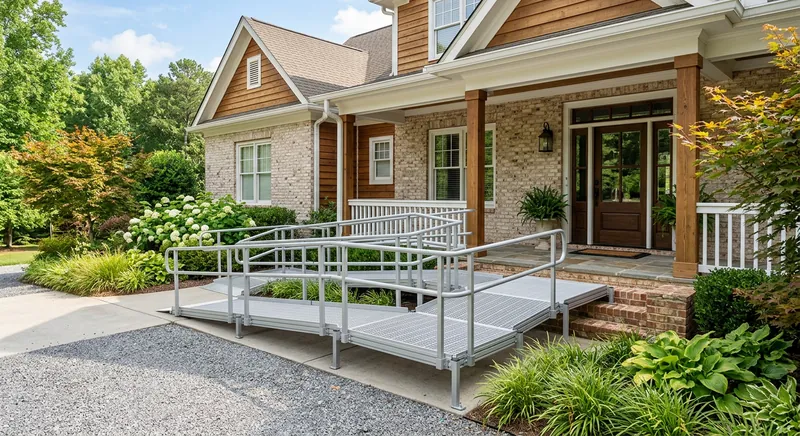
Best Wheelchair Ramps for Home Access and Mobility
Modular aluminum, folding portable, threshold, and solid wheelchair ramps each solve a different access need. Compare length, slope, weight capacity, and material before you buy.
 Accessibility & Senior Home Products
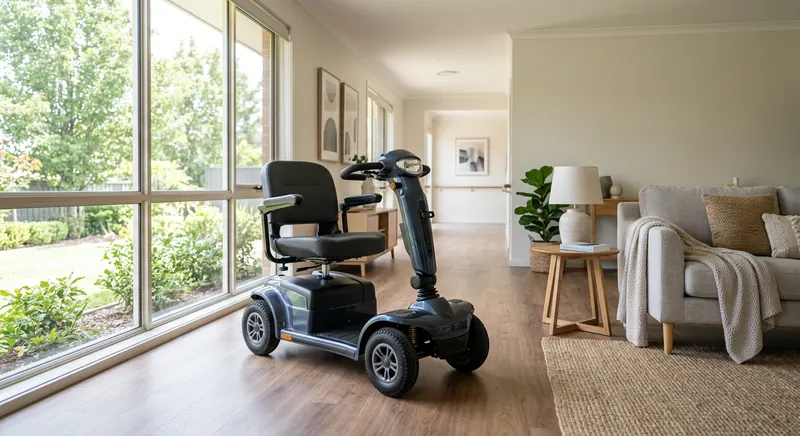
Best Mobility Scooters for Independence and Everyday Use
Travel, mid-size, heavy-duty, and foldable mobility scooters each suit different lifestyles. Compare weight capacity, battery range, turning radius, and disassembly before you buy.
 Accessibility & Senior Home Products
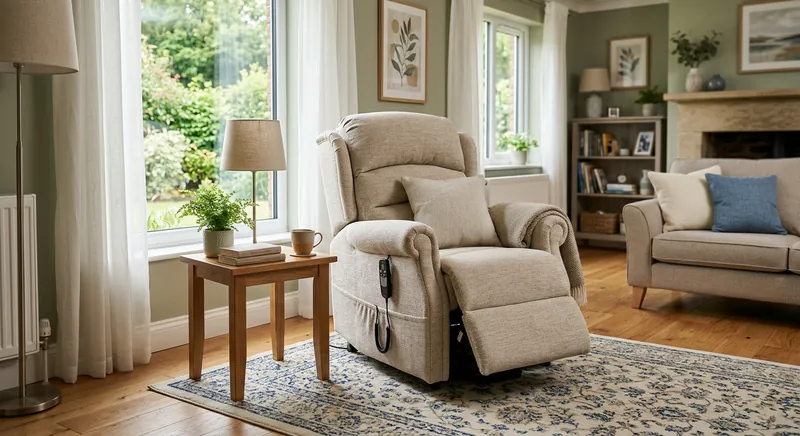
Best Lift Chair Recliners for Standing and Reclining with Ease
Infinite-position, 3-position, heavy-duty, and compact lift chairs each suit different users and rooms. Compare weight capacity, recline positions, power mechanism, and upholstery before you buy.
 Accessibility & Senior Home Products
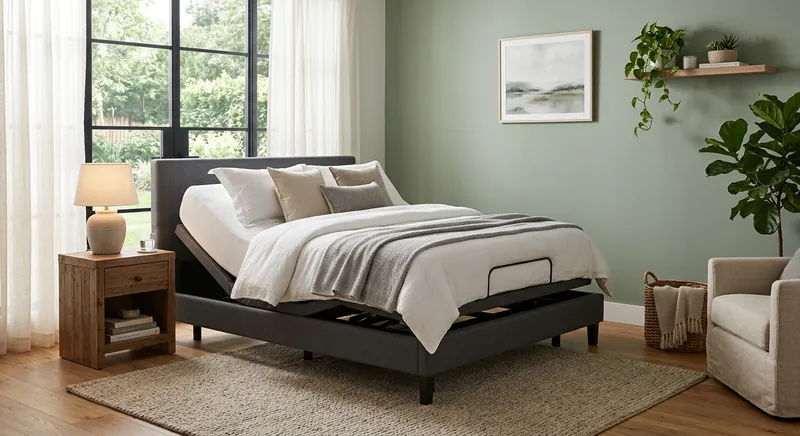
Best Adjustable Beds for Seniors: Comfort, Positioning, and Accessibility
Split-king, massage, preset-position, and budget adjustable beds each suit different senior needs. Compare articulation, presets, wall-hugger design, weight capacity, and remote control.
Get Smarter About Your Home
Receive practical buying guides, product comparisons, maintenance tips and home project ideas from HomeGear Guide.
You can unsubscribe at any time.