Best Lawn Aerators for Healthier Grass
Affiliate Disclosure: HomeGear Guide is reader-supported. When you buy through links on our site, we may earn an affiliate commission at no extra cost to you. We do not accept paid product placements or sponsor-biased reviews.
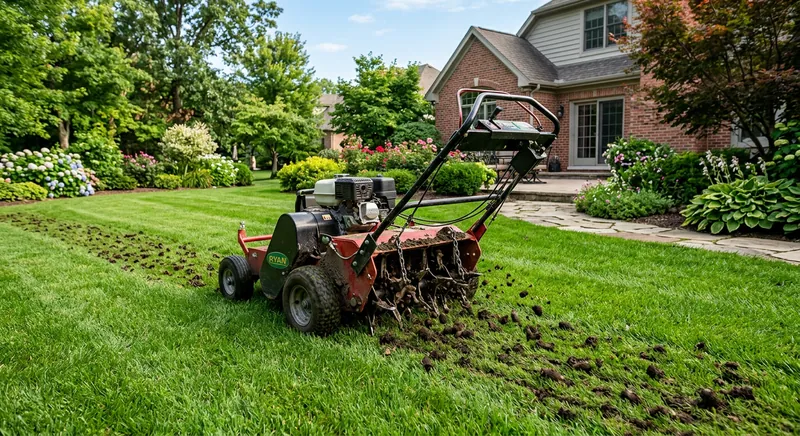
Aerating relieves soil compaction so air, water, and nutrients can reach grass roots. Compacted soil — common in high-traffic yards, clay-heavy areas, and lawns built on construction fill — restricts root growth and leads to thin, weak grass. The right aerator makes a visible difference in lawn health, but the choice between core and spike aeration, and between manual, powered, and tow-behind designs, depends on your lawn size, soil type, and how much effort you want to invest. Understanding these differences helps you choose a tool that actually improves your lawn rather than one that just pokes holes.
Quick Answer
Core aeration is more effective than spike aeration for most lawns because it physically removes plugs of soil, relieving compaction without compressing surrounding soil, while spike aerators simply push soil aside and can actually increase compaction around the holes. For yards up to a quarter acre, a manual core aerator costing 30 to 60 dollars is sufficient for spot aeration and small areas. For quarter-acre to half-acre lawns, a powered walk-behind core aerator rental at 60 to 90 dollars per day is the most practical approach. Tow-behind aerators are the right choice for lawns over half an acre if you own a riding mower or ATV. The main trade-off is effort versus cost, as manual aerators require significant physical effort but cost little, while powered units make quick work of large lawns but require rental or purchase. Aerate when soil is moist but not saturated for best plug removal.
Top Picks at a Glance
Manual Spike Aerator
Core Aerator (Manual)
Spike Aerator (Tow-Behind)
Powered Core Aerator
Product Comparison
| Product | Best For | Type | Aeration Method | Width | Power Source | Price Range | Details |
|---|---|---|---|---|---|---|---|
Core Aerator (Manual) Best for Healthy Roots | Small lawns and spot aeration where plug removal is desired | Manual core (plug) aerator | Hollow tines remove soil plugs | 16–19 inches per pass | Manual (foot pressure) | $40–$90 | View Review ↓ |
Spike Aerator (Tow-Behind) Best for Riding Mowers | Medium to large lawns mowed with a riding mower or tractor | Tow-behind spike aerator | Solid tines puncture soil | 36–48 inches per pass | Towed by riding mower or tractor | $80–$200 | View Review ↓ |
Powered Core Aerator Best for Large Lawns | Large lawns and severely compacted soil requiring core removal | Powered core (plug) aerator | Engine-driven hollow tines remove plugs | 18–22 inches per pass | Gas engine | $900–$2,000 | View Review ↓ |
Manual Spike Aerator Best for Small Lawns | Light aeration and small yards | Manual spike aerator | Solid tines puncture soil | 16–20 inches per pass | Manual (push or foot pressure) | $25–$60 | View Review ↓ |
Core Aerator (Manual)
Best for Healthy Roots- Best For:
- Small lawns and spot aeration where plug removal is desired
- Type:
- Manual core (plug) aerator
- Aeration Method:
- Hollow tines remove soil plugs
- Width:
- 16–19 inches per pass
- Power Source:
- Manual (foot pressure)
- Price Range:
- $40–$90
Spike Aerator (Tow-Behind)
Best for Riding Mowers- Best For:
- Medium to large lawns mowed with a riding mower or tractor
- Type:
- Tow-behind spike aerator
- Aeration Method:
- Solid tines puncture soil
- Width:
- 36–48 inches per pass
- Power Source:
- Towed by riding mower or tractor
- Price Range:
- $80–$200
Powered Core Aerator
Best for Large Lawns- Best For:
- Large lawns and severely compacted soil requiring core removal
- Type:
- Powered core (plug) aerator
- Aeration Method:
- Engine-driven hollow tines remove plugs
- Width:
- 18–22 inches per pass
- Power Source:
- Gas engine
- Price Range:
- $900–$2,000
Manual Spike Aerator
Best for Small Lawns- Best For:
- Light aeration and small yards
- Type:
- Manual spike aerator
- Aeration Method:
- Solid tines puncture soil
- Width:
- 16–20 inches per pass
- Power Source:
- Manual (push or foot pressure)
- Price Range:
- $25–$60
Detailed Product Reviews & Specifications
Core Aerator (Manual)
A manual core aerator with a foot bar and hollow tines that pull plugs of soil from the lawn. Core aeration is the most effective method for relieving compaction because it removes soil rather than simply displacing it. Best for small lawns or targeted aeration of high-traffic areas.
Pros
- •Removes soil cores for genuine compaction relief
- •Hollow tines pull plugs rather than compacting sideways
- •No fuel or power required
- •Affordable and simple to maintain
Cons
- •Physically demanding for large areas
- •Slow coverage on anything beyond a small lawn
- •Tines can clog with wet or clay soil
Key Specifications
Spike Aerator (Tow-Behind)
A tow-behind spike aerator with a drum of solid tines that puncture the soil as it is pulled behind a riding mower or garden tractor. Covers ground quickly with minimal physical effort, and the weight tray can be loaded for deeper penetration. Spike aeration is less effective than core aeration for severe compaction but works well for routine maintenance.
Pros
- •Covers large areas quickly behind a riding mower
- •Minimal physical effort required
- •Weight tray allows adjustable penetration depth
- •Lower cost than powered core aerators
Cons
- •Spike tines displace soil sideways and can worsen compaction
- •Requires a riding mower or tractor to tow
- •Less effective than core aeration for compacted clay
Key Specifications
Powered Core Aerator
A gas-powered core aerator with engine-driven hollow tines that pull soil plugs across large areas efficiently. The most effective tool for relieving serious compaction, it combines the soil-removal benefit of core aeration with the coverage speed of a powered machine. Suitable for lawns where manual core aeration would be impractical.
Pros
- •Removes soil cores for genuine compaction relief
- •Engine-driven tines cover large areas quickly
- •Effective on severely compacted and clay soil
- •Adjustable tine depth for different conditions
Cons
- •Highest cost in the category
- •Heavier and harder to maneuver than manual options
- •Engine requires fuel and maintenance
Key Specifications
Manual Spike Aerator
A simple manual spike aerator, either a pitchfork-style tool or a rolling drum with solid tines. Punctures the soil to open channels for air and water. The least expensive and simplest aeration option, suited to light maintenance on small, not severely compacted lawns.
Pros
- •Least expensive aeration option
- •Simple with no moving parts or engine
- •Lightweight and easy to store
- •Suitable for quick light aeration
Cons
- •Spike tines displace soil and can worsen compaction
- •Not effective for severely compacted soil
- •Slow and tiring on larger lawns
Key Specifications
Core vs Spike Aeration
Core aeration uses hollow tines to remove plugs of soil from the lawn, creating open channels that relieve compaction and allow air, water, and nutrients to reach the root zone. This is the most effective method for genuinely compacted soil because it removes material rather than displacing it.
Spike aeration uses solid tines to puncture the soil, creating holes but pushing soil sideways in the process. On heavy or clay soil, this can actually increase compaction around the holes. Spike aeration is fine for light maintenance on already healthy soil but is not the right choice for rehabilitating compacted lawns.
Choosing the Right Aerator Type
The right aerator depends on your lawn size, soil condition, and how much effort you want to spend. Manual tools are affordable but slow and tiring. Tow-behind options leverage a riding mower you already own. Powered core aerators are the most effective for large or compacted lawns but cost the most.
For most homeowners, the decision comes down to whether you need core or spike aeration first, then matching the power source to your lawn size.
Manual vs Powered
Manual aerators are inexpensive and simple but only practical for small lawns or spot treatment — the physical effort scales poorly to larger areas. Powered aerators cover ground quickly with engine-driven tines but cost more, weigh more, and require fuel and engine maintenance. For one-time annual aeration of a large lawn, renting a powered aerator is often the most economical choice.
Tow-Behind Options
Tow-behind aerators attach to a riding mower or garden tractor and cover large areas with minimal effort. They come in spike and core (plug) versions, with weight trays that allow you to add weight for deeper penetration. If you already own a riding mower, a tow-behind aerator is a practical way to aerate a larger lawn without a separate powered machine.
Aerating Width
Width per pass determines how quickly you cover your lawn. Manual aerators typically cover 16 to 20 inches, powered core aerators 18 to 22 inches, and tow-behind models 36 to 48 inches. Wider is faster but less maneuverable around landscaping. For small or obstacle-heavy lawns, a narrower aerator is easier to control.
When and How to Aerate
Aerate cool-season grasses ( Kentucky bluegrass, fescue, rye) in early fall when grass is actively growing and can recover quickly. Aerate warm-season grasses (Bermuda, Zoysia) in late spring to early summer. Avoid aerating during drought or extreme heat, when grass is stressed and slow to recover.
Mow the lawn slightly lower than usual before aerating, and water the lawn a day ahead so the soil is moist but not muddy — tines penetrate moist soil but clog in mud. After aerating, leave the soil plugs on the lawn to break down, and follow up with overseeding or fertilizer if your lawn needs it.
Buy or Rent a Lawn Aerator
For most homeowners, aeration is a once or twice per year task. Buying a powered core aerator that costs $1,000 or more for occasional use is hard to justify — renting from a home improvement store for $60 to $100 per day is usually the better economic choice for large lawns needing core aeration.
Buying makes sense if you aerate multiple times per year, manage more than one property, or want the convenience of aerating on your own schedule. For small lawns, an inexpensive manual core or spike aerator is a reasonable purchase. For large lawns with severe compaction, rent a powered core aerator for the day.
Safety & Compliance Notice
Powered and tow-behind aerators can cause strain or injury if used improperly. Wear closed-toe shoes and eye protection. Be aware of underground utilities, irrigation heads, and sprinkler lines before aerating — call 811 if you are unsure about utility locations on your property.
Frequently Asked Questions
Core aeration uses hollow tines to remove plugs of soil, creating open channels that genuinely relieve compaction. Spike aeration uses solid tines to puncture the soil, but pushes soil sideways and can worsen compaction in heavy clay. Core aeration is more effective for compacted soil; spike aeration is fine for light maintenance on healthy lawns.
Final Verdict
For most homeowners, core aeration is more effective than spike aeration for genuine compaction relief. Choose a manual core aerator for small lawns or spot treatment, a tow-behind spike aerator if you own a riding mower and want low-effort routine maintenance, and a powered core aerator for large lawns or severely compacted soil — though renting a powered aerator for the day is often more economical than buying. Match the method to your soil condition first (core for compaction, spike for light maintenance) and the power source to your lawn size, and aerate at the right time of year for your grass type for the best results.
James Carter
Outdoor Equipment Specialist
James covers lawn care, outdoor power equipment, and yard maintenance products for HomeGear Guide. His work focuses on helping homeowners compare mowers, trimmers, and yard tools based on property size, terrain, and practical use cases.
Related Articles & Buying Guides
 Lawn & Outdoor Equipment
Best Riding Lawn Mowers for Large Yards
Compare 42" to 54" riding mowers with hydrostatic and gear-drive transmissions. Find the right deck size, engine power, and maneuverability for your yard.
 Lawn & Outdoor Equipment
Best Leaf Blowers for Yard Cleanup
Compare gas, battery, and corded leaf blowers with CFM and MPH ratings. Find the right power source and design for your yard size and cleanup needs.
 Lawn & Outdoor Equipment
Best Garden Hoses for Watering and Yard Work
Compare rubber, hybrid polymer, expandable, and heavy-duty vinyl garden hoses. Find the right material, diameter, length, and fittings for your yard.
Get Smarter About Your Home
Receive practical buying guides, product comparisons, maintenance tips and home project ideas from HomeGear Guide.
You can unsubscribe at any time.