Best Riding Lawn Mowers for Large Yards
Affiliate Disclosure: HomeGear Guide is reader-supported. When you buy through links on our site, we may earn an affiliate commission at no extra cost to you. We do not accept paid product placements or sponsor-biased reviews.
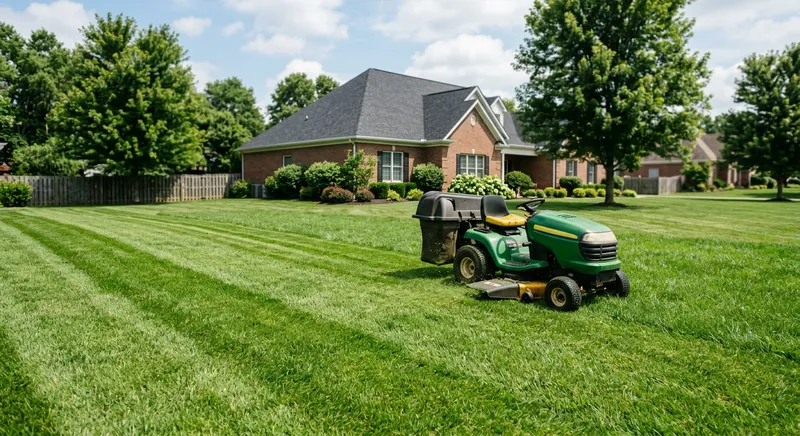
A riding lawn mower is the practical choice once your yard grows beyond about half an acre. Pushing a walk-behind mower across an acre or more is exhausting and time-consuming, and a riding mower can cut that same work to a fraction of the effort. But choosing the right one means matching deck size to your yard, picking a transmission that fits how you mow, and selecting enough engine power to handle your grass conditions without bogging down. Size up too small and you will spend extra hours mowing; buy more mower than you need and you pay for capability you never use.
Quick Answer
For most homeowners with yards between half an acre and 2 acres, a 42-inch deck riding mower with a 20 to 22 horsepower V-twin engine and a hydrostatic transmission is the best choice, balancing cutting width, maneuverability, and price. Hydrostatic transmissions are preferable to manual gear drives because they allow smooth speed adjustments without stopping, making mowing around obstacles far easier. A 42-inch deck fits through standard 48-inch gates and covers roughly 2 acres per hour. If your yard has slopes or thick wet grass, upgrade to a 24-plus horsepower engine to prevent bogging. The main trade-off is deck size versus maneuverability, as wider decks cut faster but are harder to navigate in tight spaces. Always match engine power to your terrain, as underpowered mowers struggle on hills and tall grass.
Top Picks at a Glance
42" Hydrostatic Riding Mower
46" Gear-Drive Riding Mower
50" Riding Mower with Bagging
54" Heavy-Duty Riding Mower
Product Comparison
| Product | Best For | Deck Size | Transmission | Engine HP | Turning Radius | Price Range | Details |
|---|---|---|---|---|---|---|---|
42" Hydrostatic Riding Mower Best Overall | Yards from 1 to 2 acres with trees and landscaping | 42 inches | Hydrostatic | 18–22 HP | 16–18 inches | $1,500–$2,500 | View Review ↓ |
46" Gear-Drive Riding Mower Best Value | Open yards from 1 to 2 acres with fewer obstacles | 46 inches | Manual gear-drive | 20–24 HP | 18–20 inches | $1,300–$2,000 | View Review ↓ |
50" Riding Mower with Bagging Best for Bagging | Yards where grass collection and clean appearance matter | 50 inches | Hydrostatic | 22–26 HP | 16–20 inches | $2,000–$3,200 | View Review ↓ |
54" Heavy-Duty Riding Mower Best for Big Yards | Yards of 2 acres or more and rougher terrain | 54 inches | Hydrostatic | 24–27 HP | 14–18 inches | $2,500–$4,000 | View Review ↓ |
42" Hydrostatic Riding Mower
Best Overall- Best For:
- Yards from 1 to 2 acres with trees and landscaping
- Deck Size:
- 42 inches
- Transmission:
- Hydrostatic
- Engine HP:
- 18–22 HP
- Turning Radius:
- 16–18 inches
- Price Range:
- $1,500–$2,500
46" Gear-Drive Riding Mower
Best Value- Best For:
- Open yards from 1 to 2 acres with fewer obstacles
- Deck Size:
- 46 inches
- Transmission:
- Manual gear-drive
- Engine HP:
- 20–24 HP
- Turning Radius:
- 18–20 inches
- Price Range:
- $1,300–$2,000
50" Riding Mower with Bagging
Best for Bagging- Best For:
- Yards where grass collection and clean appearance matter
- Deck Size:
- 50 inches
- Transmission:
- Hydrostatic
- Engine HP:
- 22–26 HP
- Turning Radius:
- 16–20 inches
- Price Range:
- $2,000–$3,200
54" Heavy-Duty Riding Mower
Best for Big Yards- Best For:
- Yards of 2 acres or more and rougher terrain
- Deck Size:
- 54 inches
- Transmission:
- Hydrostatic
- Engine HP:
- 24–27 HP
- Turning Radius:
- 14–18 inches
- Price Range:
- $2,500–$4,000
Detailed Product Reviews & Specifications
42" Hydrostatic Riding Mower
A 42-inch deck riding mower with a hydrostatic transmission that delivers smooth, stepless speed control without shifting gears. The two-blade deck handles standard residential grass well, and foot-pedal speed control lets you slow down for obstacles without stopping.
Pros
- •Hydrostatic transmission for smooth speed control
- •42-inch deck fits through standard gates
- •Foot-pedal operation frees both hands for steering
- •Relatively compact for storage
Cons
- •Two-blade deck can struggle in tall or wet grass
- •Not ideal for yards over 2 acres
- •Hydrostatic drive costs more than gear-drive models
Key Specifications
46" Gear-Drive Riding Mower
A 46-inch deck riding mower with a manual gear-drive transmission. Offers a wider cut than 42-inch models at a lower price than hydrostatic alternatives. Gear selection provides set speeds, and the larger deck covers more ground per pass on open stretches.
Pros
- •Wider 46-inch deck for faster cutting
- •Lower price than hydrostatic models
- •Gear-drive transmission is simple and inexpensive to service
- •Good for open yards with long straight runs
Cons
- •Requires shifting to change speed
- •Less precise control around obstacles
- •No infinite speed adjustment between gears
Key Specifications
50" Riding Mower with Bagging
A 50-inch deck riding mower designed to work with a twin-bag or triple-bag collection system. The larger deck covers ground quickly, and the bagging attachment collects clippings so you do not leave rows of grass behind — useful for keeping lawns tidy and reducing thatch buildup.
Pros
- •50-inch deck covers ground quickly
- •Bagging system collects clippings for a clean finish
- •Reduces thatch and keeps walkways clear
- •Good for yards where appearance is a priority
Cons
- •Bagging attachment adds cost and storage space
- •Bags fill quickly and need frequent emptying
- •Heavier clippings reduce forward speed
Key Specifications
54" Heavy-Duty Riding Mower
A 54-inch deck riding mower built with a heavier frame and more powerful engine for larger properties. The wider deck reduces the number of passes, and the stronger engine maintains blade speed in taller, thicker grass. Typically includes a reinforced deck and larger rear tires for traction.
Pros
- •54-inch deck minimizes mowing time on large properties
- •Higher horsepower maintains blade speed in thick grass
- •Heavier frame and larger tires handle rough terrain
- •Hydrostatic transmission for smooth control at speed
Cons
- •Largest deck may not fit through standard gates
- •Higher price and larger storage footprint
- •Heavier machine is harder to trailer and maneuver in tight spaces
Key Specifications
What to Look for in a Riding Lawn Mower
Riding mowers are sized by deck width, powered by gasoline engines, and driven by either hydrostatic or gear-drive transmissions. The right combination depends on your yard size, the number of obstacles, and how fast you want to finish. A mower that is too small turns mowing into a long chore, while one that is too large may not fit through your gates or storage area.
For most homeowners with 1 to 2 acres, a 42- to 46-inch deck with a hydrostatic transmission is the practical sweet spot. It covers the ground efficiently, maneuvers around landscaping, and fits through standard residential gates.
Deck Size: 42" to 54"
Deck size determines how wide a strip of grass you cut per pass. A 42-inch deck is the most common starting point and fits through a standard 48-inch gate. A 50- or 54-inch deck cuts faster but needs wider access and more storage room. As a rough guide, 42 inches suits up to 2 acres, 46 to 50 inches suits 2 to 3 acres, and 54 inches is best for 3 acres or more.
Hydrostatic vs Manual Transmission
A hydrostatic transmission uses fluid pressure to deliver smooth, stepless speed control — you press a pedal to go faster or slower without shifting. A manual gear-drive transmission offers set speed ranges and requires you to clutch and shift between them. Hydrostatic is easier and more precise, especially around obstacles, but costs more upfront and more to repair.
Engine Horsepower
Engine output ranges from about 18 HP on entry-level models to 27 HP or more on heavy-duty mowers. More horsepower helps the blades maintain speed in tall, thick, or wet grass and reduces bogging. For flat yards with regular mowing, 18–22 HP is adequate. For larger properties, thicker grass, or slopes, 24 HP and up provides a comfortable margin.
Turning Radius
Turning radius measures how tightly the mower can turn — a smaller number means tighter turns. A 16-inch radius lets you navigate around trees and beds with fewer back-and-forth adjustments. Standard riding mowers typically turn in 16 to 20 inches. If your yard has many obstacles, a tighter turning radius saves time and reduces trimming.
Matching Mower Size to Your Yard
Yard size is the single biggest factor in choosing a riding mower. A mower that is undersized turns a 2-acre mow into a two-hour job; one that is oversized may not fit through your gate or into your shed. Use deck size as your primary guide and engine power as a secondary check for tough grass conditions.
For 1 acre, a 42-inch deck is efficient and easy to store. For 2 acres, step up to 46 or 50 inches to cut mowing time meaningfully. For 3 acres or more, a 50- or 54-inch deck with a stronger engine pays for itself in time saved over a season.
Bagging, Mulching, and Side Discharge
Most riding mowers side-discharge clippings by default, which is the fastest way to mow and works fine if you mow regularly and clippings are short. Mulching plugs chop clippings finely and return them to the lawn as nutrients, which is good for lawn health but requires dry grass and more frequent mowing.
Bagging systems collect clippings for a clean, finished look and are preferred on showcase lawns or when leaves are heavy. Bagging adds cost, fills quickly, and slows you down with stops to empty the bags. Choose based on how you want your lawn to look and how much cleanup you are willing to do.
Maintenance and Longevity
A riding mower is a multi-year investment, and regular maintenance is what keeps it running. Change the engine oil and filter at the intervals in your manual, sharpen or replace blades at least once per season, and keep the deck clean of caked grass after each mow.
The transmission also needs attention. Hydrostatic drives have fluid and filters that should be serviced per the schedule — neglect is a common cause of premature failure. Store the mower out of the weather, and consider a fuel stabilizer if it sits unused for weeks at a time.
Safety & Compliance Notice
Riding mowers can cause serious injury or death if operated improperly. Never operate a riding mower on slopes steeper than the manufacturer's rated limit, always mow up and down slopes (not across) with a riding mower, keep children and pets away from the mowing area, and never carry passengers. Read the operator manual before use and wear eye protection and closed-toe shoes.
Frequently Asked Questions
A 42-inch deck is generally sufficient for 1 acre and offers a good balance of cutting speed and maneuverability. It also fits through standard residential gates. If your acre is wide open with few obstacles, a 46-inch deck will finish faster.
Final Verdict
For most homeowners with 1 to 2 acres, a 42-inch hydrostatic riding mower is the best all-around choice — it covers ground efficiently, maneuvers around obstacles smoothly, and fits through standard gates. If your yard is open and budget is the priority, a 46-inch gear-drive model offers a wider cut for less money. Choose a 50-inch bagging model if a clean, clipping-free lawn matters to you, and step up to a 54-inch heavy-duty mower for properties of 2 acres or more. Match the deck to your yard size, choose hydrostatic if you mow around obstacles, and keep up with maintenance to protect your investment.
James Carter
Outdoor Equipment Specialist
James covers lawn care, outdoor power equipment, and yard maintenance products for HomeGear Guide. His work focuses on helping homeowners compare mowers, trimmers, and yard tools based on property size, terrain, and practical use cases.
Related Articles & Buying Guides
 Lawn & Outdoor Equipment
Best Zero-Turn Mowers for Fast, Precise Cutting
Compare 42" to 60" zero-turn mowers with lap bar steering and up to 8 MPH top speed. Find the right deck, engine, and controls for fast, precise mowing.
 Lawn & Outdoor Equipment
Best Robot Lawn Mowers for Automated Lawn Care
Compare robot mowers for small to large yards. Learn about boundary wire vs GPS navigation, slope handling, and battery life to find the right automated mower.
 Lawn & Outdoor Equipment
Riding Lawn Mower Reviews: Detailed Model Analysis
Detailed analysis of riding lawn mower reliability, common issues, and long-term ownership. Compare entry-level, mid-range, premium, and garden tractor options.
 Lawn & Outdoor Equipment
Best Lawn Aerators for Healthier Grass
Compare core and spike aerators in manual, powered, and tow-behind designs. Find the right aeration method and width for your lawn size and soil type.
Get Smarter About Your Home
Receive practical buying guides, product comparisons, maintenance tips and home project ideas from HomeGear Guide.
You can unsubscribe at any time.