Best Robot Lawn Mowers for Automated Lawn Care
Affiliate Disclosure: HomeGear Guide is reader-supported. When you buy through links on our site, we may earn an affiliate commission at no extra cost to you. We do not accept paid product placements or sponsor-biased reviews.
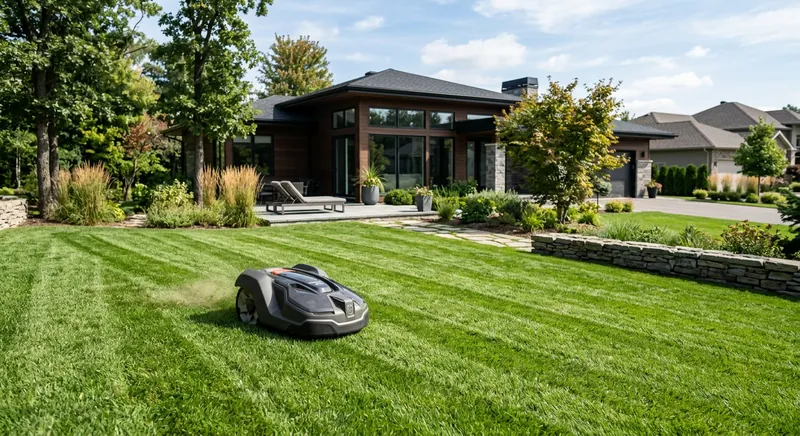
A robot lawn mower takes mowing off your weekly list by cutting a little at a time on a schedule you set. Instead of one long mow every weekend, the mower trims a small amount of grass frequently, which is actually healthier for your lawn. The key decisions are how much area the mower can cover, how it knows where your lawn ends, how well it handles slopes, and how long it runs between charges. Getting these right determines whether a robot mower is a genuinely useful investment or a frustrating gadget that struggles with your yard.
Quick Answer
For most homeowners with yards up to a quarter acre, a boundary-wire robot mower costing 1,000 to 2,000 dollars is the best choice because it reliably navigates within a defined perimeter and handles moderate slopes up to 22 degrees. The wire installation takes 2 to 4 hours but provides consistent edge detection for years. Yards between a quarter and a half acre require a mower with 28V or higher battery capacity and at least 60 minutes of runtime per charge. Models with GPS-assisted navigation reduce the reliance on boundary wires and handle complex yard shapes better, though they cost 50 to 100 percent more. The main trade-off is autonomy versus cost, as fully autonomous models with weather sensors and app control offer the most convenience at premium prices. Robot mowers cannot handle tall overgrown grass and require regular blade replacement every 1 to 3 months.
Top Picks at a Glance
Wire-Guided Robot Mower (Small Yard)
GPS Robot Mower (Medium Yard)
Wire-Free Robot Mower
Heavy-Duty Robot Mower (Large Yard)
Product Comparison
| Product | Best For | Coverage Area | Navigation | Max Slope | Battery Life | Price Range | Details |
|---|---|---|---|---|---|---|---|
Wire-Guided Robot Mower (Small Yard) Best for Small Yards | Small, simple lawns up to 0.25 acre | Up to 0.25 acre | Boundary perimeter wire | 20–25 percent (11–14 degrees) | 60–90 minutes per charge | $800–$1,500 | View Review ↓ |
GPS Robot Mower (Medium Yard) Best Overall | Medium lawns from 0.25 to 0.75 acre with open shape | 0.25–0.75 acre | GPS with boundary assist | 25–30 percent (14–17 degrees) | 90–120 minutes per charge | $1,500–$3,000 | View Review ↓ |
Wire-Free Robot Mower Easiest Setup | Homeowners who want to avoid installing perimeter wire | Up to 0.75 acre | GPS RTK or camera-based (wire-free) | 25–30 percent (14–17 degrees) | 90–120 minutes per charge | $2,000–$4,000 | View Review ↓ |
Heavy-Duty Robot Mower (Large Yard) Best for Large Yards | Large properties up to 1.5 acres or more | Up to 1.5 acres | GPS RTK with boundary assist | 30–35 percent (17–20 degrees) | 120–180 minutes per charge | $3,500–$6,000 | View Review ↓ |
Wire-Guided Robot Mower (Small Yard)
Best for Small Yards- Best For:
- Small, simple lawns up to 0.25 acre
- Coverage Area:
- Up to 0.25 acre
- Navigation:
- Boundary perimeter wire
- Max Slope:
- 20–25 percent (11–14 degrees)
- Battery Life:
- 60–90 minutes per charge
- Price Range:
- $800–$1,500
GPS Robot Mower (Medium Yard)
Best Overall- Best For:
- Medium lawns from 0.25 to 0.75 acre with open shape
- Coverage Area:
- 0.25–0.75 acre
- Navigation:
- GPS with boundary assist
- Max Slope:
- 25–30 percent (14–17 degrees)
- Battery Life:
- 90–120 minutes per charge
- Price Range:
- $1,500–$3,000
Wire-Free Robot Mower
Easiest Setup- Best For:
- Homeowners who want to avoid installing perimeter wire
- Coverage Area:
- Up to 0.75 acre
- Navigation:
- GPS RTK or camera-based (wire-free)
- Max Slope:
- 25–30 percent (14–17 degrees)
- Battery Life:
- 90–120 minutes per charge
- Price Range:
- $2,000–$4,000
Heavy-Duty Robot Mower (Large Yard)
Best for Large Yards- Best For:
- Large properties up to 1.5 acres or more
- Coverage Area:
- Up to 1.5 acres
- Navigation:
- GPS RTK with boundary assist
- Max Slope:
- 30–35 percent (17–20 degrees)
- Battery Life:
- 120–180 minutes per charge
- Price Range:
- $3,500–$6,000
Detailed Product Reviews & Specifications
Wire-Guided Robot Mower (Small Yard)
A boundary-wire robot mower designed for small, straightforward lawns. A perimeter wire buried at the lawn edge tells the mower where to stop, and the mower cuts on a set schedule within that boundary. The most affordable entry into robotic mowing, best suited to simple yard shapes without complex landscaping.
Pros
- •Lowest cost entry into robotic mowing
- •Reliable boundary detection with perimeter wire
- •Quiet operation suitable for suburban settings
- •Frequent trimming is healthy for grass
Cons
- •Perimeter wire installation takes time and effort
- •Limited to small, simple yard shapes
- •Can struggle with narrow passages and complex layouts
- •Manual cutting pattern can leave uneven patches on open areas
Key Specifications
GPS Robot Mower (Medium Yard)
A robot mower that combines GPS positioning with a boundary wire or virtual boundary for medium-sized lawns. GPS helps the mower navigate more systematically and return to the charging dock efficiently, reducing the random patterns of wire-only models. Suitable for yards where a more organized cut and larger coverage area are needed.
Pros
- •GPS-assisted navigation for more systematic cutting
- •Larger coverage area than entry-level models
- •Better at maintaining an even cut on open lawns
- •App-based scheduling and monitoring
Cons
- •Higher price than wire-only models
- •GPS accuracy can vary near tall buildings and trees
- •May still require a boundary wire for reliable edges
Key Specifications
Wire-Free Robot Mower
A wire-free robot mower that uses GPS RTK or camera-based navigation to mow without a buried perimeter wire. Virtual boundaries are set through a smartphone app, which makes setup far easier than wire-guided models and allows boundaries to be adjusted as landscaping changes.
Pros
- •No perimeter wire to install or bury
- •Boundaries set and adjusted via smartphone app
- •Easier to reconfigure when landscaping changes
- •Systematic cutting pattern for a more even finish
Cons
- •Highest cost among residential robot mowers
- •RTK base station may be required for accuracy
- •Camera-based navigation can struggle in low light
Key Specifications
Heavy-Duty Robot Mower (Large Yard)
A heavy-duty robot mower built for larger properties with a bigger battery, wider cutting deck, and more powerful motors. Designed to cover an acre or more on a schedule, with terrain capability for rougher ground and thicker grass than residential entry models can handle.
Pros
- •Covers large properties up to 1.5 acres
- •Larger battery and wider cut for efficiency
- •Handles thicker grass and rougher terrain
- •Durable construction for extended daily operation
Cons
- •Highest cost in the category
- •Overkill for small or medium yards
- •Larger and heavier, requiring more storage space
Key Specifications
How Robot Lawn Mowers Work
A robot lawn mower operates within a defined boundary, cutting small amounts of grass on a frequent schedule rather than mowing the whole lawn at once. It returns to a charging dock when the battery runs low, then resumes where it left off. This frequent-light-cut approach is healthier for grass than infrequent heavy cutting.
Most robot mowers use a random or systematic cutting pattern within their boundary. Random mowers wander and eventually cover the whole area, while systematic models use GPS or mapping to mow in organized passes for a more even finish. The navigation method is one of the biggest factors in cut quality and ease of setup.
What to Look for in a Robot Lawn Mower
Coverage area, navigation method, slope handling, and battery life are the core specifications that determine whether a robot mower suits your yard. Matching these to your lawn size, shape, and terrain is essential — a mower that cannot cover your yard or handle your slopes will be a constant source of frustration.
Start by measuring your lawn area in acres or square feet, then choose a mower rated for at least 20 percent more than your actual yard to account for obstacles and layout inefficiencies.
Coverage Area (Acres)
Robot mowers are rated by the area they can maintain, typically from 0.25 acre up to 1.5 acres or more. Always choose a mower rated for more than your actual lawn size — obstacles, narrow passages, and irregular shapes reduce effective coverage. A mower pushed to its limit will run nearly constantly and may still leave uncut patches.
Boundary Wire vs GPS/RTK
Boundary-wire mowers use a buried perimeter wire to define the mowing area — reliable but time-consuming to install and hard to move. GPS and RTK-based mowers use satellite positioning and virtual boundaries set in an app, which is far easier to set up and adjust. Wire-free models cost more but offer far more flexibility.
Slope Handling
Every robot mower has a maximum slope rating, expressed as a percentage or degrees. Most residential models handle 20 to 30 percent (11 to 17 degrees). If your yard has steep sections, check the rating carefully — a mower that cannot climb your slope will get stuck repeatedly. Some models have all-wheel drive for improved hill climbing.
Battery Life and Charge Time
Battery run time ranges from about 60 minutes on entry models to 180 minutes or more on heavy-duty mowers. Charge time is typically 60 to 90 minutes. The mower manages its own charging, so what matters is total daily mowing capacity — the hours it can cut between charges and recharges within a day. Larger yards need longer run times or more frequent mowing sessions.
Installation and Setup
Wire-guided mowers require laying a perimeter wire at the lawn edge and around obstacles, either pinned to the surface or buried shallowly. This is a one-time project that can take several hours depending on yard complexity. Once installed, the wire is reliable but difficult to relocate.
Wire-free GPS and RTK mowers skip the wire but may require setting up a reference base station and mapping your lawn in the app. Setup is generally faster and boundaries can be adjusted as your landscaping changes. For yards where you anticipate changes, the flexibility of wire-free navigation is a meaningful advantage.
Limitations to Understand
Robot mowers cut frequently but do not edge — you will still need to trim along walkways, beds, and fences. They handle moderate slopes but not steep ones, and they can struggle with very thick, tall, or wet grass. They also cannot pick up debris, so sticks and toys must be cleared from the lawn.
A robot mower is best understood as a tool that keeps an already-managed lawn trimmed automatically, not a replacement for all lawn care. If your yard is well-suited — reasonably flat, regularly cleared, and within the mower's coverage rating — it can eliminate weekly mowing. Complex yards may still need occasional conventional mowing or trimming.
Safety & Compliance Notice
Robot mowers use sharp blades that can cause lacerations. Keep children and pets away from the mower during operation. Install boundary markers clearly, do not lift a running mower without wearing gloves, and follow the manufacturer's emergency stop procedures.
Frequently Asked Questions
Yes, for yards that match the mower's capabilities. Robot mowers maintain lawns by cutting frequently and automatically within a defined boundary. They work best on reasonably flat, regularly cleared yards within their coverage area rating. They do not edge, handle steep slopes, or cut very tall or thick grass well.
Final Verdict
A GPS-assisted robot mower rated for medium yards is the best choice for most homeowners with 0.25 to 0.75 acre of lawn, offering systematic cutting and app control without the complexity of larger heavy-duty models. Choose a wire-guided mower for small, simple yards where the lower price justifies the installation effort, a wire-free model if you want to avoid perimeter wire entirely, and a heavy-duty mower for properties of an acre or more. Match the coverage rating to your yard size with a comfortable margin, confirm the slope rating fits your terrain, and understand that a robot mower automates regular cutting but does not eliminate edging and occasional conventional mowing.
James Carter
Outdoor Equipment Specialist
James covers lawn care, outdoor power equipment, and yard maintenance products for HomeGear Guide. His work focuses on helping homeowners compare mowers, trimmers, and yard tools based on property size, terrain, and practical use cases.
Related Articles & Buying Guides
 Lawn & Outdoor Equipment
Best Riding Lawn Mowers for Large Yards
Compare 42" to 54" riding mowers with hydrostatic and gear-drive transmissions. Find the right deck size, engine power, and maneuverability for your yard.
 Lawn & Outdoor Equipment
Best Zero-Turn Mowers for Fast, Precise Cutting
Compare 42" to 60" zero-turn mowers with lap bar steering and up to 8 MPH top speed. Find the right deck, engine, and controls for fast, precise mowing.
 Lawn & Outdoor Equipment
Best String Trimmers for Edging and Trimming
Compare gas, battery, and corded string trimmers with straight and curved shafts. Find the right power source, cutting width, and line feed for your yard.
 Lawn & Outdoor Equipment
Best Leaf Blowers for Yard Cleanup
Compare gas, battery, and corded leaf blowers with CFM and MPH ratings. Find the right power source and design for your yard size and cleanup needs.
Get Smarter About Your Home
Receive practical buying guides, product comparisons, maintenance tips and home project ideas from HomeGear Guide.
You can unsubscribe at any time.