Best String Trimmers for Edging and Trimming
Affiliate Disclosure: HomeGear Guide is reader-supported. When you buy through links on our site, we may earn an affiliate commission at no extra cost to you. We do not accept paid product placements or sponsor-biased reviews.
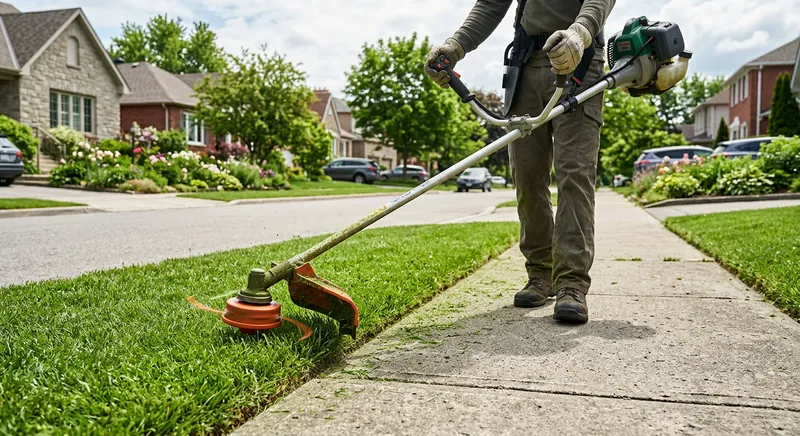
A string trimmer finishes the job a mower cannot — cutting grass and weeds along fences, sidewalks, garden beds, and trees. Every yard has edges a mower cannot reach, and a trimmer is what gives a lawn a finished look. The choice between gas, battery, and corded power, straight and curved shafts, and different line feed systems affects how the trimmer handles, how much it can cut, and how much maintenance it needs. Matching these to your yard size and the type of trimming you do helps you avoid a trimmer that bogs down on tall grass or is overkill for a small city yard.
Quick Answer
For most homeowners, a 40V or 60V battery-powered string trimmer with a straight shaft and dual-line bump feed is the best choice because it handles edging along sidewalks, fences, and garden beds with instant start, no gas mixing, and quiet operation. Straight shafts reach under decks and shrubs more easily than curved shafts and accept edger attachments for multi-tool capability. A dual-line head cuts more efficiently than single-line and handles thicker grass without bogging. Gas trimmers are worth considering only for large properties over an acre or for cutting woody brush, as they require fuel mixing and more maintenance. The main trade-off is power versus weight, with higher-voltage models cutting thicker grass but weighing 2 to 4 pounds more. An auto-feed line system saves time but bump-feed heads are more reliable and cheaper to replace.
Top Picks at a Glance
Battery-Powered String Trimmer
Gas String Trimmer
Corded Electric String Trimmer
Straight-Shaft Gas Trimmer
Product Comparison
| Product | Best For | Power Source | Shaft Type | Cutting Width | Line Feed | Price Range | Details |
|---|---|---|---|---|---|---|---|
Battery-Powered String Trimmer Best Overall | Most residential yards and noise-sensitive neighborhoods | Battery (18V–80V) | Straight or curved shaft | 13–17 inches | Auto or bump feed | $90–$200 | View Review ↓ |
Gas String Trimmer Best for Heavy Weeds | Large properties and heavy, woody weeds | Gas (two-stroke or four-stroke) | Straight shaft | 17–18 inches | Bump feed | $130–$280 | View Review ↓ |
Corded Electric String Trimmer Best for Small Yards | Small yards and light trimming near an outlet | Corded electric | Straight or curved shaft | 13–15 inches | Auto or bump feed | $40–$90 | View Review ↓ |
Straight-Shaft Gas Trimmer Best for Reach | Reaching under decks, fences, and shrubs | Gas (two-stroke or four-stroke) | Straight shaft | 17–18 inches | Bump feed | $150–$300 | View Review ↓ |
Battery-Powered String Trimmer
Best Overall- Best For:
- Most residential yards and noise-sensitive neighborhoods
- Power Source:
- Battery (18V–80V)
- Shaft Type:
- Straight or curved shaft
- Cutting Width:
- 13–17 inches
- Line Feed:
- Auto or bump feed
- Price Range:
- $90–$200
Gas String Trimmer
Best for Heavy Weeds- Best For:
- Large properties and heavy, woody weeds
- Power Source:
- Gas (two-stroke or four-stroke)
- Shaft Type:
- Straight shaft
- Cutting Width:
- 17–18 inches
- Line Feed:
- Bump feed
- Price Range:
- $130–$280
Corded Electric String Trimmer
Best for Small Yards- Best For:
- Small yards and light trimming near an outlet
- Power Source:
- Corded electric
- Shaft Type:
- Straight or curved shaft
- Cutting Width:
- 13–15 inches
- Line Feed:
- Auto or bump feed
- Price Range:
- $40–$90
Straight-Shaft Gas Trimmer
Best for Reach- Best For:
- Reaching under decks, fences, and shrubs
- Power Source:
- Gas (two-stroke or four-stroke)
- Shaft Type:
- Straight shaft
- Cutting Width:
- 17–18 inches
- Line Feed:
- Bump feed
- Price Range:
- $150–$300
Detailed Product Reviews & Specifications
Battery-Powered String Trimmer
A battery-powered string trimmer with a brushless motor and auto or bump feed line system. Combines the freedom of gas with the convenience of push-button start and minimal maintenance. Quiet enough for suburban use and compatible with other tools on the same battery platform.
Pros
- •Push-button start with no pull cord or gas-oil mix
- •Quiet operation suitable for noise-restricted areas
- •Low maintenance — no air filter, spark plug, or fuel system
- •Shares batteries with other tools on the same platform
Cons
- •Battery runtime limited to 20–45 minutes per charge
- •Spare batteries add significant cost
- •Less power than gas models for heavy, woody weeds
Key Specifications
Gas String Trimmer
A gas-powered string trimmer with a two-stroke or four-stroke engine that delivers maximum cutting power for thick grass and woody weeds. Offers unlimited runtime with refueling and handles heavy growth that stalls battery and corded models. The choice for large properties and demanding conditions.
Pros
- •Maximum cutting power for thick grass and woody weeds
- •Unlimited runtime — refuel and keep working
- •Handles heavy growth that stalls weaker trimmers
- •Wide cutting swath for faster work on large areas
Cons
- •Loudest option — check local noise regulations
- •Requires gas-oil mix (two-stroke) and regular engine maintenance
- •Heavier and more vibration than battery or corded models
- •Pull-start can be finicky in cold weather
Key Specifications
Corded Electric String Trimmer
A corded electric string trimmer that provides unlimited runtime at the lowest cost with no battery to charge and no gas to mix. Lightweight and quiet, ideal for small yards where an outdoor outlet is accessible. Tethered to a power cord that limits range.
Pros
- •Unlimited runtime — no battery to charge
- •Lowest cost in the category
- •Lightweight and quiet operation
- •No engine or battery maintenance
Cons
- •Tethered to a power cord — limits range
- •Requires outdoor-rated extension cord (extra cost)
- •Less power than gas or premium battery models
- •Cord management is frustrating in larger areas
Key Specifications
Straight-Shaft Gas Trimmer
A straight-shaft gas trimmer designed for reaching under low obstacles and into tight spaces. The straight shaft allows you to trim beneath decks, fences, and shrubs where a curved shaft cannot reach. Combines gas power with extended reach for detailed trimming on larger properties.
Pros
- •Straight shaft reaches under decks, fences, and shrubs
- •Gas power for thick grass and weeds
- •Better balance for extended use
- •Often supports blade and attachment options
Cons
- •Louder than battery and corded models
- •Requires gas-oil mix and engine maintenance
- •Straight shaft is longer and harder to store
- •Heavier than curved-shaft alternatives
Key Specifications
What to Look for in a String Trimmer
String trimmers vary by power source, shaft type, cutting width, and line feed mechanism. Each choice affects how the trimmer handles, what it can cut, and how much maintenance it needs. Matching these to your yard size and trimming habits is the key to choosing a trimmer that performs without paying for capability you do not need.
For most homeowners with typical yards, a battery-powered trimmer offers the best balance of convenience, noise, and power. Gas is the choice for large properties and heavy growth, and corded electric suits small yards near an outlet.
Gas vs Battery vs Corded
Gas trimmers deliver the most power and unlimited runtime but are loud and need the most maintenance. Battery trimmers are convenient and quiet with minimal maintenance, but runtime is limited and spare batteries are costly. Corded trimmers offer unlimited runtime at the lowest cost but are tethered to an outlet. For most residential yards, battery is the best balance.
Straight vs Curved Shaft
A straight shaft reaches under decks, fences, and shrubs where a curved shaft cannot, and is better for tall users who find curved shafts too short. A curved shaft is lighter, shorter, and easier to maneuver for flat edging. Choose straight if you trim under obstacles regularly; choose curved for simple edging on smaller yards.
Cutting Width
Cutting width ranges from about 13 inches on compact models to 18 inches on gas trimmers. A wider swath cuts faster but uses more line and can be harder to maneuver in tight spaces. For typical residential edging, 14 to 16 inches is a good balance. Choose a wider swath for open areas and large properties.
Line Feed: Bump, Auto, and Manual
Bump feed releases line when you tap the head on the ground — reliable but requires stopping to tap. Auto feed releases line automatically as needed — convenient but can use more line than necessary. Manual feed requires you to stop and advance line by hand — simplest and most economical but slowest. Bump and auto feed are the most common choices.
Matching the Trimmer to Your Yard
For a small city yard or townhouse with light edging, a corded electric or battery trimmer is sufficient and convenient. For a typical suburban yard with fences, beds, and trees to trim around, a battery-powered trimmer with a 14- to 16-inch cutting width is the sweet spot.
For large properties, heavy weed growth, or woody brush, a gas trimmer with a 17- to 18-inch cutting width provides the power and runtime you need. If you regularly trim under decks or shrubs, choose a straight-shaft model for the reach. Match the power source and shaft type to how and where you actually trim.
Trimmer Line Types and Maintenance
Trimmer line comes in different diameters and shapes. Thicker line (0.095 inch and up) handles heavy grass and woody weeds but requires more power and fits fewer trimmer heads. Thinner line (0.065 to 0.080 inch) is lighter and easier to handle but breaks more readily on hard surfaces and woody stems.
Round line is durable and quiet but cuts less aggressively. Twisted or serrated line cuts cleaner and handles tougher material but is noisier. Keep spare line on hand, and wind the spool carefully — a poorly wound spool jams and feeds unevenly. Clean the trimmer head after each use to prevent line weld from heat buildup.
Battery Platform Considerations
If you already own cordless outdoor tools, buying a trimmer on the same battery platform lets you share batteries and chargers. A larger platform also means more tools you can add later. If this is your first cordless tool, consider the breadth of the platform before committing.
Higher-voltage platforms (40V, 60V, 80V) generally deliver more power and runtime than 18V or 20V models, but the batteries and tools are heavier and more expensive. For typical residential trimming, an 18V to 40V platform is usually sufficient. For heavier use, a higher-voltage platform provides a comfortable margin.
Safety & Compliance Notice
String trimmers can throw debris at high speed, causing eye or skin injury. Always wear eye protection, long pants, and closed-toe shoes. Keep bystanders and pets at least 30 feet away. Never operate a gas trimmer in enclosed spaces due to carbon monoxide risk.
Frequently Asked Questions
For most residential yards, yes. Modern brushless battery trimmers handle typical grass and weeds effectively and are quieter and easier to maintain than gas models. For large properties, heavy woody weeds, or unlimited runtime, a gas trimmer still offers more power. But for typical edging and trimming, battery trimmers are sufficient and more convenient.
Final Verdict
For most homeowners, a battery-powered string trimmer is the best all-around choice — convenient, quiet, low-maintenance, and powerful enough for typical residential edging and trimming. Choose a gas trimmer for large properties or heavy woody weeds where maximum power and unlimited runtime matter. A corded electric trimmer is the most economical choice for small yards near an outlet. If you regularly trim under decks, fences, or shrubs, a straight-shaft model provides the reach you need. Match the power source to your yard size, choose a shaft type that fits where you trim, and keep spare line on hand in the right diameter for your conditions.
James Carter
Outdoor Equipment Specialist
James covers lawn care, outdoor power equipment, and yard maintenance products for HomeGear Guide. His work focuses on helping homeowners compare mowers, trimmers, and yard tools based on property size, terrain, and practical use cases.
Related Articles & Buying Guides
 Lawn & Outdoor Equipment
Best Hedge Trimmers for Shrub and Hedge Maintenance
Compare gas, battery, and corded hedge trimmers with 18" to 24" blades. Find the right power source, blade length, and cutting capacity for your hedges.
 Lawn & Outdoor Equipment
Best Leaf Blowers for Yard Cleanup
Compare gas, battery, and corded leaf blowers with CFM and MPH ratings. Find the right power source and design for your yard size and cleanup needs.
 Lawn & Outdoor Equipment
Best Lawn Aerators for Healthier Grass
Compare core and spike aerators in manual, powered, and tow-behind designs. Find the right aeration method and width for your lawn size and soil type.
Get Smarter About Your Home
Receive practical buying guides, product comparisons, maintenance tips and home project ideas from HomeGear Guide.
You can unsubscribe at any time.