Best Leaf Blowers for Yard Cleanup
Affiliate Disclosure: HomeGear Guide is reader-supported. When you buy through links on our site, we may earn an affiliate commission at no extra cost to you. We do not accept paid product placements or sponsor-biased reviews.
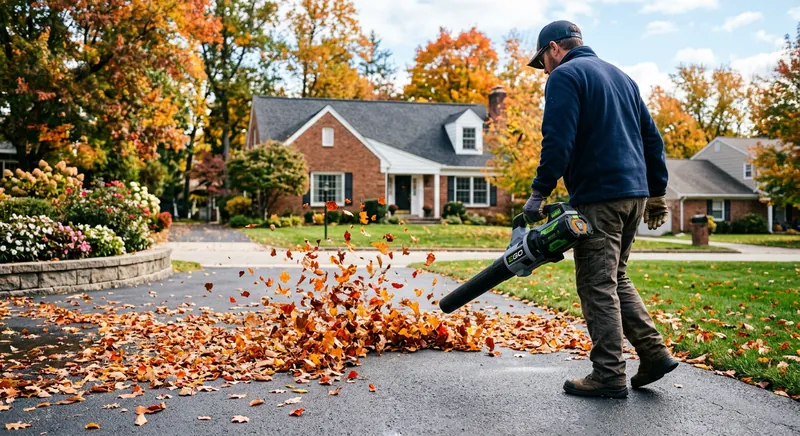
A leaf blower turns hours of raking into minutes of work, but the right blower depends on how much you need to move and how far you need to move it. CFM (cubic feet per minute) measures air volume — how much material you can move at once. MPH (miles per hour) measures air speed — how far you can push it. A blower with high MPH but low CFM moves a few leaves fast but cannot clear a full yard. Understanding the balance of these specs, along with the tradeoffs of gas, battery, and corded power, helps you choose a blower that handles your cleanup without more noise or weight than necessary.
Quick Answer
For most homeowners, a 40V or 60V battery-powered leaf blower producing 400 to 600 CFM and 120 to 150 MPH is the best choice because it handles the majority of residential leaf cleanup with instant start, no gas mixing, and minimal maintenance. CFM matters more than MPH for leaf cleanup because higher air volume moves more leaves per pass, while MPH determines how far you can push them. Gas blowers producing 600-plus CFM are necessary only for large properties over an acre or wet heavy leaves, as they are louder, heavier, and require regular maintenance. Backpack blowers distribute weight better for extended use over 30 minutes. The main trade-off is runtime versus power, with higher-voltage batteries providing more blowing force but draining faster. Keep a spare battery for continuous operation on larger properties.
Top Picks at a Glance
Battery-Powered Handheld Blower
Gas Backpack Blower
Corded Electric Blower
Gas Handheld Blower
Product Comparison
| Product | Best For | Type | CFM | MPH | Weight | Price Range | Details |
|---|---|---|---|---|---|---|---|
Battery-Powered Handheld Blower Best Overall | Most residential yards and noise-sensitive neighborhoods | Battery-powered handheld | 350–500 CFM | 120–150 MPH | 5–9 lbs (with battery) | $100–$250 | View Review ↓ |
Gas Backpack Blower Best for Big Cleanups | Large properties and heavy wet leaf cleanup | Gas-powered backpack | 600–900 CFM | 150–200 MPH | 20–25 lbs | $200–$500 | View Review ↓ |
Corded Electric Blower Best for Small Yards | Small yards and light cleanup near an outlet | Corded electric handheld | 300–400 CFM | 110–135 MPH | 4–7 lbs | $40–$100 | View Review ↓ |
Gas Handheld Blower Best Budget | Budget-conscious buyers who need gas power without backpack size | Gas-powered handheld | 400–600 CFM | 130–170 MPH | 10–14 lbs | $90–$180 | View Review ↓ |
Battery-Powered Handheld Blower
Best Overall- Best For:
- Most residential yards and noise-sensitive neighborhoods
- Type:
- Battery-powered handheld
- CFM:
- 350–500 CFM
- MPH:
- 120–150 MPH
- Weight:
- 5–9 lbs (with battery)
- Price Range:
- $100–$250
Gas Backpack Blower
Best for Big Cleanups- Best For:
- Large properties and heavy wet leaf cleanup
- Type:
- Gas-powered backpack
- CFM:
- 600–900 CFM
- MPH:
- 150–200 MPH
- Weight:
- 20–25 lbs
- Price Range:
- $200–$500
Corded Electric Blower
Best for Small Yards- Best For:
- Small yards and light cleanup near an outlet
- Type:
- Corded electric handheld
- CFM:
- 300–400 CFM
- MPH:
- 110–135 MPH
- Weight:
- 4–7 lbs
- Price Range:
- $40–$100
Gas Handheld Blower
Best Budget- Best For:
- Budget-conscious buyers who need gas power without backpack size
- Type:
- Gas-powered handheld
- CFM:
- 400–600 CFM
- MPH:
- 130–170 MPH
- Weight:
- 10–14 lbs
- Price Range:
- $90–$180
Detailed Product Reviews & Specifications
Battery-Powered Handheld Blower
A battery-powered handheld leaf blower that balances air volume and speed for typical yard cleanup. Brushless motor and lithium-ion battery provide good runtime with minimal maintenance — no gas, no oil, no pull cord. Quiet enough for suburban neighborhoods with noise restrictions.
Pros
- •No gas, oil, or pull-start — push-button start
- •Quiet operation suitable for noise-restricted areas
- •Lightweight and easy to handle one-handed
- •No emissions and minimal maintenance
Cons
- •Battery runtime limited to 15–40 minutes depending on speed
- •Spare batteries add significant cost
- •Less power than gas backpack models for heavy wet leaves
Key Specifications
Gas Backpack Blower
A gas-powered backpack leaf blower with a high-output engine that delivers the most air volume and speed in the category. The backpack design transfers weight to the hips, allowing longer use without arm fatigue. The best choice when you need to move heavy, wet leaves across a large property.
Pros
- •Highest air volume and speed for tough cleanup
- •Backpack design supports weight on hips, not arms
- •Unlimited runtime — refuel and keep working
- •Handles wet leaves and heavy debris that stall weaker blowers
Cons
- •Loudest option — check local noise regulations
- •Requires gas, oil mix, and regular engine maintenance
- •Heaviest and bulkiest option for storage
- •Pull-start can be finicky in cold weather
Key Specifications
Corded Electric Blower
A corded electric leaf blower that provides unlimited runtime at the lowest cost with no battery to charge and no gas to mix. Ideal for small yards where an outdoor outlet is accessible. Lightweight and quiet, but tethered to a power cord that limits range.
Pros
- •Unlimited runtime — no battery to charge
- •Lowest cost in the category
- •Lightweight and quiet operation
- •No engine or battery maintenance
Cons
- •Tethered to a power cord — limits range
- •Requires outdoor-rated extension cord (extra cost)
- •Lower power than gas or premium battery models
- •Cord management can be frustrating in large areas
Key Specifications
Gas Handheld Blower
A gas-powered handheld leaf blower that offers more power than battery or corded models at a lower price than a backpack blower. Compact and portable, with the unlimited runtime of gas power. A practical choice when you need gas-level power but not the size and weight of a backpack unit.
Pros
- •Gas power at a lower price than backpack models
- •Unlimited runtime with refueling
- •More compact and lighter than backpack blowers
- •Better for wet leaves than battery or corded models
Cons
- •Louder than battery and corded options
- •Requires gas-oil mix and engine maintenance
- •Handheld weight causes arm fatigue during long use
- •Vibration can be uncomfortable over extended sessions
Key Specifications
Understanding CFM and MPH
CFM (cubic feet per minute) measures the volume of air the blower moves — how wide a swath of leaves you can move at once. MPH (miles per hour) measures the speed of that air — how far you can push leaves and whether you can dislodge stuck or wet material. Both matter, and a blower needs a balance of both to perform well.
A blower with high MPH but low CFM produces a fast, narrow stream that can move a few leaves far but cannot clear a wide area. A blower with high CFM but low MPH moves a wide swath but cannot push leaves through grass or dislodge wet material. For typical yard cleanup, look for a balance: roughly 400 CFM or more with 130 MPH or more for handheld models.
Gas vs Battery vs Corded Electric
Power source is the most important decision after CFM and MPH. Gas blowers offer the most power and unlimited runtime but are the loudest and require the most maintenance. Battery blowers are convenient and quiet with minimal maintenance, but runtime is limited and spare batteries are expensive. Corded electric blowers offer unlimited runtime at low cost but are tethered to an outlet.
For most homeowners with typical yards, a battery-powered blower offers the best balance of convenience, noise, and power. Choose gas when you need maximum power or have a very large property. Choose corded electric for small yards and patios where an outlet is handy.
Gas Leaf Blowers
Gas blowers deliver the highest CFM and MPH, making them the best choice for large properties, wet leaves, and heavy debris. They offer unlimited runtime — just refuel and keep going. The tradeoffs are noise, emissions, and maintenance: two-stroke engines need gas-oil mixes, and all gas engines need regular air filter, spark plug, and fuel system service. Check local noise regulations before buying.
Battery-Powered Leaf Blowers
Battery blowers start with a button, run quietly, and need no gas or oil. Runtime ranges from about 15 minutes on high speed to 40 minutes on low, depending on battery capacity. Brushless motors deliver power approaching mid-range gas models. Spare batteries extend runtime but add cost. If you own other tools on the same battery platform, sharing batteries is a real advantage.
Corded Electric Leaf Blowers
Corded blowers offer unlimited runtime at the lowest cost with no battery to charge and no gas to mix. They are limited by the extension cord, which restricts range and must be managed during use. Best for small yards, patios, and decks where an outdoor outlet is nearby. Always use an outdoor-rated extension cord sized for the blower's amperage.
Handheld vs Backpack Design
Handheld blowers are lighter and more maneuverable, suitable for most residential cleanup. They carry all their weight in your hands, which causes arm and wrist fatigue during long sessions. Most battery and corded blowers, and many gas blowers, are handheld.
Backpack blowers transfer weight to your hips via shoulder straps, allowing much longer use without fatigue. They are typically gas-powered and deliver the highest output. Choose a backpack blower if you have a large property or regularly spend more than 30 minutes on cleanup. For smaller jobs, a handheld blower is more convenient and easier to store.
Noise and Local Regulations
Leaf blower noise is a real consideration, and many municipalities restrict when and how blowers can be used. Gas blowers are the loudest, often producing 100 decibels or more at the operator. Battery and corded electric blowers are significantly quieter, often in the 60 to 75 decibel range.
Check your local ordinances before buying — some cities restrict gas blower use to certain hours or seasons, and a few have banned gas blowers entirely. If you live in a noise-sensitive neighborhood, a battery-powered blower is the safer choice regardless of power needs.
Safety & Compliance Notice
Gas-powered leaf blowers produce noise levels that can cause hearing damage with prolonged exposure. Wear hearing protection when operating gas blowers. Be aware of local noise ordinances that may restrict blower use to certain hours or prohibit gas models entirely. Keep debris away from bystanders and pets.
Frequently Asked Questions
Both matter and you need a balance. CFM measures air volume — how wide a swath of leaves you can move. MPH measures air speed — how far you can push leaves and whether you can dislodge wet or stuck material. A blower with high MPH but low CFM moves a few leaves far but cannot clear a wide area. For typical yard cleanup, look for at least 400 CFM and 130 MPH in a handheld model.
Final Verdict
For most homeowners, a battery-powered handheld leaf blower is the best all-around choice — convenient, quiet, low-maintenance, and powerful enough for typical yard cleanup. Choose a gas backpack blower for large properties or heavy wet leaves where maximum power and runtime matter. A corded electric blower is the most economical choice for small yards and patios near an outlet. If you want gas power at a lower price than a backpack model, a gas handheld blower splits the difference but causes arm fatigue during longer sessions. Balance CFM and MPH rather than chasing one number, and check local noise regulations before buying any gas-powered blower.
James Carter
Outdoor Equipment Specialist
James covers lawn care, outdoor power equipment, and yard maintenance products for HomeGear Guide. His work focuses on helping homeowners compare mowers, trimmers, and yard tools based on property size, terrain, and practical use cases.
Related Articles & Buying Guides
 Lawn & Outdoor Equipment
Best String Trimmers for Edging and Trimming
Compare gas, battery, and corded string trimmers with straight and curved shafts. Find the right power source, cutting width, and line feed for your yard.
 Lawn & Outdoor Equipment
Best Hedge Trimmers for Shrub and Hedge Maintenance
Compare gas, battery, and corded hedge trimmers with 18" to 24" blades. Find the right power source, blade length, and cutting capacity for your hedges.
 Lawn & Outdoor Equipment
Best Lawn Aerators for Healthier Grass
Compare core and spike aerators in manual, powered, and tow-behind designs. Find the right aeration method and width for your lawn size and soil type.
 Lawn & Outdoor Equipment
Best Pressure Washer Surface Cleaners for Flat Surfaces
Compare 12" to 24" pressure washer surface cleaners for flat surfaces. Find the right diameter, PSI compatibility, and cleaning width for your driveway and patio.
Get Smarter About Your Home
Receive practical buying guides, product comparisons, maintenance tips and home project ideas from HomeGear Guide.
You can unsubscribe at any time.