Best Air Compressors for Home Use
Affiliate Disclosure: HomeGear Guide is reader-supported. When you buy through links on our site, we may earn an affiliate commission at no extra cost to you. We do not accept paid product placements or sponsor-biased reviews.
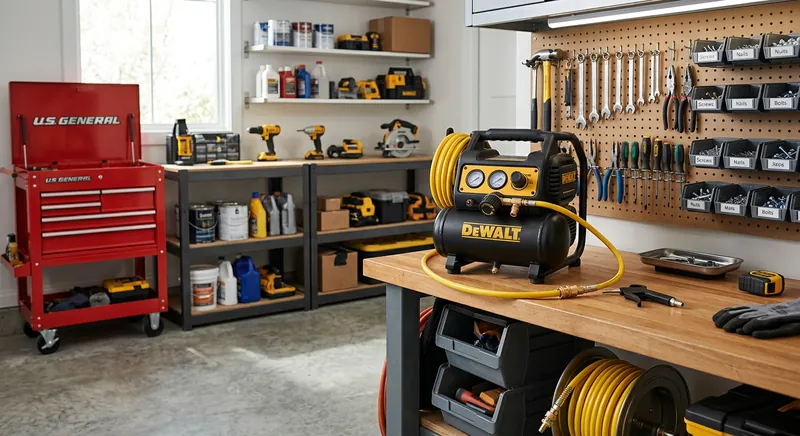
An air compressor powers pneumatic tools — nail guns, staplers, impact wrenches, inflators, and blow guns — that many homeowners find more reliable and maintenance-free than their battery-powered counterparts. For trim work, fencing, inflating tires, and cleaning out dust, a home air compressor is a versatile shop addition. But choosing the wrong tank size or CFM rating means either a compressor that runs constantly to keep up or one that is heavier and more expensive than your work requires.
Quick Answer
A 6 to 8 gallon portable air compressor with 150 PSI max pressure and 2.5 to 4.0 CFM at 90 PSI is the best choice for most homeowners because it handles the most common pneumatic tasks including brad and finish nailers, staplers, tire inflation, and blow guns without being excessively heavy or loud. Oil-free pumps require no maintenance and are standard on home-use compressors, though they are louder and have shorter lifespans than oil-lubricated pumps. Pancake-style tanks are the most portable and stable design for home use. If you plan to run framing nailers or impact wrenches, you need a larger compressor with at least 5.0 CFM at 90 PSI and a 20 to 30 gallon tank. The main trade-off is portability versus capacity, with larger tanks providing more run time but weighing significantly more.
Top Picks at a Glance
Pancake Air Compressor
Hot Dog Air Compressor
20-Gallon Vertical Compressor
Portable Brad Nailer Compressor
Product Comparison
| Product | Best For | Tank Size | CFM @ 90 PSI | Max PSI | Pump Type | Price Range | Details |
|---|---|---|---|---|---|---|---|
Pancake Air Compressor Best Overall | Trim work, brad nailers, and inflating | 6 gallons | 2.5–2.8 | 150 | Oil-free | $100–$170 | View Review ↓ |
Hot Dog Air Compressor Best for Portability | Portable use and small pneumatic tasks | 3–4 gallons | 2.0–2.5 | 150 | Oil-free | $90–$150 | View Review ↓ |
20-Gallon Vertical Compressor Best for Frequent Use | Frequent use and higher-demand pneumatic tools | 20 gallons | 4.0–5.0 | 150–175 | Oil-free or oil-lubricated | $200–$400 | View Review ↓ |
Portable Brad Nailer Compressor Best for Trim Work | Trim and finish work with low noise | 1–3 gallons | 1.0–2.0 | 120–150 | Oil-free (quiet) | $120–$200 | View Review ↓ |
Pancake Air Compressor
Best Overall- Best For:
- Trim work, brad nailers, and inflating
- Tank Size:
- 6 gallons
- CFM @ 90 PSI:
- 2.5–2.8
- Max PSI:
- 150
- Pump Type:
- Oil-free
- Price Range:
- $100–$170
Hot Dog Air Compressor
Best for Portability- Best For:
- Portable use and small pneumatic tasks
- Tank Size:
- 3–4 gallons
- CFM @ 90 PSI:
- 2.0–2.5
- Max PSI:
- 150
- Pump Type:
- Oil-free
- Price Range:
- $90–$150
20-Gallon Vertical Compressor
Best for Frequent Use- Best For:
- Frequent use and higher-demand pneumatic tools
- Tank Size:
- 20 gallons
- CFM @ 90 PSI:
- 4.0–5.0
- Max PSI:
- 150–175
- Pump Type:
- Oil-free or oil-lubricated
- Price Range:
- $200–$400
Portable Brad Nailer Compressor
Best for Trim Work- Best For:
- Trim and finish work with low noise
- Tank Size:
- 1–3 gallons
- CFM @ 90 PSI:
- 1.0–2.0
- Max PSI:
- 120–150
- Pump Type:
- Oil-free (quiet)
- Price Range:
- $120–$200
Detailed Product Reviews & Specifications
Pancake Air Compressor
A 6-gallon pancake-style air compressor with oil-free pump. The round, flat tank design provides a stable base and compact storage footprint. Produces enough CFM at 90 PSI for most nail guns and inflation tasks, making it the most popular home compressor configuration.
Pros
- •Stable round tank design
- •Enough CFM for brad and finish nailers
- •Oil-free pump requires no maintenance
- •Compact and easy to store
Cons
- •Loud during operation
- •Limited CFM for continuous-use tools
- •Tank empties quickly with high-demand tools
Key Specifications
Hot Dog Air Compressor
A lightweight, cylindrical-tank air compressor designed for maximum portability. The horizontal hot dog tank is easy to carry to different work areas and weighs less than a pancake model. Provides adequate air for small nail guns and inflation.
Pros
- •Lightweight and easy to carry
- •Compact for transport and storage
- •Sufficient for small nail guns and inflating
- •Oil-free pump
Cons
- •Smaller tank capacity
- •Not suitable for continuous-use tools
- •Less stable than pancake design
Key Specifications
20-Gallon Vertical Compressor
A 20-gallon vertical-tank compressor with higher CFM output for more demanding pneumatic tools. The vertical design saves floor space in a garage or workshop. Provides enough air for framing nailers, impact wrenches, and extended use without frequent cycling.
Pros
- •Larger tank for longer run time
- •Higher CFM for demanding tools
- •Vertical design saves floor space
- •Handles framing nailers and impact wrenches
Cons
- •Larger and heavier — less portable
- •More expensive
- •Takes up more workshop space
Key Specifications
Portable Brad Nailer Compressor
A compact, quiet air compressor specifically designed for trim and finish nailer work. Emphasis on low noise output and light weight for indoor use. Produces enough CFM for brad and finish nailers while operating quietly enough for occupied homes.
Pros
- •Quiet operation for indoor use
- •Lightweight for easy transport
- •Sufficient for brad and finish nailers
- •Compact storage footprint
Cons
- •Low CFM limits tool selection
- •Small tank requires frequent cycling
- •Higher cost per CFM than standard models
Key Specifications
Tank Size and CFM: The Two Key Numbers
Tank size, measured in gallons, determines how much stored air the compressor holds. A larger tank means the compressor cycles less frequently for intermittent-use tools, but it also means a heavier, bulkier machine. For nail guns, which use air in short bursts, a 6-gallon tank is generally sufficient.
CFM (cubic feet per minute) at 90 PSI measures how much air the compressor can deliver continuously. This is the number that determines which tools the compressor can actually run. Each pneumatic tool has a CFM requirement — a brad nailer needs roughly 0.5–1.0 CFM, a framing nailer needs 2–4 CFM, and an impact wrench needs 4–5 CFM. Always match the compressor CFM to your most demanding tool.
Oil-Free vs Oil-Lubricated Pumps
Oil-free pumps use sealed bearings and permanent lubrication, so they require no oil changes or regular maintenance. They are standard on most home compressors and are ideal for homeowners who want a maintenance-free tool. They tend to be louder and have a shorter overall lifespan than oil-lubricated pumps.
Oil-lubricated pumps require periodic oil changes but run quieter, run cooler, and last longer. They are more common on larger and professional-grade compressors. For home use, an oil-free pump is usually the practical choice, but if you use your compressor frequently, an oil-lubricated model offers better durability.
Pancake vs Hot Dog vs Vertical
Pancake compressors have a round, flat tank that provides a stable base and compact storage. They are the most popular home configuration because they balance capacity, stability, and price. The round tank sits low to the ground, making the compressor resistant to tipping.
Hot dog compressors have a horizontal cylindrical tank that makes them lighter and easier to carry but less stable than pancake models. They are best when portability is the priority and the air demand is modest.
Vertical compressors stand upright, saving floor space in a garage or workshop. They typically have larger tanks and are designed for a fixed location rather than portability. Choose vertical when you need more capacity and have a dedicated space for the compressor.
Matching Tools to Your Compressor
Before buying a compressor, check the CFM requirements of the tools you plan to run. Add a margin of 25–50% above the tool CFM to ensure the compressor can keep up without constant cycling. For example, if your framing nailer needs 3 CFM, choose a compressor rated for at least 4 CFM at 90 PSI.
Intermittent-use tools like nail guns can work with a smaller compressor because they draw air in short bursts and the tank reserves cover the demand. Continuous-use tools like sanders, grinders, and spray guns require a compressor that can sustain the CFM output indefinitely.
Frequently Asked Questions
Brad and finish nailers need 0.5–1.0 CFM and work well with a 3–6 gallon compressor. Framing nailers need 2–4 CFM and are best paired with a 6-gallon or larger compressor. Always check your nail gun's CFM requirement and choose a compressor that exceeds it by at least 25%.
Final Verdict
For most homeowners, a 6-gallon pancake compressor with an oil-free pump is the best all-around choice. It provides enough CFM and tank capacity for brad and finish nailers, staplers, and inflation tasks, and it stores compactly. If portability is your priority, a hot dog compressor is lighter and easier to carry. For frequent use or higher-demand tools like framing nailers and impact wrenches, a 20-gallon vertical compressor provides the capacity and CFM needed. If you work indoors and noise matters, a quiet trim compressor is worth the premium. Always match the compressor CFM to your most demanding tool, and drain the tank after each use.
Sarah Mitchell
Home Improvement Editor
Sarah writes about home improvement products, tools, and materials for HomeGear Guide. Her work focuses on comparing product features, use cases, and practical buying considerations for homeowners.
Related Articles & Buying Guides
 Tools & DIY Equipment
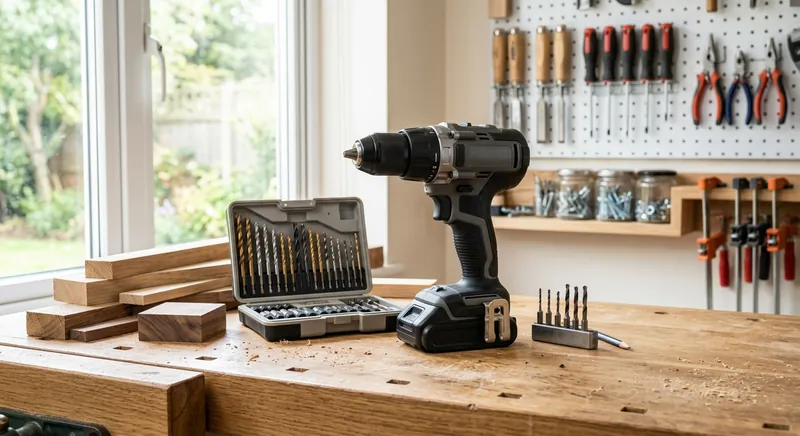
Best Cordless Drills for Home Projects
Compare 12V and 20V cordless drills with brushless and brushed motors. Find the right balance of power, weight, and battery platform for your home projects.
 Tools & DIY Equipment
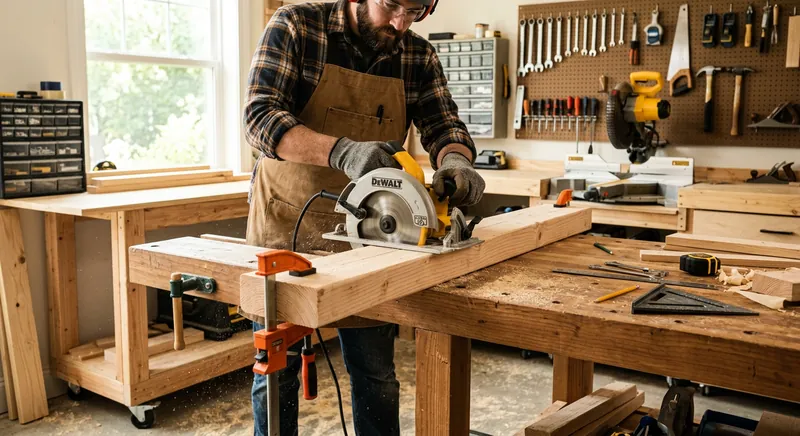
Best Circular Saws for Straight Cuts and Ripping
Compare 7-1/4 inch corded and cordless circular saws by blade size, bevel capacity, and motor power. Find the right saw for straight cuts and ripping lumber.
 Tools & DIY Equipment
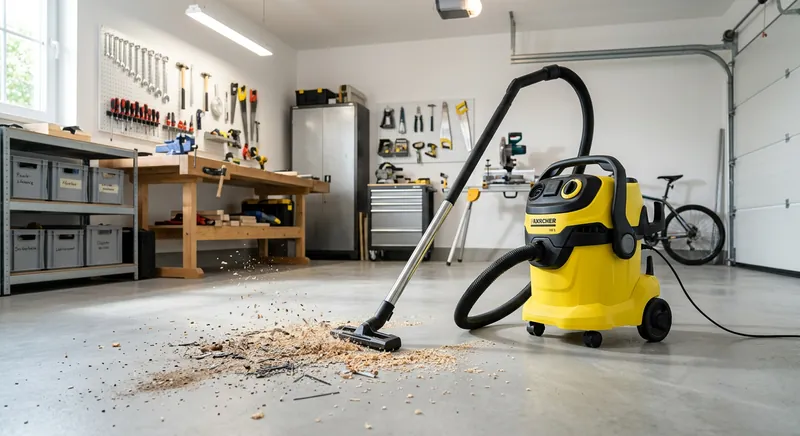
Best Wet/Dry Vacuums for Home and Garage
Compare 5-gallon to 12-gallon wet/dry vacuums by capacity, horsepower, and hose diameter. Find the right shop vacuum for liquid and dry cleanup.
Get Smarter About Your Home
Receive practical buying guides, product comparisons, maintenance tips and home project ideas from HomeGear Guide.
You can unsubscribe at any time.