Best Circular Saws for Straight Cuts and Ripping
Affiliate Disclosure: HomeGear Guide is reader-supported. When you buy through links on our site, we may earn an affiliate commission at no extra cost to you. We do not accept paid product placements or sponsor-biased reviews.
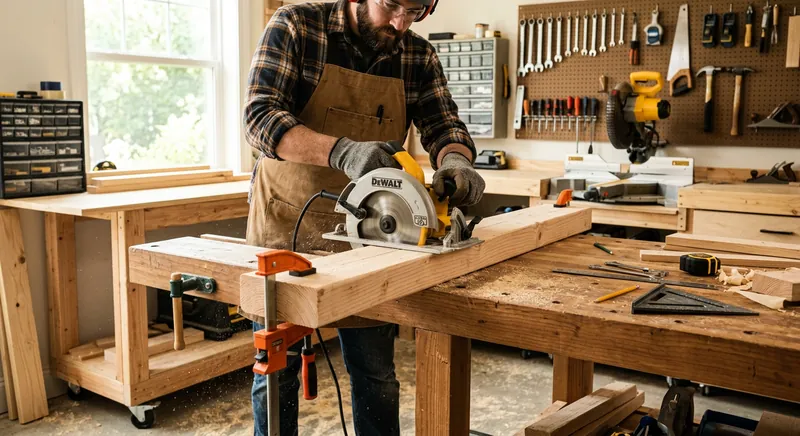
A circular saw is the tool for making straight cuts in lumber and sheet goods. It rips boards to width, crosscuts to length, and breaks down full sheets of plywood into manageable pieces. For deck building, shelving, fencing, and any project involving dimensional lumber, a circular saw is essential. The choices come down to blade size, power source, bevel capacity, and motor type — and the right combination depends on the materials you cut and how often you cut them.
Quick Answer
A 7-and-a-quarter-inch corded circular saw with a brushless motor is the best choice for most homeowners because it cuts through two-by lumber in a single pass at any angle, handles full sheets of plywood, and accepts the widest range of available blades. Cordless models offer portability and convenience but trade runtime for freedom, with modern 20V brushless versions cutting 200 to 300 cuts per charge. A magnesium body reduces weight by 30 percent compared to steel without sacrificing durability. Electric brakes that stop the blade in under 2 seconds are a critical safety feature worth paying for. The main trade-off is corded versus cordless, with corded providing unlimited runtime and maximum power at lower cost while cordless trades power for mobility. A 0 to 45 degree bevel capacity covers nearly all home projects.
Top Picks at a Glance
7-1/4" Corded Circular Saw
Cordless Circular Saw
Compact Circular Saw
Sidewinder Circular Saw
Product Comparison
| Product | Best For | Blade Size | Power Source | Bevel Capacity | Motor | Price Range | Details |
|---|---|---|---|---|---|---|---|
7-1/4" Corded Circular Saw Best Overall | General purpose cutting and ripping lumber | 7-1/4 inches | Corded (15 amp, 120V) | 0–56° with positive stops | 15 amp brushed | $80–$140 | View Review ↓ |
Cordless Circular Saw Best for Portability | Cutting without cord limitations | 6-1/2 to 7-1/4 inches | Cordless (20V max) | 0–50° with positive stops | Brushless | $120–$200 | View Review ↓ |
Compact Circular Saw Best for Small Cuts | Small cuts, sheet goods, and one-handed use | 4-1/2 to 5-1/2 inches | Corded or cordless | 0–45° | 4–6 amp or 20V brushless | $60–$120 | View Review ↓ |
Sidewinder Circular Saw Best for Frequent Rip Cuts | Frequent rip cuts and long cutting sessions | 7-1/4 inches | Corded (15 amp, 120V) | 0–56° with positive stops | 15 amp sidewinder (direct drive) | $90–$160 | View Review ↓ |
7-1/4" Corded Circular Saw
Best Overall- Best For:
- General purpose cutting and ripping lumber
- Blade Size:
- 7-1/4 inches
- Power Source:
- Corded (15 amp, 120V)
- Bevel Capacity:
- 0–56° with positive stops
- Motor:
- 15 amp brushed
- Price Range:
- $80–$140
Cordless Circular Saw
Best for Portability- Best For:
- Cutting without cord limitations
- Blade Size:
- 6-1/2 to 7-1/4 inches
- Power Source:
- Cordless (20V max)
- Bevel Capacity:
- 0–50° with positive stops
- Motor:
- Brushless
- Price Range:
- $120–$200
Compact Circular Saw
Best for Small Cuts- Best For:
- Small cuts, sheet goods, and one-handed use
- Blade Size:
- 4-1/2 to 5-1/2 inches
- Power Source:
- Corded or cordless
- Bevel Capacity:
- 0–45°
- Motor:
- 4–6 amp or 20V brushless
- Price Range:
- $60–$120
Sidewinder Circular Saw
Best for Frequent Rip Cuts- Best For:
- Frequent rip cuts and long cutting sessions
- Blade Size:
- 7-1/4 inches
- Power Source:
- Corded (15 amp, 120V)
- Bevel Capacity:
- 0–56° with positive stops
- Motor:
- 15 amp sidewinder (direct drive)
- Price Range:
- $90–$160
Detailed Product Reviews & Specifications
7-1/4" Corded Circular Saw
A 7-1/4-inch corded circular saw with a 15-amp motor. The most common and versatile circular saw configuration, capable of cutting 2x lumber at 90 degrees in a single pass and providing enough power for continuous use without battery limitations.
Pros
- •Cuts 2x lumber in a single pass
- •Continuous power with no battery runtime limit
- •15-amp motor handles dense material
- •Wide blade and accessory availability
Cons
- •Cord limits mobility
- •Heavier than compact alternatives
- •Requires a compatible extension cord for distance
Key Specifications
Cordless Circular Saw
A cordless circular saw running on a 20V battery platform. Provides mobility for cutting anywhere on a property without managing a power cord. Brushless motor models deliver power comparable to corded saws for most cutting tasks, with the trade-off of battery runtime.
Pros
- •No cord to manage or trip over
- •Work anywhere on the property
- •Compatible with cordless tool battery platform
- •Instant start with no warm-up
Cons
- •Battery runtime limits continuous cutting
- •Heavier due to battery weight
- •Slightly less power than corded 15-amp models
Key Specifications
Compact Circular Saw
A smaller, lighter circular saw with a 4-1/2 to 5-1/2 inch blade. Designed for cutting sheet goods, trim, and thin lumber where a full-size saw is cumbersome. Easier to handle one-handed and better suited to small, precise cuts.
Pros
- •Lightweight and easy to handle
- •Good for sheet goods and thin material
- •Easier control for small cuts
- •Compact for storage and transport
Cons
- •Cannot cut 2x lumber in one pass
- •Less power for dense material
- •Limited blade availability compared to 7-1/4"
Key Specifications
Sidewinder Circular Saw
A sidewinder-style circular saw where the motor sits alongside the blade, making the saw lighter and more balanced than worm-drive alternatives. The direct-drive design delivers high blade speed for fast, efficient ripping through dimensional lumber.
Pros
- •Lighter than worm-drive designs
- •High blade RPM for fast cutting
- •Well-balanced for controlled handling
- •Direct drive means less maintenance
Cons
- •Less torque than worm-drive saws
- •Not ideal for heaviest framing applications
- •Motor alongside blade can limit visibility on one side
Key Specifications
Blade Size and Cutting Depth
The 7-1/4-inch blade is the standard for circular saws because it can cut through 2x lumber (1-1/2 inches actual thickness) at 90 degrees in a single pass. This is the blade size most homeowners need. Smaller blades — 6-1/2, 5-1/2, or 4-1/2 inches — cannot cut 2x lumber in one pass and are suited to thinner materials.
Cutting depth adjusts by raising or lowering the blade through the base plate. At full depth, a 7-1/4-inch saw cuts roughly 2-1/2 inches at 90 degrees. Bevel cuts reduce the effective depth because the blade enters the material at an angle.
Corded vs Cordless Circular Saws
Corded saws provide continuous power with no runtime limit. A 15-amp corded saw handles the toughest cutting tasks and is the right choice if you work near power outlets or need sustained cutting power. The trade-off is managing a power cord and needing an appropriate extension cord for distance.
Cordless saws offer mobility and convenience, especially on properties where running a cord is impractical. Modern brushless cordless saws deliver power close to corded models for most tasks, but battery runtime limits continuous cutting. If you already own tools on a 20V platform, a cordless saw that shares batteries is a convenient addition.
Bevel Capacity and Angle Cuts
Bevel capacity refers to the maximum angle the saw can tilt from vertical. Most circular saws bevel to 45 or 50 degrees, with some reaching 56 degrees. Positive stops at common angles like 0°, 22.5°, and 45° allow quick setup without checking the angle indicator each time.
Bevel cuts are used for picture frames, trim, angled joints, and decorative cuts. For most home projects, a saw that bevels to 45 degrees is sufficient. Positive stops at common angles speed up repetitive work.
Motor Power: Amps and Volts
Corded circular saw motors are rated in amps. A 15-amp motor is the standard for full-size saws and provides enough power for cutting dense lumber and continuous use. Lower-amp motors (10–12 amps) are found on lighter saws and are adequate for occasional cutting but may bog down in thick material.
Cordless saw motors are rated by voltage (typically 18V or 20V max) and whether they are brushed or brushless. Brushless motors are more efficient and deliver more power and runtime per charge. For cordless saws, brushless is worth the extra cost because cutting is power-intensive and battery drain is significant.
Safety & Compliance Notice
A circular saw has an exposed blade and can cause serious injury. Always wear eye protection, keep hands clear of the blade path, support the workpiece to prevent kickback, and never defeat the blade guard. Unplug or remove the battery before changing blades.
Frequently Asked Questions
For plywood and sheet goods, use a blade with more teeth — typically 40 to 60 teeth — for clean cuts with minimal splintering. For cutting dimensional lumber, a 24-tooth framing blade cuts faster and clears debris efficiently. For general-purpose use, a 40-tooth combination blade balances speed and finish quality.
Final Verdict
For most homeowners, a 7-1/4-inch corded circular saw with a 15-amp motor is the best all-around choice. It cuts 2x lumber in a single pass, provides continuous power, and handles everything from deck building to breaking down plywood. If mobility is important and you own a compatible 20V battery platform, a cordless brushless saw is a capable alternative. A compact saw is a useful complement for sheet goods and trim but cannot replace a full-size saw for dimensional lumber. Use a straight edge guide for accurate cuts, choose the right blade for the material, and always prioritize safety with eye protection and proper workpiece support.
Sarah Mitchell
Home Improvement Editor
Sarah writes about home improvement products, tools, and materials for HomeGear Guide. Her work focuses on comparing product features, use cases, and practical buying considerations for homeowners.
Related Articles & Buying Guides
 Tools & DIY Equipment
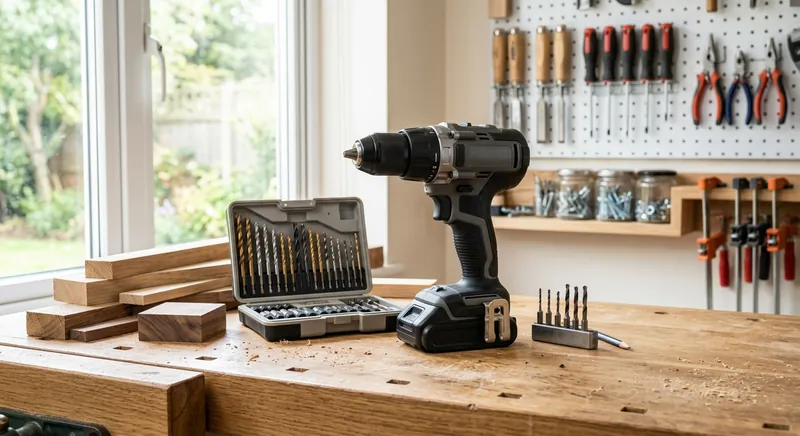
Best Cordless Drills for Home Projects
Compare 12V and 20V cordless drills with brushless and brushed motors. Find the right balance of power, weight, and battery platform for your home projects.
 Tools & DIY Equipment
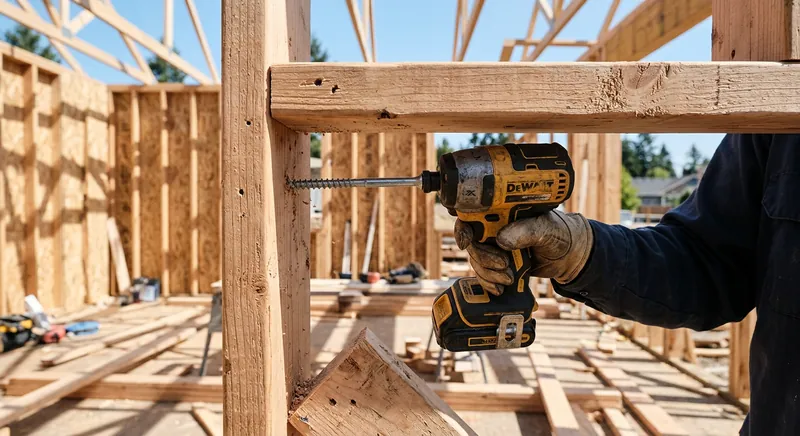
Best Impact Drivers for Driving Fasteners
Impact drivers deliver high torque through rapid rotational impacts, making them ideal for driving long screws and lag bolts. Compare options for your home projects.
 Tools & DIY Equipment
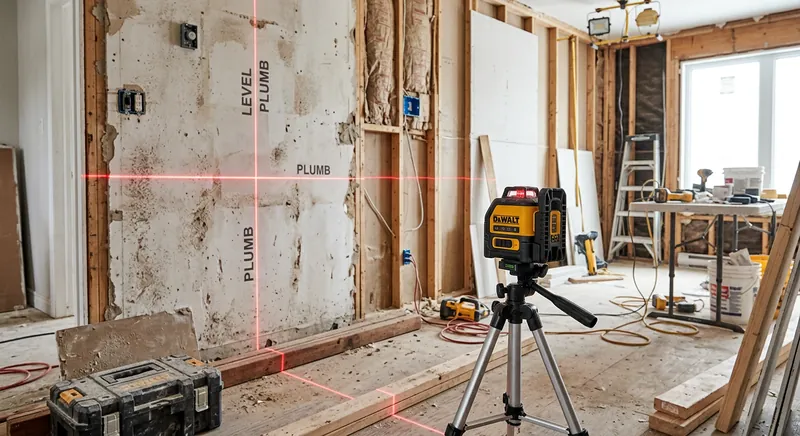
Best Laser Levels for Accurate Layout and Alignment
Compare cross-line, rotary, and 360-degree laser levels. Learn about self-leveling range, green vs red beams, and accuracy specs for precise home layout work.
Get Smarter About Your Home
Receive practical buying guides, product comparisons, maintenance tips and home project ideas from HomeGear Guide.
You can unsubscribe at any time.