Cordless Drill vs Impact Driver: Which Do You Need?
Affiliate Disclosure: HomeGear Guide is reader-supported. When you buy through links on our site, we may earn an affiliate commission at no extra cost to you. We do not accept paid product placements or sponsor-biased reviews.
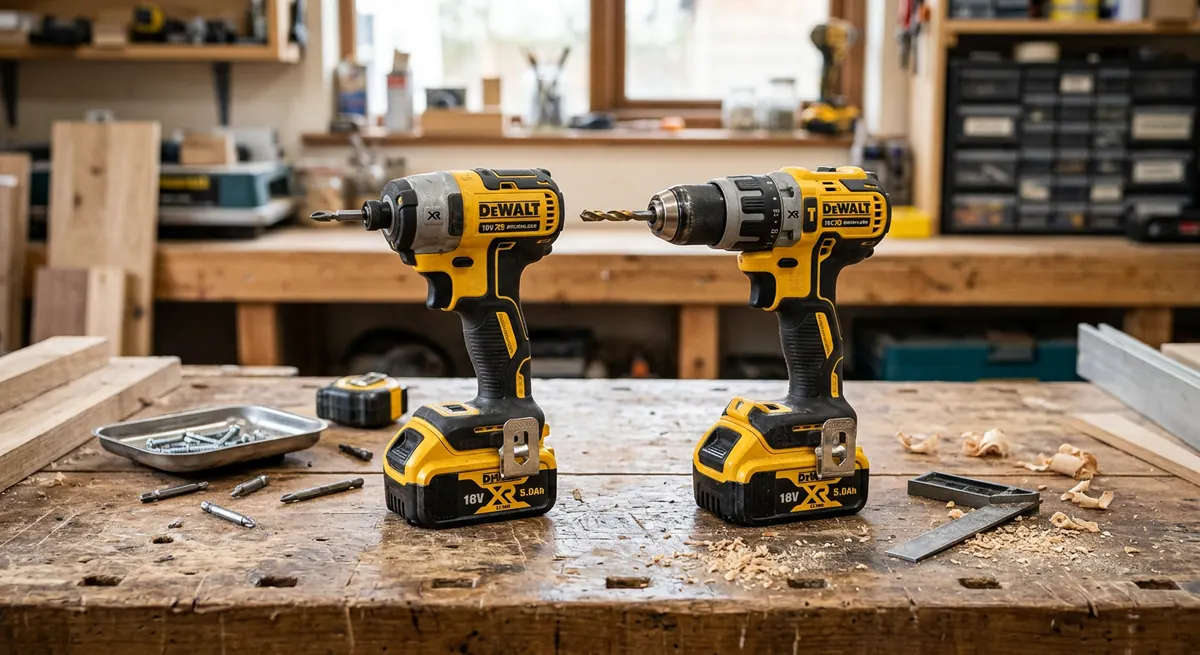
A cordless drill and an impact driver look similar, share the same battery platform, and are often sold together in combo kits — but they are built for different jobs. A drill is a versatile tool that drills holes and drives screws with adjustable speed and a clutch that prevents overdriving. An impact driver is a specialized fastening tool that uses rotational impacts to drive long screws and lag bolts with far less wrist strain. Understanding how each tool works, and when to reach for one over the other, helps you work faster, avoid stripped screws, and decide whether you need both or just one.
Quick Answer
A cordless drill is the tool to reach for when drilling holes, mixing materials, or driving small screws where precision matters — its adjustable clutch and chuck that accepts round and hex bits make it the more versatile tool. An impact driver is the tool for driving long screws, lag bolts, and large quantities of fasteners, where its 1,000 to 2,000+ inch-pounds of torque and rapid rotational impacts drive fasteners with less effort and less cam-out than a drill. Most homeowners benefit from owning both, because a drill handles drilling and light driving while an impact driver takes over for heavy fastening. If you can only buy one, start with a drill for its versatility. The main trade-off is that an impact driver accepts only 1/4-inch hex bits and lacks a clutch, so it is less precise but far more powerful for fastening.
How Each Tool Works
A cordless drill applies constant rotational force to the bit. A motor turns a chuck, the chuck grips the bit, and the bit spins at a speed you control with the trigger. A two-speed gearbox gives a low gear for high-torque driving and a high gear for faster drilling. An adjustable clutch slips at a set torque level to prevent overdriving screws into material.
An impact driver applies rotation plus rapid rotational impacts. When the tool senses resistance, an internal mechanism engages and delivers a series of quick, powerful torque impulses in the direction of rotation. The result is that the impacts — not your grip — do the work of driving the fastener. This is why an impact driver can drive a long lag bolt that would twist a drill out of your hands.
The difference is most obvious on tough fasteners. A drill applying constant force will stall or cam out when a screw binds, transferring all that resistance to your wrist. An impact driver senses the same resistance and responds with percussive torque that breaks the fastener loose and keeps driving, with much less feedback to your hand.
Torque Comparison
Torque, measured in inch-pounds (in-lbs), is the rotational force the tool can apply. Cordless drills typically produce 300 to 600 in-lbs of torque, which is enough to drill holes in wood, metal, and masonry and to drive most household screws. High-end hammer drills reach toward 700 to 800 in-lbs, but the majority of homeowner drills sit in the 350 to 500 in-lbs range.
Impact drivers produce substantially more torque — typically 1,000 to 2,000+ in-lbs. A standard brushless 20V impact driver delivers 1,500 to 1,800 in-lbs, and high-torque models reach 2,200 in-lbs or more. This is three to four times the torque of a typical drill, which is why impact drivers drive long screws and lag bolts that a drill simply cannot.
Raw torque is not always an advantage. On small screws or delicate material, 1,500 in-lbs of impact torque will snap heads off, strip cam out, or sink the screw below the surface before you can react. This is why drills, with their adjustable clutch, remain the better choice for precision driving. Impact drivers earn their place on heavy fastening where the extra torque is actually needed.
Chuck vs Hex Collet
A drill uses a chuck — a clamp that tightens around the bit shank. A 3/8-inch or 1/2-inch keyless chuck accepts both round-shank drill bits and hex-shank driver bits, which is why a drill can drill holes and drive screws. The chuck is the source of the drill's versatility: nearly any bit with a compatible shank diameter fits.
An impact driver uses a 1/4-inch hex collet that accepts only hex-shank bits. You slip the bit in, and a spring-loaded collar locks it in place. This is fast and convenient for driving, but it means an impact driver cannot accept standard round-shank drill bits without an adapter — and adapters are not recommended because the impact force can damage them and the bit can slip.
The practical result is that a drill is the tool for drilling holes and an impact driver is the tool for driving fasteners. If you own both, you can keep a drill bit in the drill and a driver bit in the impact driver, which eliminates the constant bit-swapping that slows down project work.
When to Use a Drill
Use a drill when you need to drill holes. The chuck accepts twist bits, spade bits, hole saws, and auger bits — none of which fit an impact driver without an adapter. For drilling into wood, metal, drywall, or masonry, a drill is the correct tool.
Use a drill for precision driving where control matters more than power. The adjustable clutch lets you set a torque limit so the screw stops at a consistent depth, which prevents stripping and overdriving on cabinetry, hardware installation, and delicate materials. The variable-speed trigger gives you fine control over how fast the bit spins.
Use a drill for mixing tasks. With a mixing paddle attachment, a drill can mix thinset, grout, paint, and drywall mud. An impact driver should never be used for mixing — the impact mechanism engages under load and can damage the paddle or splash material. A drill at low speed is the right tool for any mixing job.
Use a drill for light driving tasks like assembling furniture, tightening cabinet hinges, or installing brackets. For these jobs, the clutch and lower torque make the drill more controllable, and the difference in speed versus an impact driver is negligible.
When to Use an Impact Driver
Use an impact driver for long screws. Driving a 3-inch or 4-inch screw into framing bogs down a drill and twists your wrist, but an impact driver's rotational impacts drive the same screw with minimal effort. If you have ever fought a drill to sink a long screw, you understand exactly when an impact driver earns its place.
Use an impact driver for lag bolts and structural fasteners. Lag bolts into framing, ledger board lag screws, and heavy brackets are exactly the kind of high-torque fastening that impact drivers are built for. A drill will stall or struggle, while an impact driver drives the bolt home with steady impacts.
Use an impact driver for deck building and projects with many fasteners. Driving hundreds of deck screws with a drill is fatiguing and slow, and the drill will cam out and strip heads on the tough ones. An impact driver drives each screw faster, with less wrist strain, and with fewer stripped heads — which speeds up large projects significantly.
Use an impact driver when a drill is struggling. If your drill is stalling, camming out, or twisting your wrist on a fastener, switching to an impact driver is the solution. The impacts will break the fastener loose and finish the job that the drill could not.
Do You Need Both?
For most homeowners who do more than occasional repairs, owning both a drill and an impact driver is worthwhile. The drill handles drilling holes and precision driving, while the impact driver handles heavy fastening. Using each tool for its intended purpose speeds up project work and extends the life of both tools.
If you can only buy one tool, start with a drill. Its chuck and clutch make it the more versatile tool, and it can handle light driving tasks that an impact driver would overpower. A drill alone covers the majority of household tasks — drilling, assembling furniture, hanging fixtures, and light fastening.
If you already own a drill and are considering a second tool, an impact driver is the natural complement. Buying both on the same battery platform means you share batteries and chargers, and many manufacturers sell drill and impact driver combo kits that cost less than buying the tools separately. The combo is the most cost-effective way to own both.
You do not need both if your projects are limited to occasional light repairs. A single drill handles those tasks. The case for owning both gets stronger as your projects involve more fastening — deck building, fencing, furniture construction, or any work with long screws or lag bolts.
Brushless Motor Considerations
Both drills and impact drivers are available with brushed or brushless motors. Brushless motors are more efficient, run cooler, last longer, and deliver more runtime per charge. For a tool you expect to use regularly, brushless is worth the extra cost. The efficiency matters most on an impact driver, where high-torque driving drains batteries quickly.
Brushless impact drivers often include multiple speed or precision modes that let you dial back torque for smaller fasteners. This is valuable because an impact driver at full power can snap small screws or overdrive them before you react. Precision modes start slow and ramp up, giving you control on delicate work.
For combo kits, brushless models are the better long-term value. They cost more upfront but deliver better runtime, longer motor life, and features like precision modes that improve usability. If budget is tight, a brushed drill alone is a capable starter tool — but if you are buying both tools, brushless is the sensible choice.
Frequently Asked Questions
Not entirely. An impact driver accepts only 1/4-inch hex bits, so it cannot hold standard round-shank drill bits without an adapter, and adapters are not recommended under impact force. It also lacks an adjustable clutch, so it is less precise for delicate driving. An impact driver excels at heavy fastening, but a drill remains the better tool for drilling holes and precision work.
Final Verdict
A cordless drill and an impact driver are complementary tools, not competitors. A drill is the more versatile first tool — its chuck accepts drill bits, its clutch provides precision, and it handles drilling, mixing, and light driving. An impact driver is the specialized tool for heavy fastening, where its three-to-four-times higher torque and rotational impacts drive long screws and lag bolts with less effort and fewer stripped heads. If you can only buy one, start with a drill. If you do regular building or repair work, owning both on the same battery platform speeds up projects and is the most cost-effective path. Choose brushless motors for both tools if budget allows, and use impact-rated bits in the impact driver.
Sarah Mitchell
Home Improvement Editor
Sarah writes about home improvement products, tools, and materials for HomeGear Guide. Her work focuses on comparing product features, use cases, and practical buying considerations for homeowners.
Related Articles & Buying Guides
 Tools & DIY Equipment
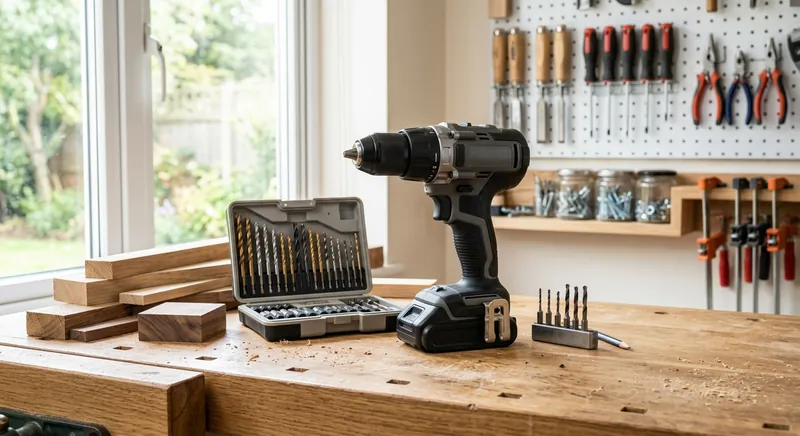
Best Cordless Drills for Home Projects
Compare 12V and 20V cordless drills with brushless and brushed motors. Find the right balance of power, weight, and battery platform for your home projects.
 Tools & DIY Equipment
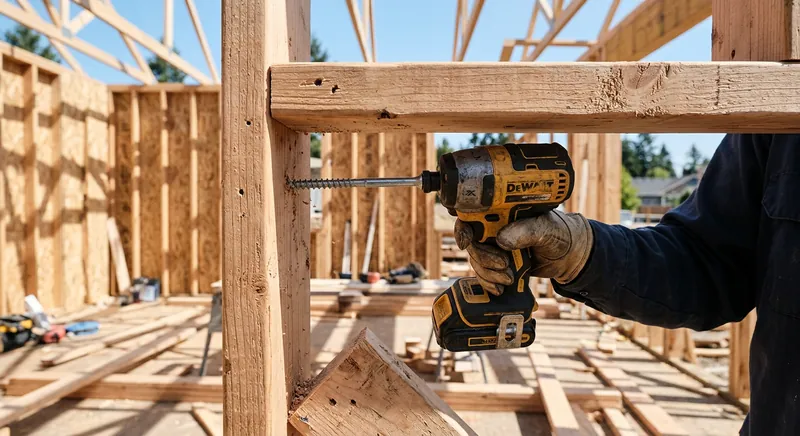
Best Impact Drivers for Driving Fasteners
Impact drivers deliver high torque through rapid rotational impacts, making them ideal for driving long screws and lag bolts. Compare options for your home projects.
 Tools & DIY Equipment
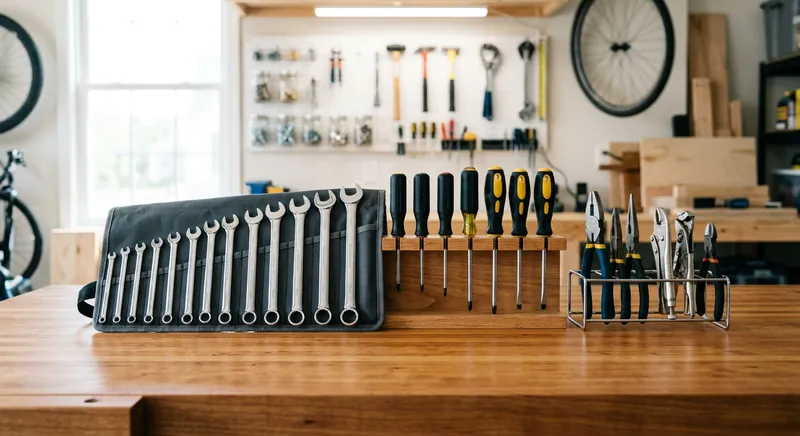
Best Tool Sets for Homeowners
Compare 100-piece to 200-piece home tool sets and power tool combo kits. Learn what essentials to look for and which sets offer the best value for homeowners.
 Tools & DIY Equipment
Best Circular Saws for Straight Cuts and Ripping
Compare 7-1/4 inch corded and cordless circular saws by blade size, bevel capacity, and motor power. Find the right saw for straight cuts and ripping lumber.
Get Smarter About Your Home
Receive practical buying guides, product comparisons, maintenance tips and home project ideas from HomeGear Guide.
You can unsubscribe at any time.