Attic Fan vs. Whole House Fan: Which Do You Need?
Affiliate Disclosure: HomeGear Guide is reader-supported. When you buy through links on our site, we may earn an affiliate commission at no extra cost to you. We do not accept paid product placements or sponsor-biased reviews.
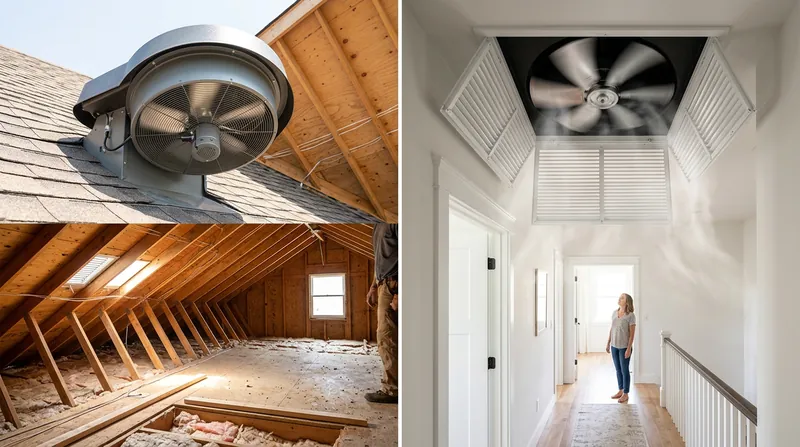
Attic fans and whole house fans are often confused because both involve ventilation and both mount in or around the attic. But they serve entirely different purposes, operate differently, and are not interchangeable. An attic fan ventilates only the attic space to reduce attic temperatures and protect the roof structure. A whole house fan ventilates the entire living space by pulling fresh outside air through windows and exhausting hot indoor air through the attic. Understanding the difference is essential because buying the wrong one will not solve your problem — and could even create new ones. This comparison explains what each does, how they compare on cost and installation, and which one your home actually needs.
Quick Answer
The fundamental distinction is that an attic fan cools only the attic to protect roofing and reduce ceiling heat transfer, while a whole house fan cools the entire living space by pulling fresh outside air through windows and exhausting hot indoor air through the attic. An attic fan is the right choice if your shingles are showing heat damage, your AC runs constantly due to ceiling heat, or you want to protect stored items from extreme temperatures. A whole house fan is what you need if your goal is energy-efficient whole-home cooling and your climate has cool evenings. They are complementary rather than competing products, and in hot climates having both is ideal since the attic fan handles daytime heat while the whole house fan handles evening cooling. Operating costs are low for both, at 2 to 8 dollars per month.
Top Picks at a Glance
Standard Attic Fan
Whole House Fan
Product Comparison
| Product | Best For | Purpose | CFM Range | Installation | Price Range | Details |
|---|---|---|---|---|---|---|
Standard Attic Fan | Reducing attic heat to protect roofing and reduce ceiling heat transfer | Cools attic space only (protects roof and reduces ceiling heat gain) | 800–1,600 CFM | Roof or gable mounted (small opening) | $80–$400 | View Review ↓ |
Whole House Fan | Cooling the entire living space by flushing hot indoor air and drawing in fresh outside air | Cools entire living space (air exchange through windows) | 3,000–10,000 CFM | Ceiling-mounted between living space and attic (large opening) | $300–$1,200 | View Review ↓ |
Standard Attic Fan
- Best For:
- Reducing attic heat to protect roofing and reduce ceiling heat transfer
- Purpose:
- Cools attic space only (protects roof and reduces ceiling heat gain)
- CFM Range:
- 800–1,600 CFM
- Installation:
- Roof or gable mounted (small opening)
- Price Range:
- $80–$400
Whole House Fan
- Best For:
- Cooling the entire living space by flushing hot indoor air and drawing in fresh outside air
- Purpose:
- Cools entire living space (air exchange through windows)
- CFM Range:
- 3,000–10,000 CFM
- Installation:
- Ceiling-mounted between living space and attic (large opening)
- Price Range:
- $300–$1,200
Detailed Product Reviews & Specifications
Standard Attic Fan
A standard attic fan is a relatively small exhaust fan (800–1,600 CFM) mounted on the roof or gable wall that vents hot air from the attic to the outside. It does not interact with the living space — it only cools the attic. An attic fan runs automatically based on a thermostat (and sometimes a humidistat), turning on when the attic reaches a set temperature and off when it cools.
Pros
- •Protects roof shingles and decking from excessive heat
- •Reduces heat transfer from attic to living space
- •Relatively inexpensive to purchase and install
- •Operates automatically with thermostat control
Cons
- •Does not cool the living space directly
- •Requires adequate intake ventilation to function properly
- •Can create negative pressure if intake is insufficient
- •Only addresses attic heat, not indoor comfort
Key Specifications
Whole House Fan
A whole house fan is a large fan (3,000–10,000 CFM) installed in the ceiling between the living space and the attic. When running with windows open, it pulls fresh outside air through the house and pushes hot indoor air into the attic, where it exits through attic vents. This creates a complete air exchange every 2–4 minutes and can lower indoor temperatures by 10–15°F in minutes.
Pros
- •Directly cools the living space, not just the attic
- •Uses 80–90% less electricity than central AC
- •Provides fresh air exchange, improving indoor air quality
- •Can serve as primary cooling in mild climates
Cons
- •Only effective when outside air is cooler than inside air
- •Requires opening windows to operate
- •Larger and more complex installation than an attic fan
- •Can be noisy at full speed
Key Specifications
Purpose: What Each Fan Actually Does
The fundamental difference between an attic fan and a whole house fan is what they cool. An attic fan cools the attic. A whole house fan cools the living space.
An attic fan exhausts hot air from the attic to the outside, drawing cooler outside air in through intake vents (soffit vents). It does not move any air in the living space. Its purpose is to reduce attic temperatures, which protects roof shingles from overheating, reduces heat transfer through the ceiling, and can extend the life of items stored in the attic.
A whole house fan pulls fresh outside air through open windows, moves it through the living space, and exhausts it through the attic and roof vents. It creates a breeze through the house and can drop indoor temperatures by 10–15°F in minutes. Its purpose is to cool the people and the living space, not the attic.
How They Operate and When to Use Them
An attic fan operates automatically. It is controlled by a thermostat (and sometimes a humidistat) that turns it on when the attic reaches a set temperature (typically 100–110°F) and off when it cools. You do not need to do anything — it runs as needed during hot weather. Some solar attic fans run automatically whenever the sun is out.
A whole house fan operates manually. You turn it on when you want to cool the house, and you must open windows first for it to work. It is most effective in the evening, at night, and in the early morning when outside air is cooler than inside air. During the day, you turn it off and close windows to keep heat out.
This means the two fans have different usage patterns. An attic fan runs during the hottest part of the day. A whole house fan runs during the coolest part of the day or night.
Can You Use Both?
Yes, and many homes benefit from both. The whole house fan cools the living space in the evening and at night, while the attic fan keeps attic temperatures in check during the day. They do not conflict because they operate at different times and serve different purposes. If you install both, make sure the attic fan has its own thermostat control so it does not run while the whole house fan is operating.
Cost Comparison
Attic fans are less expensive than whole house fans in both equipment and installation. A typical attic fan costs $80–$400 for the unit and $150–$400 for professional installation, bringing total cost to $230–$800. Solar attic fans cost more upfront ($150–$550) but eliminate the electrician fee and operating cost.
Whole house fans cost $300–$1,200 for the unit and $400–$800 for professional installation, for a total of $700–$2,000. The larger opening, framing, and potential need for additional attic exhaust ventilation contribute to the higher installation cost.
In terms of operating cost, both are inexpensive to run. An attic fan uses 100–400 watts and runs several hours per day, costing $2–$8 per month. A whole house fan uses 200–700 watts but runs fewer hours, costing $1–$5 per month. Both are far cheaper to operate than central air conditioning.
Installation Comparison
Attic fans require a relatively small opening — either a roof penetration (for roof-mounted models) or a gable wall opening (for gable-mounted models). Solar models are the simplest to install because no wiring is needed. Electric models require connection to your home electrical system, which typically requires an electrician.
Whole house fans require a larger ceiling opening, framing to support the fan, and adequate attic exhaust ventilation. The fan must be positioned in a central hallway for even airflow. Electric wiring is required, and in cold climates, an insulated cover should be installed to prevent winter heat loss.
Both installations are moderate DIY projects for experienced homeowners, but professional installation is recommended for most people — especially for electric attic fans (wiring) and whole house fans (ceiling framing and vent verification).
Which One Do You Need?
Choose an attic fan if: your attic gets extremely hot, your shingles are showing signs of heat damage, your AC runs constantly because heat is radiating from the ceiling, or you want to protect items stored in the attic from heat damage.
Choose a whole house fan if: you want to cool your living space efficiently, your climate has cool evenings or nights, you want fresh air exchange in your home, or you want to reduce AC usage and save on cooling costs.
Choose both if: you live in a hot climate where the attic overheats during the day and you also want efficient nighttime cooling. The two fans address different problems and can work together effectively.
Attic Ventilation Calculator & Code Sizing Tool
Calculate your attic's required Net Free Ventilating Area (NFVA) under IRC R806.2 building code formulas, balanced 50/50 between intake and exhaust.
Frequently Asked Questions
No. An attic fan ventilates only the attic space to reduce attic temperatures and protect roofing. A whole house fan ventilates the entire living space by pulling fresh air through windows and exhausting hot air through the attic. They serve different purposes and are not interchangeable.
Final Verdict
The choice between an attic fan and a whole house fan comes down to what you are trying to accomplish. If your goal is to reduce attic heat and protect your roof, get an attic fan. If your goal is to cool your living space efficiently, get a whole house fan. In hot climates, having both is ideal — the attic fan handles daytime attic heat while the whole house fan handles evening home cooling. They are complementary, not competing, products.
Michael Davies
Home Systems & Repair Editor
Michael writes about roofing, attic ventilation, insulation, and structural repair products for HomeGear Guide. His focus is on helping homeowners understand the materials and tools involved in protecting their home exterior and interior.
Related Articles & Buying Guides
 Attic & Insulation
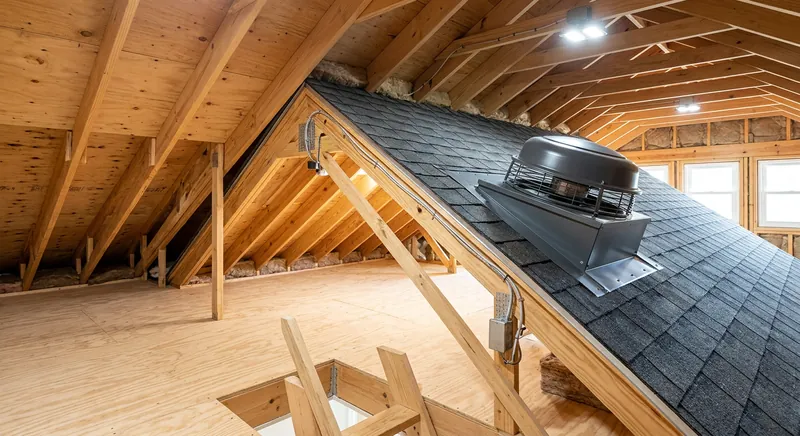
Best Attic Fans for Ventilation and Temperature Control
Compare solar and electric attic ventilation fans by airflow, thermostat controls, roof mounting, and IRC building codes to cool your attic and protect your roof.
 Attic & Insulation
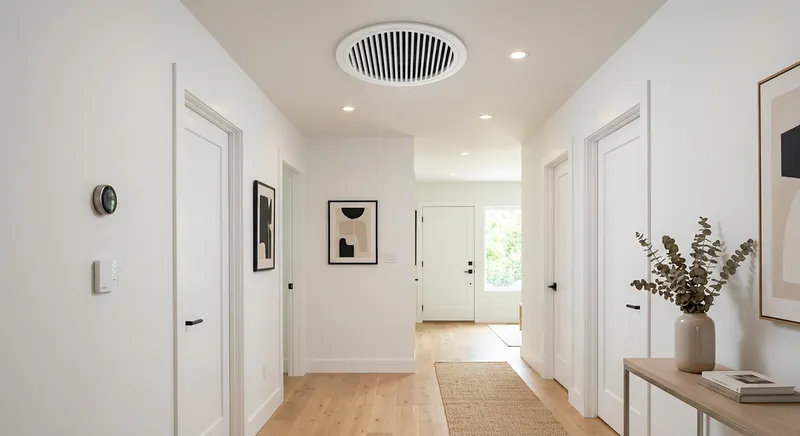
Best Whole House Fans for Fast Home Cooling
A whole house fan can cool your home in minutes by drawing in fresh outside air and pushing hot air out through the attic. Here is how to choose the right size, drive type, and features.
 Attic & Insulation
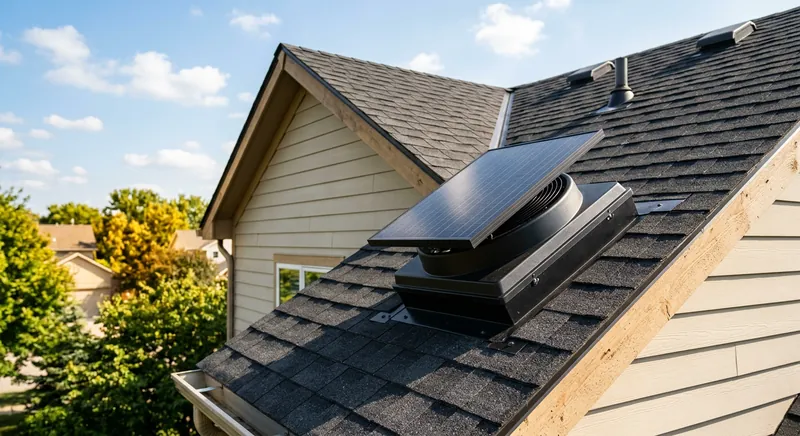
Solar Attic Fan Reviews: Comparing Top Options
Solar attic fans promise zero-cost ventilation, but panel wattage, CFM, and warranty vary widely between models. This review compares the key features that matter.
 Attic & Insulation
Best Radiant Barriers for Attic Heat Reduction
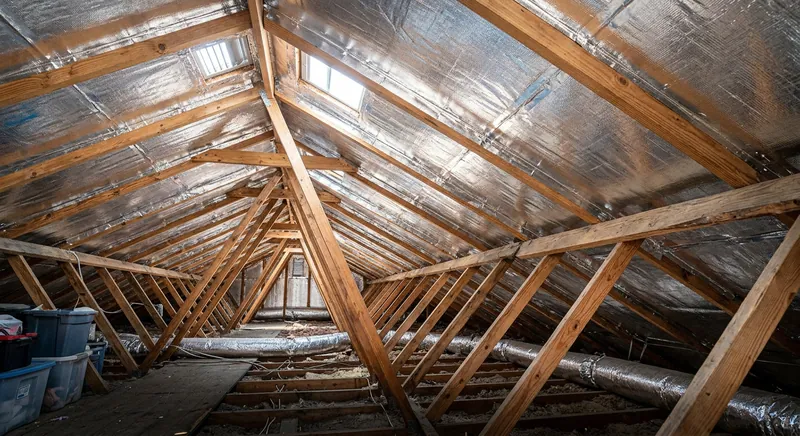
Radiant barriers reflect attic heat back toward the roof, reducing temperatures by 10–20°F. Here is how to compare foil barriers, radiant barrier paint, and installation methods.
Get Smarter About Your Home
Receive practical buying guides, product comparisons, maintenance tips and home project ideas from HomeGear Guide.
You can unsubscribe at any time.