Best Whole House Fans for Fast Home Cooling
Affiliate Disclosure: HomeGear Guide is reader-supported. When you buy through links on our site, we may earn an affiliate commission at no extra cost to you. We do not accept paid product placements or sponsor-biased reviews.
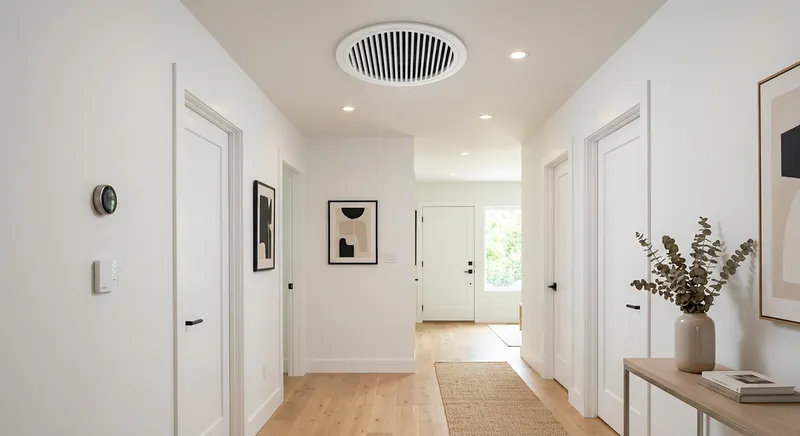
A whole house fan is one of the most effective and energy-efficient ways to cool a home. Unlike an attic fan, which only ventilates the attic space, a whole house fan pulls fresh outside air through open windows and exhausts hot indoor air through the attic and roof vents. On a mild evening, a properly sized whole house fan can replace all the air in your home in 2–4 minutes and drop the indoor temperature by 10–15°F. They use a fraction of the electricity that central air conditioning requires — typically 200–700 watts versus 3,000–5,000 watts for a central AC unit. This guide covers CFM sizing, the differences between direct-drive and belt-drive models, louver types, and what to expect during installation.
Quick Answer
A direct-drive whole house fan is the best choice for most homes up to 2,500 square feet because it is simpler, quieter at low speeds, and requires minimal maintenance with no belts to replace. You need 2 to 3 CFM per square foot of living space, so a typical 2,000 square foot home requires 4,000 to 6,000 CFM. Belt-drive models make sense only for larger homes over 2,500 square feet that need more than 6,000 CFM, offering quieter full-speed operation but requiring periodic belt inspection. In cold climates, an insulated cover is essential to prevent significant winter heat loss through the fan opening. The fan requires open windows to draw outside air and adequate attic exhaust ventilation of at least 1 square foot per 750 CFM, without which it will underperform or create backpressure.
Top Picks at a Glance
Direct-Drive Whole House Fan
Belt-Drive Whole House Fan
Compact Whole House Fan
Insulated Whole House Fan
Product Comparison
| Product | Best For | Drive Type | CFM Rating | Installation | Noise Level | Price Range | Details |
|---|---|---|---|---|---|---|---|
Direct-Drive Whole House Fan Best Overall | Most homeowners who want efficient, low-maintenance cooling | Direct-drive (blade mounted to motor shaft) | 3,000–6,000 CFM | Ceiling-mounted between attic and living space | Low at reduced speed; moderate at full speed | $300–$700 | View Review ↓ |
Belt-Drive Whole House Fan Best for Large Homes | Larger homes (2,500+ sq ft) and homeowners who prioritize quiet operation at full speed | Belt-drive (motor connected via belt and pulley) | 5,000–10,000 CFM | Ceiling-mounted (requires more attic clearance) | Quiet at full speed; slight belt noise possible | $500–$1,200 | View Review ↓ |
Compact Whole House Fan | Small homes, condos, or homes with limited attic space | Direct-drive (compact motor) | 1,500–3,000 CFM | Ceiling-mounted (low-profile design) | Low to moderate | $200–$500 | View Review ↓ |
Insulated Whole House Fan Best for Cold Climates | Homeowners in cold climates who want to prevent heat loss through the fan opening | Direct-drive (with insulated cover system) | 3,000–6,000 CFM | Ceiling-mounted (insulated cover in attic) | Low to moderate | $400–$900 | View Review ↓ |
Direct-Drive Whole House Fan
Best Overall- Best For:
- Most homeowners who want efficient, low-maintenance cooling
- Drive Type:
- Direct-drive (blade mounted to motor shaft)
- CFM Rating:
- 3,000–6,000 CFM
- Installation:
- Ceiling-mounted between attic and living space
- Noise Level:
- Low at reduced speed; moderate at full speed
- Price Range:
- $300–$700
Belt-Drive Whole House Fan
Best for Large Homes- Best For:
- Larger homes (2,500+ sq ft) and homeowners who prioritize quiet operation at full speed
- Drive Type:
- Belt-drive (motor connected via belt and pulley)
- CFM Rating:
- 5,000–10,000 CFM
- Installation:
- Ceiling-mounted (requires more attic clearance)
- Noise Level:
- Quiet at full speed; slight belt noise possible
- Price Range:
- $500–$1,200
Compact Whole House Fan
- Best For:
- Small homes, condos, or homes with limited attic space
- Drive Type:
- Direct-drive (compact motor)
- CFM Rating:
- 1,500–3,000 CFM
- Installation:
- Ceiling-mounted (low-profile design)
- Noise Level:
- Low to moderate
- Price Range:
- $200–$500
Insulated Whole House Fan
Best for Cold Climates- Best For:
- Homeowners in cold climates who want to prevent heat loss through the fan opening
- Drive Type:
- Direct-drive (with insulated cover system)
- CFM Rating:
- 3,000–6,000 CFM
- Installation:
- Ceiling-mounted (insulated cover in attic)
- Noise Level:
- Low to moderate
- Price Range:
- $400–$900
Detailed Product Reviews & Specifications
Direct-Drive Whole House Fan
A direct-drive whole house fan has the fan blade mounted directly to the motor shaft. This design is simpler, quieter at low speeds, and requires less maintenance than belt-drive models because there are no belts to tension or replace. Most modern direct-drive fans deliver 3,000–6,000 CFM and include variable speed controls, making them suitable for homes up to about 2,500 square feet.
Pros
- •Simpler design with fewer moving parts
- •Quieter at low speeds than belt-drive models
- •No belt maintenance or replacement needed
- •Variable speed control on most models
Cons
- •May be louder than belt-drive at full speed
- •Motor replacement requires replacing the entire fan assembly
- •Less suitable for very large homes (over 3,000 sq ft)
Key Specifications
Belt-Drive Whole House Fan
A belt-drive whole house fan uses a motor connected to the fan blade via a belt and pulley system. This design allows for larger blade diameters and higher CFM output — typically 5,000–10,000 CFM — making belt-drive models suitable for larger homes. The belt also acts as a vibration damper, which can make these fans quieter at full speed than direct-drive models. The trade-off is that belts need periodic inspection and replacement.
Pros
- •Higher CFM output for large homes
- •Quieter at full speed due to belt isolation
- •Motor can be replaced without replacing the fan blade
- •Better suited for homes over 2,500 sq ft
Cons
- •Belt needs inspection and eventual replacement
- •More complex design with additional maintenance
- •Larger footprint requires more attic space
- •Higher cost than comparable direct-drive models
Key Specifications
Compact Whole House Fan
A compact whole house fan is a smaller, lower-profile unit designed for homes where attic space is limited or where a full-size fan would be overkill. These fans typically deliver 1,500–3,000 CFM, which is enough for homes up to about 1,500 square feet. Their smaller size makes them easier to install and less intrusive in the ceiling.
Pros
- •Smaller footprint fits tight attic spaces
- •Easier and less expensive installation
- •Lower CFM is sufficient for small homes
- •Generally quieter than full-size models
Cons
- •Not enough airflow for larger homes
- •Limited speed control options on some models
- •May need longer run time to fully cool the house
Key Specifications
Insulated Whole House Fan
An insulated whole house fan includes built-in insulation — typically an automatic or manual insulated cover that seals the fan opening when the fan is not in use. In cold climates, an uninsulated fan opening can be a significant source of heat loss, as warm air from the living space escapes into the attic. The insulated cover eliminates this problem, making these fans ideal for regions with long heating seasons.
Pros
- •Prevents heat loss through the fan opening in winter
- •Automatic insulated covers available on some models
- •Suitable for cold climates with long heating seasons
- •Maintains energy efficiency year-round
Cons
- •Higher cost than standard models
- •Automatic covers add mechanical complexity
- •Manual covers require you to climb into the attic
- •Limited selection compared to standard fans
Key Specifications
How Whole House Fans Work
A whole house fan is a large fan installed in the ceiling between your living space and the attic. When the fan runs, it pulls air through open windows and forces it up into the attic, where it exits through attic vents. This creates a complete air exchange — fresh outside air replaces stale indoor air in minutes.
Whole house fans work best when the outside air is cooler than the inside air. They are most effective in the evening, at night, and in the early morning during the cooling season. In many climates, a whole house fan can serve as the primary cooling system, with air conditioning used only on the hottest days.
For a whole house fan to work properly, you must have adequate attic exhaust ventilation. The fan pushes a large volume of air into the attic, and that air needs a way out. Most manufacturers recommend at least 1 square foot of exhaust vent net free area for every 750 CFM of fan capacity.
Sizing: How Much CFM Do You Need?
Whole house fans are sized based on the square footage of your home living space (not the attic). The standard recommendation is 2–3 CFM per square foot of living space for a complete air exchange every 3–4 minutes.
CFM Sizing Guide
Home up to 1,000 sq ft: 2,000–3,000 CFM
Home 1,000–2,000 sq ft: 3,000–6,000 CFM
Home 2,000–3,000 sq ft: 6,000–9,000 CFM
Home over 3,000 sq ft: 9,000+ CFM (consider multiple fans)
Window Opening Requirements
A whole house fan needs open windows to draw air from. As a general rule, you need approximately 2 square feet of open window area for every 1,000 CFM of fan capacity. If windows are closed, the fan cannot pull air and will not cool the home effectively.
Direct-Drive vs. Belt-Drive: Which Is Better?
Direct-drive fans have the blade mounted directly to the motor shaft. They are simpler, require less maintenance, and tend to be quieter at low speeds. They are the most common type for residential use and are suitable for most homes up to about 2,500 square feet.
Belt-drive fans use a belt and pulley to connect the motor to the blade. This allows for larger blades and higher CFM output, making them better for larger homes. The belt also isolates motor vibration from the blade, which can reduce noise at full speed. The trade-off is that belts need periodic inspection and replacement — typically every 3–5 years.
For most homeowners, a direct-drive fan is the better choice. It is simpler, more reliable, and less expensive. Belt-drive makes sense only if you have a large home that requires more than 6,000 CFM or if noise at full speed is a primary concern.
Louvers and Insulated Covers
Whole house fans include louvers — the slatted doors that open when the fan runs and close when it stops. There are two types: gravity louvers, which open from the air pressure of the fan and close by gravity, and motorized louvers, which are mechanically opened and closed.
Gravity louvers are simple and reliable but may not seal tightly when closed, allowing some air leakage between the living space and the attic. Motorized louvers seal better but add mechanical complexity and cost.
In cold climates, consider a fan with an insulated cover. When the fan is not in use for months at a time, an uninsulated opening can be a significant source of heat loss. Insulated covers can be manual (you place them by hand) or automatic (they deploy when the fan is off). Automatic covers are more convenient but more expensive.
Installation Requirements
Installing a whole house fan requires cutting a hole in the ceiling, framing the opening, mounting the fan, and ensuring adequate attic ventilation. It is a moderate-to-advanced DIY project or a professional installation that typically costs $400–$800 in labor.
The fan should be located in a central hallway ceiling where it can pull air evenly from all rooms. The hallway should be wide enough to accommodate the fan opening and provide access for installation and maintenance.
Before installation, verify that your attic has enough exhaust ventilation for the fan CFM. If existing ridge, gable, or soffit vents are insufficient, you will need to add more. An undersized exhaust system will restrict airflow and reduce the fan effectiveness, and in extreme cases can create backpressure that forces air back into the living space.
Attic Ventilation Calculator & Code Sizing Tool
Calculate your attic's required Net Free Ventilating Area (NFVA) under IRC R806.2 building code formulas, balanced 50/50 between intake and exhaust.
Frequently Asked Questions
In mild climates with cool evenings, a whole house fan can serve as the primary cooling system. In hot, humid climates where nighttime temperatures stay above 75°F, a whole house fan alone may not be sufficient, and air conditioning will still be needed on the hottest days. Many homeowners use a whole house fan for most of the cooling season and reserve AC for extreme heat.
Final Verdict
For most homes, a direct-drive whole house fan in the 3,000–6,000 CFM range is the best choice — it is reliable, efficient, and requires minimal maintenance. Belt-drive models are worth the extra cost only for larger homes that need more than 6,000 CFM. In cold climates, an insulated cover is essential to prevent winter heat loss. Whatever you choose, make sure your attic has adequate exhaust ventilation, as the fan can only perform as well as its exhaust path allows.
Michael Davies
Home Systems & Repair Editor
Michael writes about roofing, attic ventilation, insulation, and structural repair products for HomeGear Guide. His focus is on helping homeowners understand the materials and tools involved in protecting their home exterior and interior.
Related Articles & Buying Guides
 Attic & Insulation
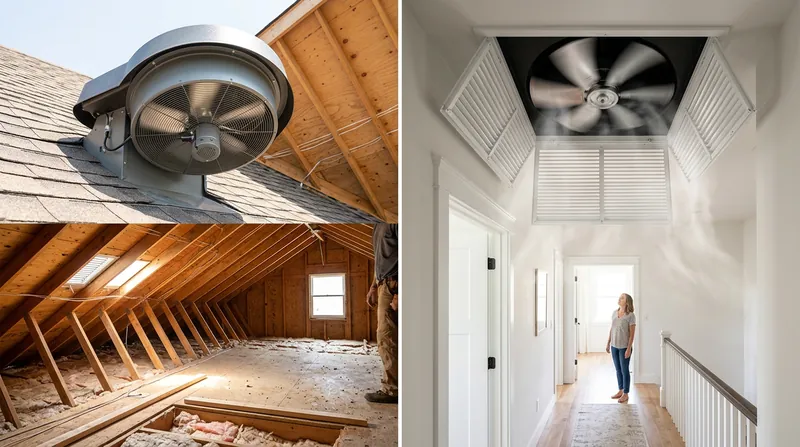
Attic Fan vs. Whole House Fan: Which Do You Need?
Attic fans and whole house fans sound similar but serve completely different purposes. This comparison breaks down what each does, how much they cost, and which one your home actually needs.
 Attic & Insulation
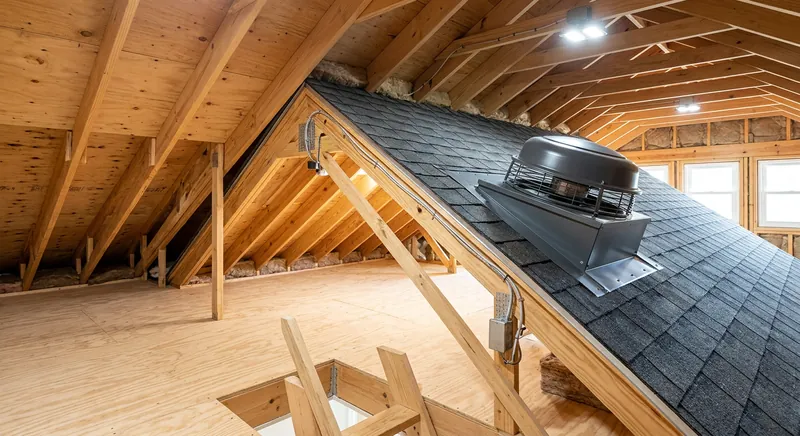
Best Attic Fans for Ventilation and Temperature Control
Compare solar and electric attic ventilation fans by airflow, thermostat controls, roof mounting, and IRC building codes to cool your attic and protect your roof.
 Attic & Insulation
Best Attic Insulation for Hot Climates
Compare spray foam, radiant barriers, blown fiberglass, and cellulose attic insulation to stop intense radiant heat gain, lower cooling bills, and control humidity.
 Attic & Insulation
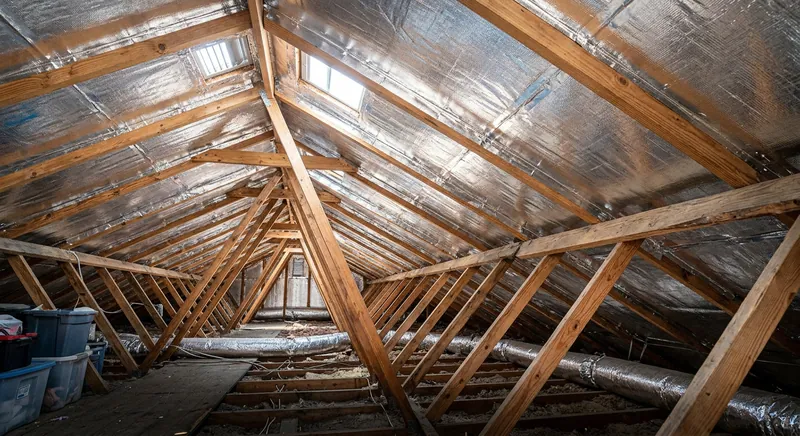
Best Radiant Barriers for Attic Heat Reduction
Radiant barriers reflect attic heat back toward the roof, reducing temperatures by 10–20°F. Here is how to compare foil barriers, radiant barrier paint, and installation methods.
Get Smarter About Your Home
Receive practical buying guides, product comparisons, maintenance tips and home project ideas from HomeGear Guide.
You can unsubscribe at any time.