Best Attic Fans for Ventilation and Temperature Control
Affiliate Disclosure: HomeGear Guide is reader-supported. When you buy through links on our site, we may earn an affiliate commission at no extra cost to you. We do not accept paid product placements or sponsor-biased reviews.
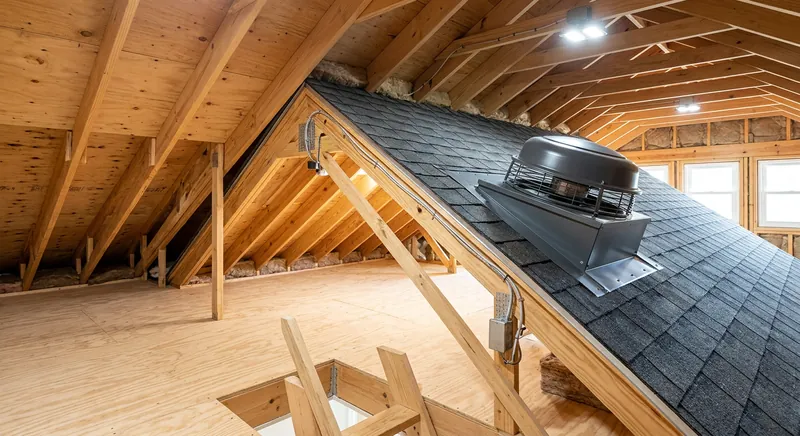
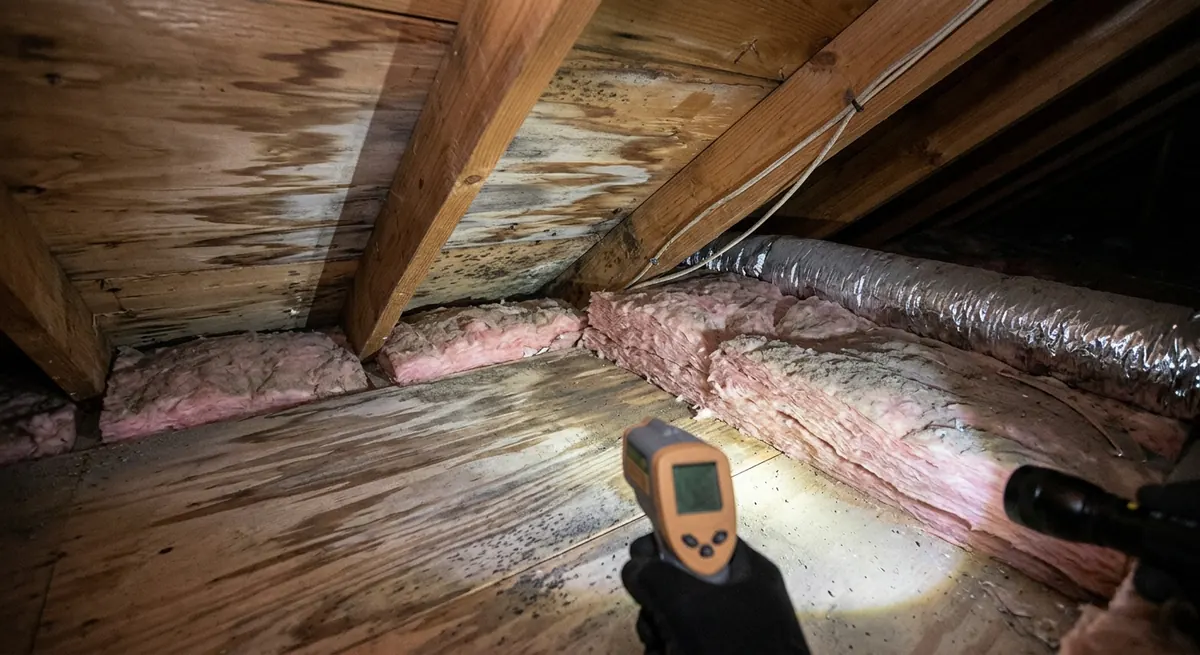
During peak summer months, solar radiation baking an asphalt shingle roof can drive attic temperatures past 140°F to 160°F. Without adequate ventilation, this superheated air mass conducts heat downward through ceiling insulation into living spaces, driving air conditioning compressors to continuous exhaustion. Furthermore, excessive heat accelerates shingle granule loss and curls roof decking, while winter moisture accumulation fosters attic mold and wood rot. Powered attic fans actively exhaust hot air, maintaining a continuous thermal exchange. However, an improperly sized fan can depressurize your home and backdraft hazardous combustion gases from water heaters. Michael Davies breaks down CFM sizing formulas, mounting configurations, and International Residential Code (IRC) Section R806.2 standards.
Quick Answer
Proper attic fan selection requires calculating minimum CFM based on attic volume: multiply your attic square footage by 0.7 to establish the base airflow requirement (e.g., a 1,500 sq ft attic requires at least 1,050 CFM), adding 20% for roofs with steep pitches (7:12 or greater) or dark shingles. Solar attic fans (30W to 40W panels delivering 1,200 to 1,800 CFM) are ideal for sunny southern climates because they operate without running electrical wiring and qualify for federal energy tax credits. Electric powered fans (1,400 to 2,000+ CFM) provide thermostatically controlled performance regardless of cloud cover. Most importantly: your attic must have 1 square foot of Net Free Ventilating Area (NFVA) of intake soffit vents for every 300 CFM of powered exhaust, or the fan will pull conditioned air from inside your home.
Top Picks at a Glance
High-Efficiency Solar Attic Fan (35W)
Monocrystalline 35W solar panel with brushless DC motor delivering 1,550 CFM without wiring.
Dual-Control Electric Roof Attic Fan
1,600 CFM heavy-duty steel fan equipped with built-in adjustable thermostat and humidistat.
Heavy-Duty Gable Mount Electric Fan
High-capacity 2,100 CFM motor designed for internal gable louvers with automatic shutter doors.
Smart Brushless DC Variable-Speed Fan
Ultra-quiet sub-1.0 sone operation with multi-speed digital app control and low 45W draw.
Product Comparison
| Product | Power Source | Rated Airflow (CFM) | Attic Coverage | Controls | Noise / Motor | Best Application | Details |
|---|---|---|---|---|---|---|---|
High-Efficiency Solar Attic Fan Best Overall Solar | 35W Monocrystalline Solar | 1,550 CFM | Up to 1,850 Sq Ft | Brushless DC Motor | 1.2 Sones | Homes in sunny climates seeking zero-electric-cost ventilation and simple wireless installation | View Review ↓ |
Dual-Control Electric Roof Attic Fan Best Overall Electric | 120V AC (145 Watts) | 1,600 CFM | Up to 2,200 Sq Ft | Adjustable Thermostat & Humidistat | Thermally Protected PSC | Reliable, consistent temperature and moisture removal regardless of sunlight or weather | View Review ↓ |
Heavy-Duty Gable Mount Electric Fan Best Gable Mount | 120V AC (190 Watts) | 2,100 CFM | Up to 2,800 Sq Ft | Interior Gable Wall Studs | Precision Bi-Metal Thermostat | Attics with existing gable louver vents that avoid cutting holes into roof shingles | View Review ↓ |
Smart Brushless DC Variable-Speed Fan Best for Low Noise | 120V AC Inverter to DC (45W) | 1,800 CFM | < 1.0 Sone (Whisper Quiet) | Variable-Speed Brushless EC | Smart App / Digital Thermostat | Homes where attic fans are positioned directly above master bedrooms or noise-sensitive spaces | View Review ↓ |
High-Efficiency Solar Attic Fan
Best Overall Solar- Power Source:
- 35W Monocrystalline Solar
- Rated Airflow (CFM):
- 1,550 CFM
- Attic Coverage:
- Up to 1,850 Sq Ft
- Controls:
- Brushless DC Motor
- Noise / Motor:
- 1.2 Sones
- Best Application:
- Homes in sunny climates seeking zero-electric-cost ventilation and simple wireless installation
Dual-Control Electric Roof Attic Fan
Best Overall Electric- Power Source:
- 120V AC (145 Watts)
- Rated Airflow (CFM):
- 1,600 CFM
- Attic Coverage:
- Up to 2,200 Sq Ft
- Controls:
- Adjustable Thermostat & Humidistat
- Noise / Motor:
- Thermally Protected PSC
- Best Application:
- Reliable, consistent temperature and moisture removal regardless of sunlight or weather
Heavy-Duty Gable Mount Electric Fan
Best Gable Mount- Power Source:
- 120V AC (190 Watts)
- Rated Airflow (CFM):
- 2,100 CFM
- Attic Coverage:
- Up to 2,800 Sq Ft
- Controls:
- Interior Gable Wall Studs
- Noise / Motor:
- Precision Bi-Metal Thermostat
- Best Application:
- Attics with existing gable louver vents that avoid cutting holes into roof shingles
Smart Brushless DC Variable-Speed Fan
Best for Low Noise- Power Source:
- 120V AC Inverter to DC (45W)
- Rated Airflow (CFM):
- 1,800 CFM
- Attic Coverage:
- < 1.0 Sone (Whisper Quiet)
- Controls:
- Variable-Speed Brushless EC
- Noise / Motor:
- Smart App / Digital Thermostat
- Best Application:
- Homes where attic fans are positioned directly above master bedrooms or noise-sensitive spaces
Detailed Product Reviews & Specifications
High-Efficiency Solar Attic Fan
A high-performance solar-powered attic exhaust fan featuring a premium 35-watt monocrystalline solar panel and an ultra-efficient brushless DC motor. Automatically ramps up speed during peak sun hours when attic heat is at its maximum.
Pros
- •Zero operating cost; powered 100% by high-efficiency monocrystalline solar energy
- •Brushless DC motor operates smoothly with minimal vibration and extended 15+ year lifespan
- •Seamless spun aluminum housing will never rust or leak around roof flashing
- •Qualifies for federal residential energy clean property tax credits
Cons
- •Higher initial purchase price compared to standard 120V electric models
- •Does not run after dark unless paired with an optional battery or hybrid AC adapter
Key Specifications
Dual-Control Electric Roof Attic Fan
A robust roof-mounted electric attic fan featuring dual integrated controls: an adjustable thermostat (60°F to 120°F) and an adjustable humidistat (30% to 90% RH). Provides year-round protection against summer heat and winter condensation.
Pros
- •Dual thermostat and humidistat automation protects against heat and winter moisture
- •Consistent, powerful 1,600 CFM airflow regardless of cloud cover or time of day
- •Heavy-duty galvanized steel housing with baked-on epoxy powder coat finish
- •Integrated thermal overload protection prevents motor burnout
Cons
- •Adds modest electrical consumption to monthly utility bills
- •Requires 120V electrical junction box in the attic space
Key Specifications
Heavy-Duty Gable Mount Electric Fan
A commercial-grade gable-mount attic fan engineered to mount directly behind existing exterior wall louvers inside the attic. Delivers a massive 2,100 CFM to evacuate heat from sprawling ranch and two-story attics.
Pros
- •Eliminates roof shingle penetrations; completely hidden inside the attic gable wall
- •High-volume 2,100 CFM airflow handles large homes up to 2,800 square feet
- •Direct-drive motor requires zero belt maintenance or tension adjustments
- •Pre-wired adjustable thermostat with easy wall mounting bracket
Cons
- •Higher noise vibration if mounted to wall studs near upper-floor bedrooms
- •Requires adequate soffit or opposing gable intake to establish cross-ventilation
Key Specifications
Smart Brushless DC Variable-Speed Fan
An ultra-quiet, technologically advanced attic ventilation fan utilizing an electronically commutated brushless DC motor. Produces less than 1.0 sone of sound while drawing only 45 watts of electricity at full speed.
Pros
- •Virtually silent sub-1.0 sone operation prevents irritating low-frequency hum in bedrooms
- •Electronically commutated motor uses 70% less energy than standard AC motors
- •Smart smartphone app displays real-time attic temperature and humidity telemetry
- •Multi-speed modulation runs at gentle speeds rather than harsh on/off cycles
Cons
- •Higher upfront electronics cost
- •Requires Wi-Fi connectivity for full smartphone scheduling features
Key Specifications
How Attic Fans Work: Thermodynamics and Building Science
Attic ventilation operates on fundamental thermodynamic principles: conduction, radiation, and convective airflow. During summer, the sun's shortwave radiation superheats roof shingles up to 160°F. The sheathing conducts this heat into the attic air space. In an unventilated attic, stagnant air acts as a massive thermal battery.
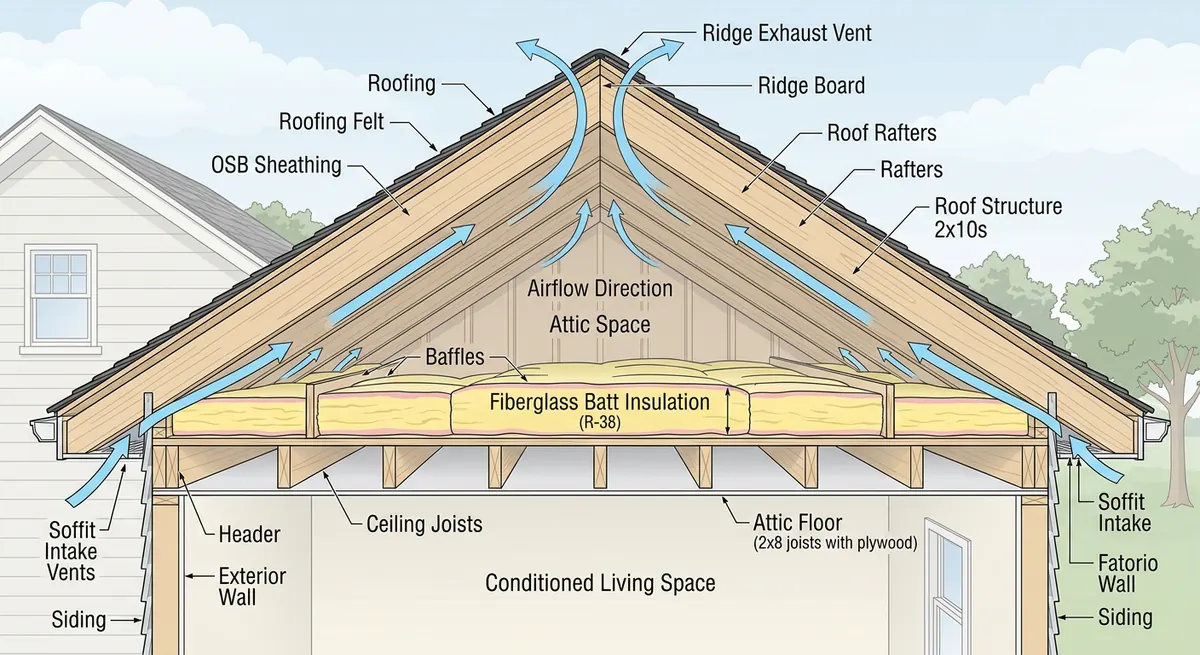
Powered attic fans force mechanical air exchange. By drawing cooler outdoor ambient air in through continuous soffit eave vents and violently exhausting hot air through the roof or gable, the fan reduces attic temperatures by 30°F to 50°F. This lowers the temperature differential across ceiling drywall, significantly slowing conductive heat transfer into air-conditioned bedrooms below.
Sizing: How Many CFM Do You Need?
Under-sizing an attic fan leaves your attic hot and stagnant, while over-sizing can create dangerous negative attic pressure. The Home Improvement Research Institute and building engineering standards specify this fundamental sizing formula:
Base CFM = Attic Floor Square Footage x 0.7
For example, a home with a 2,000 square foot attic footprint requires a minimum base airflow of: 2,000 x 0.7 = 1,400 CFM.
Add 15% to 20% to this rating if your roof pitch is 7:12 or steeper (which increases attic air volume substantially), or if you have dark black or charcoal asphalt shingles that absorb maximum solar heat. Use our interactive Attic Ventilation Calculator to verify precise Net Free Ventilating Area (NFVA) code compliance.
Solar vs. Electric vs. Wired: Which Power Source Is Right?
Solar Powered: Solar attic fans operate completely independently of the household grid. Their greatest engineering advantage is thermal alignment: they run fastest precisely when the sun is at peak intensity and heat load is highest. Brushless DC motors eliminate brushes that wear out, delivering decades of maintenance-free service.
Line-Voltage Electric (120V): Standard AC fans deliver consistent, uncompromised airflow regardless of overcast skies or cloud cover. Because they include humidistats, electric fans can also activate during cold, damp winter months when solar fans are inactive, expelling moisture that would otherwise condense on cold roof rafters.
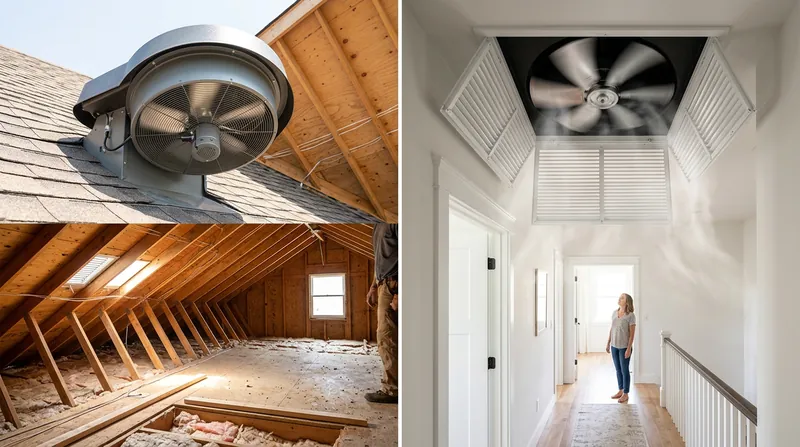
Whole-House Fans vs. Attic Fans: It is vital not to confuse an attic fan with a whole-house fan. An attic fan vents only the attic space above the ceiling. A whole-house fan mounts in the central ceiling hallway and pulls outdoor air through open living-room windows, cooling the entire home during cool morning or evening hours.
Do Not Forget Intake Ventilation: Preventing Backdrafting
A powered attic exhaust fan can only blow out as much air as it takes in. International Residential Code (IRC) Section R806 mandates balanced ventilation. For powered fans, you must provide approximately 1 square foot of Net Free Ventilating Area (NFVA) of intake soffit vents for every 300 CFM of fan exhaust capacity.
If your soffit vents are clogged with blown-in insulation or lack adequate opening area, the fan creates severe negative pressure in the attic. This negative pressure will forcefully draw air from inside your conditioned home through ceiling light fixtures, attic hatches, and wall top-plates. Worse yet, it can backdraft toxic carbon monoxide fumes from atmospheric gas water heaters or furnace flues directly into living spaces.
Before installing any powered attic fan, verify that all soffits are clear and install rafter baffles to ensure unobstructed intake airflow.
Attic Ventilation Calculator & Code Sizing Tool
Calculate your attic's required Net Free Ventilating Area (NFVA) under IRC R806.2 building code formulas, balanced 50/50 between intake and exhaust.
Safety & Compliance Notice
Never operate a powerful attic exhaust fan without verifying intake soffit ventilation. In homes with atmospheric gas water heaters or furnaces, negative attic pressure can pull deadly carbon monoxide down into living spaces. Install carbon monoxide alarms on every floor.
Frequently Asked Questions
Most roofing specialists recommend setting the thermostat between 105°F and 110°F. Setting it lower (e.g., 90°F) will cause the fan to run almost constantly all summer without additional cooling benefit, wasting electricity. Setting it higher allows heat to build up excessively.
Final Verdict
For homeowners seeking energy independence and zero operating cost in sunny southern and western states, High-Efficiency Solar Attic Fan (35W) is our top pick. For mixed climates requiring reliable dual-control protection against summer heat and winter mold, Dual-Control Electric Roof Attic Fan provides the most consistent year-round performance. Always inspect your soffit intake vents before powering on any high-CFM exhaust fan.
Michael Davies
Home Systems & Repair Editor
Michael writes about roofing, attic ventilation, insulation, and structural repair products for HomeGear Guide. His focus is on helping homeowners understand the materials and tools involved in protecting their home exterior and interior.
Related Articles & Buying Guides
 Attic & Insulation
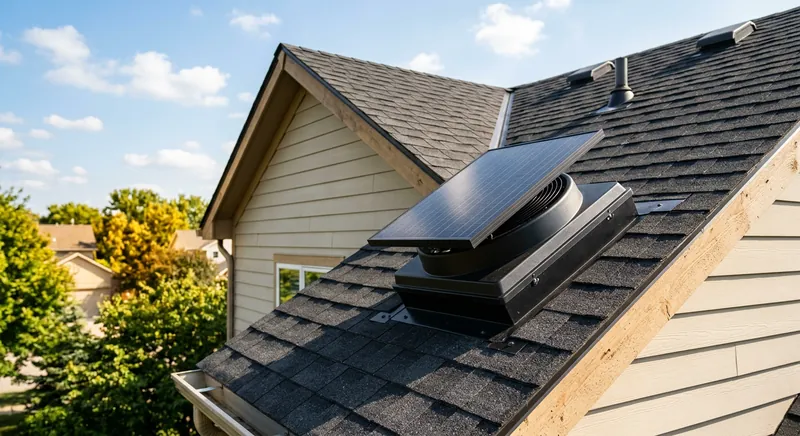
Solar Attic Fan Reviews: Comparing Top Options
Solar attic fans promise zero-cost ventilation, but panel wattage, CFM, and warranty vary widely between models. This review compares the key features that matter.
 Attic & Insulation
Attic Fan vs. Whole House Fan: Which Do You Need?
Attic fans and whole house fans sound similar but serve completely different purposes. This comparison breaks down what each does, how much they cost, and which one your home actually needs.
 Attic & Insulation
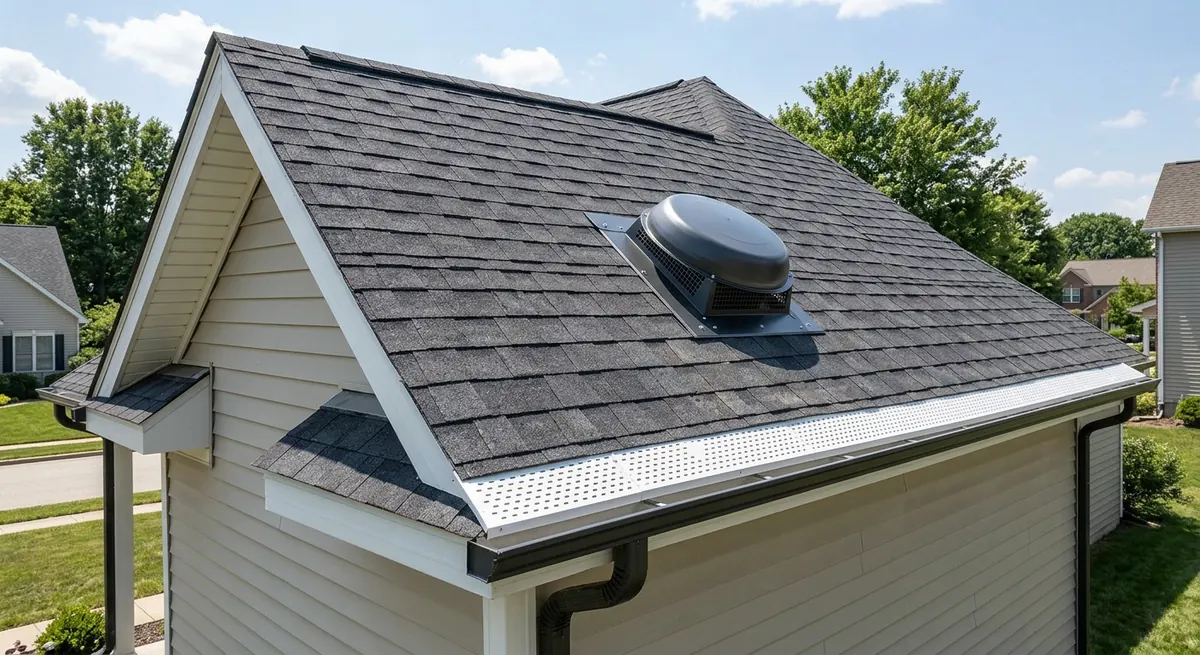
How to Size an Attic Fan: CFM Calculation Guide
Sizing an attic fan correctly is the difference between effective ventilation and wasted money. This guide walks through the CFM formula, a sizing chart by attic size, and intake ventilation checks.
 Attic & Insulation
Attic Ventilation Requirements: Code Rules and Best Practices
Proper attic ventilation follows the 1:300 rule and a balanced intake-to-exhaust ratio. This guide explains code requirements, vent types, NFA calculations, and the mistakes that cause roof damage.
 Attic & Insulation
Signs of Poor Attic Ventilation and How to Fix It
A hot, stuffy attic, frost on nails, mold growth, and curling shingles all signal poor ventilation. Learn to diagnose and fix attic ventilation problems before they cause expensive damage.
Get Smarter About Your Home
Receive practical buying guides, product comparisons, maintenance tips and home project ideas from HomeGear Guide.
You can unsubscribe at any time.