How to Size an Attic Fan: CFM Calculation Guide
Affiliate Disclosure: HomeGear Guide is reader-supported. When you buy through links on our site, we may earn an affiliate commission at no extra cost to you. We do not accept paid product placements or sponsor-biased reviews.
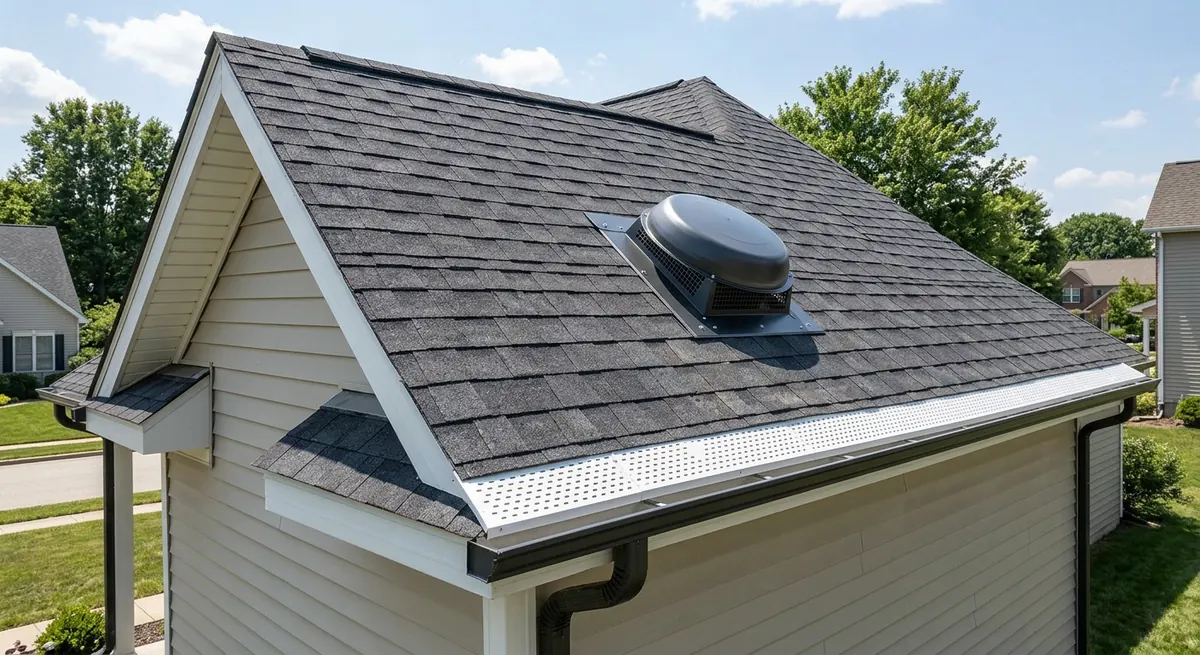
Sizing an attic fan is the single most important step in the installation process, and it is also the step most homeowners get wrong. An undersized fan will not move enough air to make a meaningful dent in attic temperatures, while an oversized fan can create negative pressure that pulls conditioned air from your living space and actually increases your energy bills. The good news is that sizing an attic fan is straightforward once you know the formula. The calculation is based on your attic square footage and two standard rules of thumb — 0.7 CFM per square foot for minimum ventilation and 1 CFM per square foot for more aggressive cooling. This guide walks through the CFM formula step by step, provides a sizing chart by attic size, explains how to verify your intake ventilation can keep up with the fan, and covers what to do when your attic is too large for a single fan.
Quick Answer
To size an attic fan, multiply your attic square footage by 0.7 for minimum ventilation or by 1.0 for aggressive cooling. A 2,000 square foot attic needs 1,400 CFM at minimum or 2,000 CFM for aggressive ventilation. Before installing, verify intake ventilation at a ratio of 1 square foot of net free area per 300 CFM of exhaust — a 1,400 CFM fan needs at least 4.7 square feet of intake NFA. Oversizing a fan beyond what your intake vents can support creates negative pressure that draws conditioned air from the living space, so intake capacity should always be checked before buying a larger fan. For attics over 3,000 square feet, consider two smaller fans on opposite ends of the roof rather than one massive unit, which improves airflow distribution and avoids overloading a single exhaust point.
The CFM Formula: Two Rules of Thumb
CFM, or cubic feet per minute, is the measure of how much air a fan can move. Sizing an attic fan comes down to matching CFM to your attic square footage, and the industry uses two standard rules of thumb for the calculation.
The minimum ventilation rule is 0.7 CFM per square foot of attic space. This is the baseline recommended by most fan manufacturers and building codes, and it provides enough airflow to keep attic temperatures from reaching extreme levels on a typical summer day. For a 2,000 square foot attic, this rule gives you 1,400 CFM.
The aggressive ventilation rule is 1.0 CFM per square foot of attic space. This higher rate provides more thorough air exchange and is recommended for hot climates, attics with ductwork running through them, or homes where you want maximum cooling benefit. For the same 2,000 square foot attic, this rule gives you 2,000 CFM.
Which rule you choose depends on your climate and goals. In moderate climates where attic heat is a minor concern, the 0.7 rule is sufficient. In hot, sunny climates — particularly the Sun Belt and Gulf Coast — the 1.0 rule is worth the extra airflow. If your ductwork runs through the attic, the aggressive rate helps keep those ducts cooler, which directly improves AC efficiency.
Step-by-Step Calculation
Sizing an attic fan is a three-step process: measure the attic footprint, calculate the required CFM, and check that your intake ventilation can support that CFM. Skipping the third step is the most common cause of poor fan performance.
Step 1: Measure the Attic Footprint
Measure the length and width of your attic floor in feet and multiply them to get the square footage. If your attic has an irregular shape, break it into rectangles and add the areas together. Use the exterior footprint of the house — the attic spans the full width of the building, not just the accessible area. For a house that is 40 feet by 50 feet, the attic footprint is 2,000 square feet.
If you have a complex roof with multiple sections (L-shaped, hip and valley, dormers), estimate the footprint of each section and sum them. Do not include attached garages or porches unless they share the attic space. Accuracy here matters — an underestimate means an undersized fan.
Step 2: Calculate the Required CFM
Multiply your attic square footage by 0.7 to get the minimum CFM, and by 1.0 to get the aggressive CFM. For a 2,000 square foot attic, the minimum is 1,400 CFM and the aggressive target is 2,000 CFM.
Choose a fan rated within this range. It is fine to round up slightly — a 1,600 CFM fan for a 1,400 CFM minimum is acceptable as long as your intake ventilation can support it. Do not round up dramatically, as an oversized fan causes the problems covered later in this guide.
Step 3: Check Intake Ventilation Capacity
An exhaust fan can only move as much air as the intake vents let in. The rule is 1 square foot of intake net free area (NFA) for every 300 CFM of exhaust. A 1,400 CFM fan needs at least 4.7 square feet of intake NFA, and a 2,000 CFM fan needs at least 6.7 square feet.
Count your intake vents — typically soffit vents — and look up their NFA rating. A standard 16-by-8-inch soffit vent has roughly 56 square inches of NFA, or about 0.39 square feet. To reach 4.7 square feet, you would need roughly 12 such vents. If you fall short, you need to add intake vents before installing the fan, or choose a smaller fan that matches your existing intake capacity.
Attic Fan Sizing Chart by Attic Size
Use this chart as a quick reference after measuring your attic footprint. The minimum column uses the 0.7 CFM rule and the aggressive column uses the 1.0 CFM rule. Both assume your intake ventilation can support the listed CFM.
Attic up to 1,000 sq ft: 700 CFM minimum, 1,000 CFM aggressive
Attic 1,000–1,500 sq ft: 700–1,050 CFM minimum, 1,000–1,500 CFM aggressive
Attic 1,500–2,000 sq ft: 1,050–1,400 CFM minimum, 1,500–2,000 CFM aggressive
Attic 2,000–2,500 sq ft: 1,400–1,750 CFM minimum, 2,000–2,500 CFM aggressive
Attic 2,500–3,000 sq ft: 1,750–2,100 CFM minimum, 2,500–3,000 CFM aggressive
Attic over 3,000 sq ft: 2,100+ CFM minimum, 3,000+ CFM aggressive (consider multiple fans)
When shopping, pick a fan whose rated CFM falls within your range. Remember that real-world CFM is typically 10–20% lower than the rated figure due to static pressure from ductwork, louvers, and intake restrictions, so leaning toward the higher end of the range is wise.
Verifying Intake Ventilation Capacity
Intake ventilation is the half of the equation that homeowners overlook most often, and it is the reason many attic fans underperform. The 1 square foot of intake NFA per 300 CFM rule is not a suggestion — it is the minimum required for the fan to move its rated airflow.
To calculate your intake NFA, count each intake vent and multiply by its rated NFA. Continuous soffit vents are rated per linear foot (typically around 9 square inches per foot). Individual soffit vents range from 30 to 65 square inches depending on size and style. Gable vents and eave vents also count as intake if they are positioned to bring in outside air.
Compare your total intake NFA to your fan CFM divided by 300. If you have 4 square feet of intake NFA, the largest fan you can support is 1,200 CFM. Installing a 1,800 CFM fan with only 4 square feet of intake will not move 1,800 CFM — the fan will be starved for air and will instead pull conditioned air from the living space through ceiling gaps, around recessed lights, and through the attic hatch.
If your intake is short, you have two options: add more soffit or eave vents before installing the fan, or downsize the fan to match your existing intake. Adding intake vents is usually the better long-term choice because adequate intake ventilation benefits passive ventilation too.
What Happens If You Oversize the Fan
An oversized attic fan is worse than an undersized one in most cases. When a fan moves more air than the intake vents can supply, it creates negative pressure in the attic. That negative pressure does not disappear — it pulls air from wherever it can, and the path of least resistance is usually from your conditioned living space.
Conditioned air pulled into the attic means your air conditioner has to work harder to replace that air, which increases your cooling costs — the opposite of what you installed the fan to achieve. It can also pull combustion gases from gas water heaters and furnaces into the living space through backdrafting, which is a serious safety concern.
Excessive negative pressure can also stress the roof structure by pulling on the roof deck, and it can accelerate the loss of conditioned air through small ceiling leaks that you did not even know you had. The fix is never a bigger fan — it is matching the fan CFM to your intake capacity, or increasing intake capacity to match the fan you want.
Multiple Fan Strategy for Large Attics
For attics over 3,000 square feet, a single fan large enough to ventilate the space becomes impractical. A 3,000+ CFM fan is loud, draws significant power, and demands a very large intake ventilation system. The better approach is to install two smaller fans on opposite ends of the roof.
Two 1,200 CFM fans placed at opposite gable ends or on opposite roof slopes will distribute airflow more evenly than a single 2,400 CFM fan at one end. This prevents dead spots — areas of stagnant hot air that a single fan cannot reach — and reduces the demand on any single intake vent path.
When using two fans, set both thermostats to the same temperature so they activate together. If you use a humidistat, set both to the same humidity threshold. Wire them on the same circuit if possible, or on dedicated circuits if your electrical panel allows. The combined CFM should still be calculated using the 0.7 or 1.0 rule, and the combined intake NFA must meet the 1 square foot per 300 CFM requirement for the total CFM.
For extremely large attics over 4,000 square feet, consider three fans or a combination of powered exhaust and enhanced passive ventilation. A ventilation professional can help design a balanced system for complex or very large roofs.
Attic Ventilation Calculator & Code Sizing Tool
Calculate your attic's required Net Free Ventilating Area (NFVA) under IRC R806.2 building code formulas, balanced 50/50 between intake and exhaust.
Frequently Asked Questions
Multiply your attic square footage by 0.7 for minimum ventilation or by 1.0 for aggressive cooling. For a 2,000 square foot attic, that is 1,400 CFM minimum or 2,000 CFM aggressive. Choose a fan rated within that range, and verify your intake ventilation provides at least 1 square foot of net free area per 300 CFM of the fan rating.
Final Verdict
Sizing an attic fan is a calculation, not a guess. Measure your attic footprint, apply the 0.7 or 1.0 CFM rule to find your target, and — most importantly — verify your intake ventilation provides at least 1 square foot of NFA per 300 CFM before buying. An oversized fan without adequate intake is worse than no fan at all, because it pulls conditioned air from your living space and raises your energy bills. For attics over 3,000 square feet, two smaller fans outperform one large unit. Get the math right, and your attic fan will deliver the temperature reduction and roofing protection you installed it for.
Michael Davies
Home Systems & Repair Editor
Michael writes about roofing, attic ventilation, insulation, and structural repair products for HomeGear Guide. His focus is on helping homeowners understand the materials and tools involved in protecting their home exterior and interior.
Related Articles & Buying Guides
 Attic & Insulation
Best Attic Fans for Ventilation and Temperature Control
Compare solar and electric attic ventilation fans by airflow, thermostat controls, roof mounting, and IRC building codes to cool your attic and protect your roof.
 Attic & Insulation
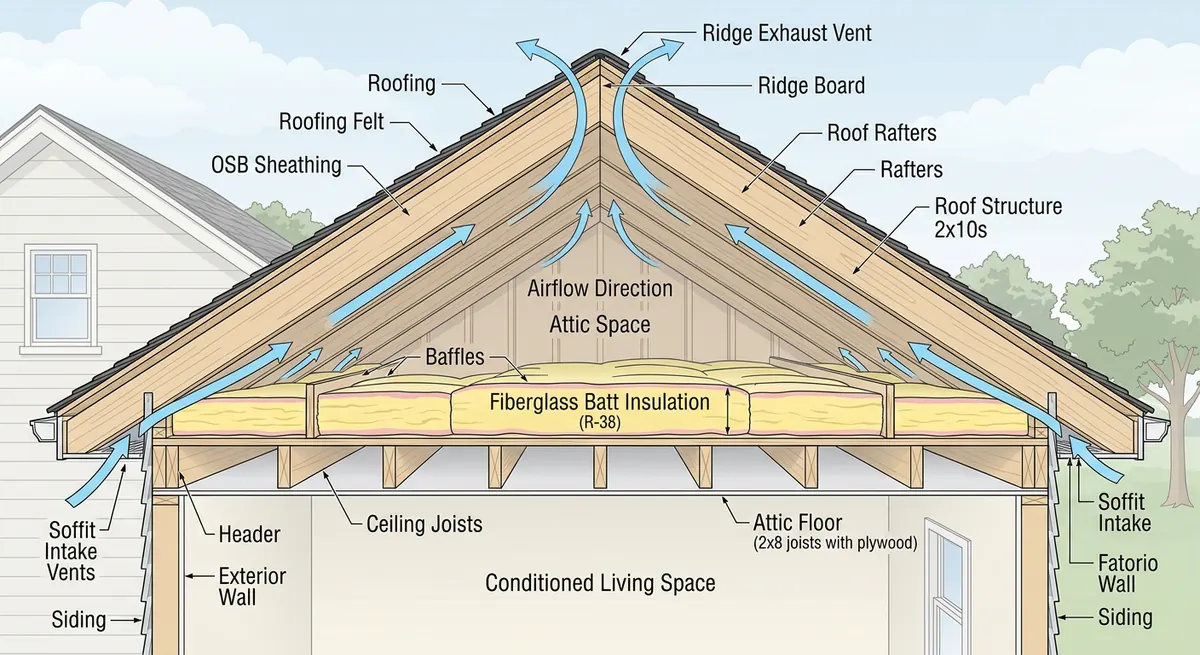
Attic Ventilation Requirements: Code Rules and Best Practices
Proper attic ventilation follows the 1:300 rule and a balanced intake-to-exhaust ratio. This guide explains code requirements, vent types, NFA calculations, and the mistakes that cause roof damage.
 Attic & Insulation
Best Radiant Barriers for Attic Heat Reduction
Radiant barriers reflect attic heat back toward the roof, reducing temperatures by 10–20°F. Here is how to compare foil barriers, radiant barrier paint, and installation methods.
 Attic & Insulation
Best Whole House Fans for Fast Home Cooling
A whole house fan can cool your home in minutes by drawing in fresh outside air and pushing hot air out through the attic. Here is how to choose the right size, drive type, and features.
Get Smarter About Your Home
Receive practical buying guides, product comparisons, maintenance tips and home project ideas from HomeGear Guide.
You can unsubscribe at any time.