Signs of Poor Attic Ventilation and How to Fix It
Affiliate Disclosure: HomeGear Guide is reader-supported. When you buy through links on our site, we may earn an affiliate commission at no extra cost to you. We do not accept paid product placements or sponsor-biased reviews.
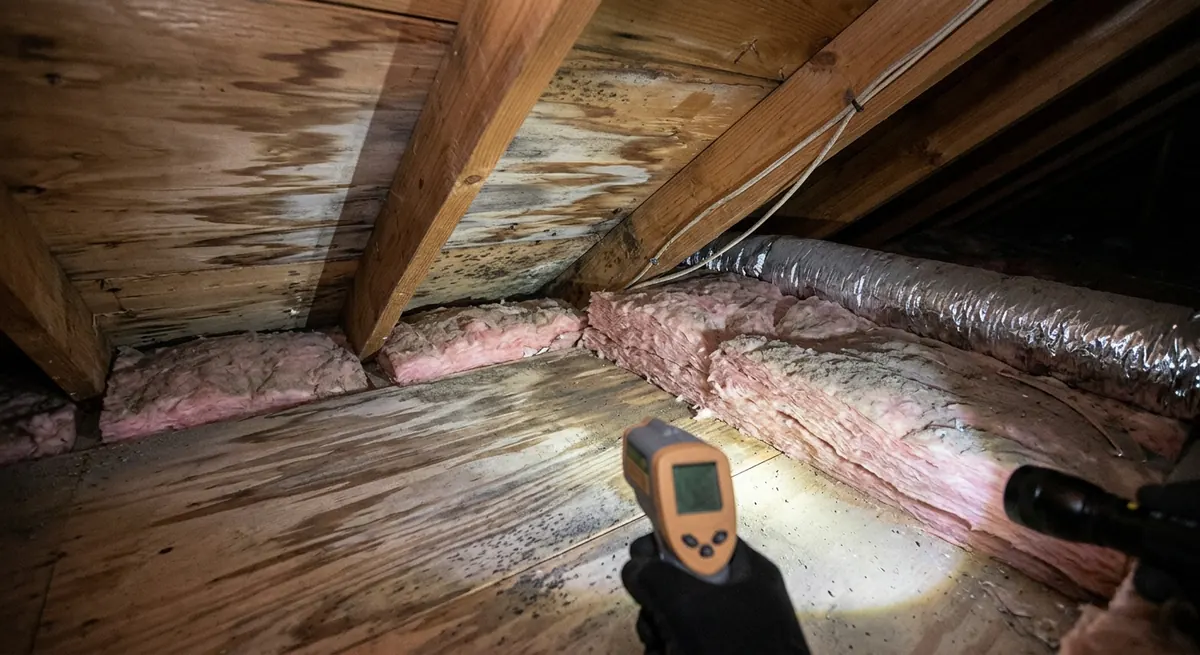
Poor attic ventilation is a silent problem. It does not announce itself with a leak or a noise — instead, it gradually degrades your roof, reduces insulation effectiveness, raises energy bills, and creates conditions for mold growth. By the time most homeowners notice the symptoms, damage has already occurred. The warning signs are there if you know what to look for: a hot, stuffy attic in summer, frost or condensation on roof nails in winter, curling shingles on the exterior, and ice dams along the roof edge in cold climates. This guide covers the most common signs of poor attic ventilation, what causes them, and the steps you can take to fix ventilation problems before they lead to expensive repairs.
Quick Answer
The most common signs of poor attic ventilation are attic temperatures exceeding 130 degrees Fahrenheit in summer, condensation or frost on roof nails and decking in winter, mold or mildew growth on attic surfaces, curling or cupping roof shingles, ice dams along the roof edge in cold climates, and a hot, stuffy feeling in upstairs rooms. The root causes are typically blocked or insufficient soffit intake vents, inadequate exhaust ventilation (ridge or gable vents), insulation blocking airflow, or a lack of ventilation altogether in older homes. Fixes include unblocking soffit vents, adding ridge or gable exhaust vents, installing an attic fan for active ventilation, ensuring insulation does not cover soffit vents, and following the 1:300 ventilation rule (1 square foot of net free ventilation area per 300 square feet of attic floor space, split evenly between intake and exhaust).
Summer Warning Signs
An attic that exceeds 130 degrees Fahrenheit on a hot summer day is the most obvious sign of poor ventilation. A properly ventilated attic should stay within 15 to 25 degrees of the outside air temperature. If your attic is 40 to 60 degrees hotter than outdoors, heat is trapped with no path to escape.
A hot, stuffy feeling when you open the attic access is another indicator. A well-ventilated attic will feel warm but not oppressive — there should be some sense of air movement. If the air feels stagnant and heavy, ventilation is likely inadequate.
Curling or cupping shingles on the roof exterior are a long-term symptom of attic overheating. When the underside of the roof deck reaches 150 degrees or more, it bakes the shingles from below, causing the asphalt to dry out, shrink, and curl at the edges. If you see shingles curling on a roof that is less than 15 years old, poor ventilation is a likely contributor.
High cooling bills in summer can also point to attic ventilation problems. A superheated attic transfers heat through the ceiling into living spaces, forcing air conditioning to work harder. If your upstairs rooms are consistently warmer than downstairs, the attic may be the culprit.
Winter Warning Signs
Frost or condensation on roof nails and the underside of the roof deck is the clearest winter sign of poor ventilation. When warm, moist air from the living space rises into a cold, poorly ventilated attic, it condenses on the coldest surfaces — typically protruding nails and metal fasteners. If you see frost, water droplets, or rust on nails in your attic during winter, moisture is trapped.
Damp or compressed insulation indicates that condensation has been occurring repeatedly. Wet insulation loses its R-value and takes a long time to dry in an unventilated attic. If insulation feels heavy, compacted, or has dark stains, moisture has been accumulating.
Mold or mildew growth on attic sheathing, rafters, or insulation is a serious sign. Mold needs moisture to grow, and in an attic, that moisture almost always comes from condensation caused by poor ventilation. Even small patches of mold indicate a ventilation problem that needs addressing. Black, green, or white fuzzy growth on wood surfaces should be investigated immediately.
Ice dams — ridges of ice that form along the roof edge — are a cold-climate symptom of poor attic ventilation combined with inadequate insulation. Warm air in the attic melts snow on the roof, and the meltwater refreezes at the cold eave. If you see icicles hanging from your roof edge or ice buildup in gutters during winter, your attic is likely too warm, which means ventilation and insulation need attention.
Common Causes of Poor Ventilation
Blocked soffit vents are the most common cause. Soffit vents under the eaves are the primary intake for attic ventilation. When insulation, debris, or stored items block these vents, air cannot enter the attic, and exhaust vents have nothing to pull. This is especially common in older homes where insulation was added without installing baffles to keep soffit vents clear.
Insufficient exhaust ventilation is the second most common cause. An attic needs both intake (soffit) and exhaust (ridge, gable, or roof vents) to create airflow. If a home has soffit vents but no ridge or gable exhaust vents, hot air has no way to exit. Conversely, if a home has exhaust vents but no intake, the exhaust is ineffective.
Imbalanced intake and exhaust reduces system effectiveness. Even when both exist, if the ratio is significantly off (for example, far more exhaust than intake), the system cannot move air efficiently. The ideal ratio is roughly 50/50 between intake and exhaust net free area.
Older homes may have no ventilation system at all. Homes built before the 1950s often lack soffit vents and ridge vents entirely. Adding ventilation to these homes requires cutting in soffit vents and installing a ridge vent or gable vents — a project that costs $500 to $2,000 but dramatically improves attic health.
Kitchen and bathroom exhaust fans vented into the attic instead of outside dump warm, moist air directly into the attic space. This is a ventilation design error, not a roof ventilation problem, but it produces the same symptoms — condensation, mold, and damp insulation. All exhaust fans must vent to the exterior.
How to Fix Poor Attic Ventilation
Step 1: Inspect and unblock soffit vents. Go into the attic and look at the area where the roof meets the exterior wall. If insulation is covering the soffit vents, pull it back and install baffles — rigid foam channels that maintain an air gap between the insulation and the roof deck. Baffles cost $2 to $5 each and are installed with staples. This is the single most effective and affordable fix for most attic ventilation problems.
Step 2: Verify exhaust ventilation. Check whether your attic has a ridge vent (a continuous opening along the roof peak), gable vents (louvered openings on the side walls), or roof vents (individual vents near the ridge). If none exist, adding a ridge vent is the most effective passive solution. A ridge vent installation costs $300 to $600 and provides continuous exhaust along the entire roof length.
Step 3: Calculate your ventilation needs. Follow the 1:300 rule: 1 square foot of net free ventilation area per 300 square feet of attic floor space, with half as intake and half as exhaust. For a 1,500 square foot attic, you need 5 square feet total — 2.5 square feet of intake and 2.5 square feet of exhaust.
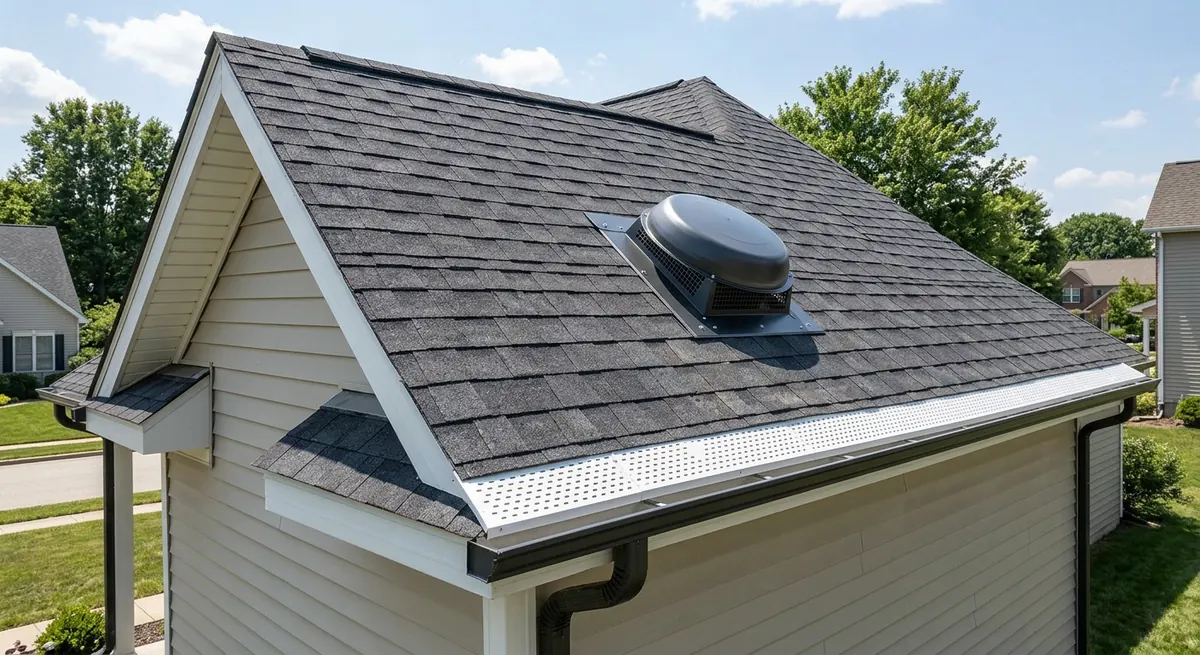
Step 4: Consider an attic fan for active ventilation. If passive ventilation is insufficient — for example, a complex roof design with limited ridge length, or a climate with extreme heat — an attic fan can supplement passive vents. A solar or electric attic fan costs $100 to $400 and can significantly improve airflow. Ensure intake ventilation is adequate before adding a fan.
Step 5: Fix exhaust fan venting. If bathroom or kitchen fans vent into the attic, reroute the ductwork to vent through the roof or a wall to the exterior. This is critical for moisture control — venting moist air into the attic guarantees condensation problems regardless of ventilation quality.
When to Call a Professional
Most attic ventilation improvements are within DIY scope for a homeowner comfortable working in the attic. Unblocking soffit vents, installing baffles, and adding a gable vent are all manageable projects. However, some situations warrant professional help.
Call a professional if you need to cut a ridge vent into an existing roof. This involves cutting through the roof deck along the ridge, which risks leaks if done incorrectly. A roofing contractor can install a ridge vent properly with integrated flashing for $300 to $600.
If mold covers more than 10 square feet of attic surface, professional mold remediation is recommended. Disturbing large areas of mold without proper containment can spread spores throughout the home. A mold remediation professional will contain the area, remove contaminated material, and treat the surfaces.
If your attic has extensive moisture damage — rotted wood, saturated insulation, or structural concerns — a professional assessment is needed before addressing ventilation. Fixing ventilation without repairing the underlying damage will not solve the problem.
Attic Ventilation Calculator & Code Sizing Tool
Calculate your attic's required Net Free Ventilating Area (NFVA) under IRC R806.2 building code formulas, balanced 50/50 between intake and exhaust.
Frequently Asked Questions
Check two things: whether soffit vents exist along the eaves and are not blocked by insulation, and whether exhaust vents (ridge, gable, or roof vents) exist near the top of the attic. Then calculate using the 1:300 rule: 1 square foot of net free ventilation area per 300 square feet of attic floor space, split evenly between intake and exhaust. If your attic is hot and stuffy in summer or has condensation in winter, ventilation is likely insufficient.
Final Verdict
Poor attic ventilation is a problem that compounds over time — what starts as a hot, stuffy attic in summer becomes condensation and mold in winter, and eventually leads to premature roof failure and higher energy bills. The warning signs are clear: attic temperatures above 130 degrees in summer, frost or condensation on nails in winter, mold growth, curling shingles, and ice dams. The most common cause is blocked or insufficient soffit intake vents, and the most affordable fix is pulling back insulation and installing baffles to keep those vents clear. For homes that lack ventilation entirely, adding a ridge vent and soffit vents following the 1:300 rule provides the foundation. An attic fan can supplement passive ventilation in extreme climates but should never replace proper intake and exhaust venting. The investment in fixing ventilation — $20 to $600 depending on the scope — is far less than the cost of roof deck replacement, mold remediation, or premature re-roofing.
Michael Davies
Home Systems & Repair Editor
Michael writes about roofing, attic ventilation, insulation, and structural repair products for HomeGear Guide. His focus is on helping homeowners understand the materials and tools involved in protecting their home exterior and interior.
Related Articles & Buying Guides
 Attic & Insulation
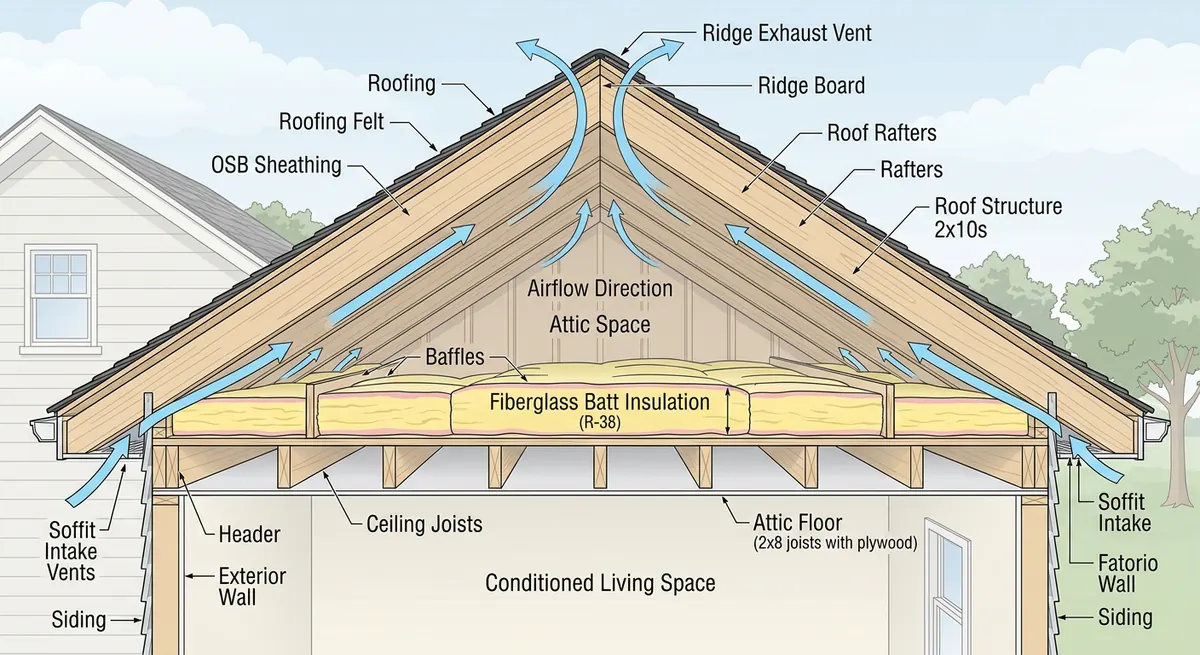
Attic Ventilation Requirements: Code Rules and Best Practices
Proper attic ventilation follows the 1:300 rule and a balanced intake-to-exhaust ratio. This guide explains code requirements, vent types, NFA calculations, and the mistakes that cause roof damage.
 Attic & Insulation
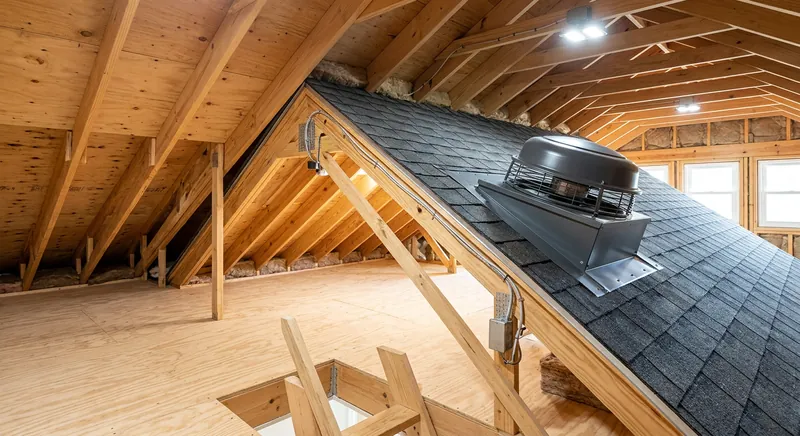
Best Attic Fans for Ventilation and Temperature Control
Compare solar and electric attic ventilation fans by airflow, thermostat controls, roof mounting, and IRC building codes to cool your attic and protect your roof.
 Attic & Insulation
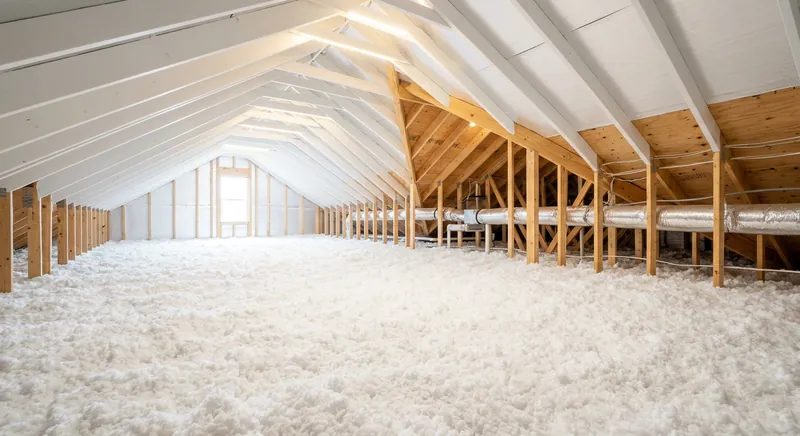
Best Attic Insulation for Hot Climates
Compare spray foam, radiant barriers, blown fiberglass, and cellulose attic insulation to stop intense radiant heat gain, lower cooling bills, and control humidity.
 Attic & Insulation
How to Size an Attic Fan: CFM Calculation Guide
Sizing an attic fan correctly is the difference between effective ventilation and wasted money. This guide walks through the CFM formula, a sizing chart by attic size, and intake ventilation checks.
 Roofing & Home Repair
Best Mold Test Kits for Home Use
Petri dish, swab, and air sampling mold test kits each serve different detection needs. Compare methods, accuracy, and lab analysis options.
Get Smarter About Your Home
Receive practical buying guides, product comparisons, maintenance tips and home project ideas from HomeGear Guide.
You can unsubscribe at any time.