Best Solar Panels for Home Rooftop and Ground Installations
Affiliate Disclosure: HomeGear Guide is reader-supported. When you buy through links on our site, we may earn an affiliate commission at no extra cost to you. We do not accept paid product placements or sponsor-biased reviews.
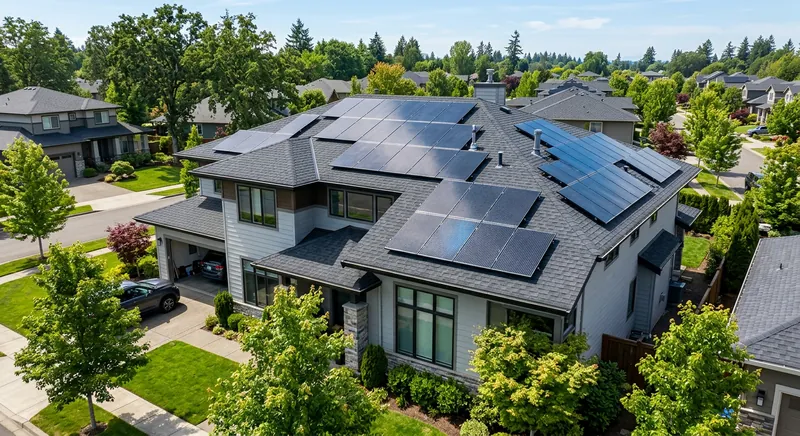
Solar panels are the component that turns your roof or yard into a power plant, and after a decade of steady improvement, today's panels produce more electricity per square foot, degrade more slowly, and come with longer warranties than the systems installed even five years ago. But choosing solar panels is not just about picking the highest wattage or efficiency rating. The panel type — monocrystalline versus polycrystalline — the temperature coefficient (how much output drops on hot days), the degradation rate (how much power the panel loses per year), and the warranty terms all affect how much energy your system will produce over its 25-plus year lifespan. And because solar panels are almost always sold and installed as part of a complete system rather than individually, understanding panel specifications helps you evaluate system quotes and compare installers rather than shopping panel by panel. Knowing what the numbers mean ensures you get panels that will perform as promised for decades.
Quick Answer
For most homeowners, 400 to 450 watt monocrystalline panels with a 25-year product warranty, a 25-year performance guarantee of at least 85 percent, and a temperature coefficient below 0.35 percent per degree Celsius are the best choice because they maximize energy production per square foot of roof space, ensuring the system generates enough power to offset a significant portion of electricity usage without requiring excessive roof area. Monocrystalline panels are 15 to 20 percent more efficient than polycrystalline, meaning more power from the same roof area. The temperature coefficient matters in hot climates, as panels lose 0.3 to 0.5 percent of output for every degree Celsius above 25 degrees, so lower coefficients preserve production on hot summer days. The main trade-off is efficiency versus cost, as premium panels at 22-plus percent efficiency cost 10 to 20 percent more but produce more power over 25 years. Micro-inverters or optimizers are worth the premium for roofs with shading or multiple orientations. A 6 to 8 kW system covers most homes.
Top Picks at a Glance
400W Monocrystalline Panel
450W High-Efficiency Panel
350W Solar Panel
Flexible Solar Panel
Product Comparison
| Product | Best For | Wattage | Efficiency | Panel Type | Price Range | Details |
|---|---|---|---|---|---|---|
400W Monocrystalline Panel Best Overall | Balanced output and value for most residential rooftops | 400W | 20–22% (typical for this class) | Monocrystalline | $200–$350 per panel (equipment only) | View Review ↓ |
450W High-Efficiency Panel Best for Limited Roof | Maximizing output when roof space is limited | 450W | 22–24% (high-efficiency class) | Monocrystalline (advanced cell architecture) | $300–$500 per panel (equipment only) | View Review ↓ |
350W Solar Panel Best Value | Lower cost per watt for homes with ample roof space | 350W | 18–20% (standard efficiency) | Monocrystalline (some polycrystalline available) | $150–$250 per panel (equipment only) | View Review ↓ |
Flexible Solar Panel Best for RV/Flat Roofs | RVs, boats, and flat roofs where rigid panels will not work | 100–200W (typical for flexible panels) | 15–19% (lower than rigid panels) | Monocrystalline (flexible construction) | $100–$250 per panel | View Review ↓ |
400W Monocrystalline Panel
Best Overall- Best For:
- Balanced output and value for most residential rooftops
- Wattage:
- 400W
- Efficiency:
- 20–22% (typical for this class)
- Panel Type:
- Monocrystalline
- Price Range:
- $200–$350 per panel (equipment only)
450W High-Efficiency Panel
Best for Limited Roof- Best For:
- Maximizing output when roof space is limited
- Wattage:
- 450W
- Efficiency:
- 22–24% (high-efficiency class)
- Panel Type:
- Monocrystalline (advanced cell architecture)
- Price Range:
- $300–$500 per panel (equipment only)
350W Solar Panel
Best Value- Best For:
- Lower cost per watt for homes with ample roof space
- Wattage:
- 350W
- Efficiency:
- 18–20% (standard efficiency)
- Panel Type:
- Monocrystalline (some polycrystalline available)
- Price Range:
- $150–$250 per panel (equipment only)
Flexible Solar Panel
Best for RV/Flat Roofs- Best For:
- RVs, boats, and flat roofs where rigid panels will not work
- Wattage:
- 100–200W (typical for flexible panels)
- Efficiency:
- 15–19% (lower than rigid panels)
- Panel Type:
- Monocrystalline (flexible construction)
- Price Range:
- $100–$250 per panel
Detailed Product Reviews & Specifications
400W Monocrystalline Panel
A 400-watt monocrystalline solar panel that represents the current mainstream of residential solar — strong output per panel, good efficiency, and a competitive price point. Monocrystalline cells offer higher efficiency than polycrystalline, meaning more power per square foot, and the 400W rating is a common sweet spot for rooftop systems where panel count and roof space need to balance.
Pros
- •400W output balances panel count and roof space for most homes
- •Monocrystalline efficiency maximizes power per square foot
- •25-year product and performance warranty is standard
- •Widely available from multiple manufacturers and installers
Cons
- •Requires professional installation and permitting
- •Rigid panels need appropriate roof mounting and orientation
- •Output drops on hot days — temperature coefficient applies
Key Specifications
450W High-Efficiency Panel
A 450-watt high-efficiency monocrystalline panel designed for homes where roof space is the limiting factor. Higher efficiency means more watts per square foot, allowing a larger system on a smaller roof. These panels typically use advanced cell architectures (such as half-cut or PERC cells) to squeeze more power from the same footprint.
Pros
- •Highest output per square foot — maximizes system size on limited roofs
- •High-efficiency cells produce more energy in the same space
- •Fewer panels needed for a given system size reduces installation complexity
- •Premium warranty and low degradation rate typical
Cons
- •Higher cost per watt than standard-efficiency panels
- •May be overspec for homes with ample roof space
- •Premium technology may not justify the cost difference for shaded or suboptimal roofs
Key Specifications
350W Solar Panel
A 350-watt solar panel that offers a lower cost per watt than premium high-output panels. Slightly lower efficiency and output per panel means you need more panels for a given system size, but if roof space is not a constraint, the total system cost can be lower. A practical choice for homes with large, unshaded roofs.
Pros
- •Lower cost per watt than high-output premium panels
- •Sufficient for most residential systems when roof space allows
- •Reliable monocrystalline technology with standard warranty
- •More panels can offset lower per-panel output if space allows
Cons
- •Lower output per panel requires more panels for the same system size
- •Lower efficiency means more roof space needed
- •May not fit smaller or complex roofs with limited usable area
Key Specifications
Flexible Solar Panel
A flexible solar panel that can bend to conform to curved surfaces like RV roofs, boat decks, and uneven flat roofs where rigid glass panels are impractical. Lightweight and thin, flexible panels adhere directly to surfaces with adhesive or Velcro, making them ideal for mobile applications and installations where drilling and racking are not possible.
Pros
- •Lightweight and flexible — conforms to curved and uneven surfaces
- •Low profile with no racking required — adheres directly to surfaces
- •Ideal for RVs, boats, and flat roofs with weight or mounting constraints
- •Easy to install without drilling for many applications
Cons
- •Lower efficiency and shorter lifespan than rigid glass panels
- •Less durable — more susceptible to damage from foot traffic and weathering
- •Typically shorter warranty and higher degradation rate
Key Specifications
Wattage and Efficiency: What Drives Energy Production
A solar panel's wattage rating is its maximum power output under standard test conditions — ideal sunlight, specific temperature, and optimal angle. In real-world conditions, panels produce less than their rated wattage, but the rating is useful for comparing panels and sizing systems. A 400W panel produces more electricity per panel than a 350W panel under the same conditions.
Efficiency is the percentage of sunlight that the panel converts to electricity. A 22% efficient panel converts 22% of the solar energy hitting it into electrical power. Higher efficiency means more power per square foot of panel area. This matters most when roof space is limited — a high-efficiency panel lets you fit more total wattage on a small roof.
Wattage and efficiency are related but not the same. A large, low-efficiency panel can have the same wattage as a smaller, high-efficiency panel. For most homeowners, the key question is how much total energy the system produces, which depends on total system wattage, roof orientation and shading, and local sunlight conditions. Per-panel wattage matters for how many panels fit, while efficiency matters for how much roof space they occupy.
Monocrystalline vs Polycrystalline Panel Types
Monocrystalline solar panels are made from a single crystal structure of silicon, giving them a uniform black appearance. They are more efficient than polycrystalline panels, typically converting 18–24% of sunlight to electricity. They also perform slightly better in low-light and high-heat conditions. The manufacturing process is more energy-intensive, making them somewhat more expensive.
Polycrystalline panels are made from multiple silicon fragments melted together, giving them a speckled blue appearance. They are less efficient — typically 15–18% — and require more surface area to produce the same wattage as monocrystalline. They are cheaper to manufacture, but the cost gap has narrowed significantly as monocrystalline production has scaled.
Today, monocrystalline panels dominate the residential market, and most quotes you receive will use them. Polycrystalline panels are increasingly rare in new residential installations because the efficiency advantage of monocrystalline outweighs the small cost difference for most homes. If you receive a quote with polycrystalline panels, ask why and compare the total system cost and output carefully.
Thin-Film and Emerging Technologies
Thin-film solar panels are a third type, made by depositing photovoltaic material in thin layers. They are lightweight and flexible but significantly less efficient than crystalline panels, and they are rarely used in residential rooftop installations. Emerging technologies like perovskite cells and tandem cell architectures promise higher efficiencies in the future but are not yet widely available for home installation. For now, monocrystalline remains the practical standard for residential solar.
Temperature Coefficient and Degradation Rate
Solar panels produce less electricity as they get hotter. The temperature coefficient tells you how much output drops for each degree Celsius above the standard test temperature (25°C or 77°F). A typical coefficient is -0.3% to -0.4% per °C, meaning a panel at 40°C (104°F) produces roughly 4.5–6% less than its rated output. In hot climates or on roofs with poor airflow, this loss adds up.
Lower (closer to zero) temperature coefficients are better. A panel with a -0.25% coefficient loses less heat-related output than one with -0.40%. If you live in a hot climate, the temperature coefficient is worth comparing alongside wattage and efficiency. Panels with better temperature performance maintain more of their rated output on hot summer days when energy demand and production both peak.
Degradation rate is how much the panel's output declines each year. A typical degradation rate is 0.5% per year, meaning a panel produces 0.5% less energy in year two than year one, and so on. Premium panels advertise lower degradation rates of 0.25–0.4% per year. Over 25 years, a 0.5% rate means the panel produces about 87% of original output at year 25, while a 0.25% rate means about 94%. Lower degradation means more lifetime energy production.
Warranty, Roof Condition, and System Sizing
Solar panel warranties come in two parts: a product warranty covering manufacturing defects (typically 12–25 years) and a performance warranty guaranteeing a minimum output at a future date (typically 25 years at 80–92% of original output, depending on degradation rate). Read the performance warranty carefully — the guaranteed end-of-warranty output is the floor of what the manufacturer promises, and better panels guarantee higher retained output.
Your roof condition matters as much as the panels. Solar systems last 25+ years, so if your roof is nearing the end of its life, replacing it before installing solar avoids the cost of removing and reinstalling panels when the roof needs work later. South-facing roofs produce the most energy in the Northern Hemisphere, but east and west orientations are also viable with somewhat reduced output. Shading from trees, chimneys, and neighboring buildings reduces production and should be assessed during the quoting process.
System sizing depends on your electricity usage, available roof space, and goals. Most residential systems are sized to offset a significant portion of annual electricity use rather than all of it, since excess production may be compensated at less favorable rates depending on your utility's net metering policy. A reputable installer will analyze your usage and roof to recommend an appropriately sized system and estimate annual production.
Safety & Compliance Notice
Solar panel systems require professional installation, permitting, and utility interconnection approval. Installation involves roof penetration, electrical work, and grid connection that must comply with local codes. Always use a licensed and certified solar installer, and check local permitting, utility interconnection, and incentive program requirements before beginning any installation.
Frequently Asked Questions
The number depends on your annual electricity usage, panel wattage, available roof space, and local sunlight. As a rough guide, a typical home using 10,000 kWh per year might need a 7–8 kW system, which at 400W per panel is about 18–20 panels. A solar installer will analyze your usage and roof to recommend a system size. The goal is usually to offset a significant portion of your annual usage, not necessarily 100%, depending on your utility's net metering policy.
Final Verdict
For most homeowners, 400W monocrystalline panels represent the best balance of output, efficiency, and value for a residential rooftop system — they are the current mainstream of residential solar and are widely available from reputable installers. If roof space is limited, 450W high-efficiency panels maximize energy production from the available area, justifying their higher cost per watt when you cannot simply add more panels. For homes with ample roof space, 350W panels offer a lower cost per watt, though you will need more of them to reach your target system size. And for RVs, boats, and flat or curved roofs where rigid panels will not work, flexible panels provide a lightweight, low-profile solution — though with lower efficiency and shorter lifespan. Whatever panels you choose, have the system professionally installed, replace your roof first if it is aging, and compare complete system quotes — including inverters, racking, labor, permitting, and warranty — rather than evaluating panels in isolation.
Emily Ross
Smart Home & Energy Writer
Emily researches smart home technology, home energy systems, and backup power solutions for HomeGear Guide. Her work focuses on helping homeowners understand how connected devices and energy products compare and what to look for before investing.
Related Articles & Buying Guides
 Home Energy & Backup Power
Best Solar Generators for Clean, Quiet Portable Power
Compare solar generators for clean, quiet portable power. Understand battery capacity in watt-hours, inverter output, solar input, charge time, and LiFePO4 vs NMC chemistry.
 Home Energy & Backup Power
Best Home Battery Backup Systems for Energy Independence
Compare home battery backup systems for energy independence. Understand capacity in kWh, power output, battery chemistry, solar integration, backup duration, and installation.
 Home Energy & Backup Power
Best Battery Power Stations for Home Backup and Portable Power
Compare battery power stations for home backup and portable use. Understand capacity in watt-hours, AC output, battery chemistry, charging options, and UPS functionality.
 Home Energy & Backup Power
Best Whole-House Surge Protectors to Safeguard Your Electronics
Compare whole-house surge protectors for your electrical panel. Understand joule ratings, kA surge current, response time, LED status, NEMA ratings, and installation.
Get Smarter About Your Home
Receive practical buying guides, product comparisons, maintenance tips and home project ideas from HomeGear Guide.
You can unsubscribe at any time.