Best Whole-House Surge Protectors to Safeguard Your Electronics
Affiliate Disclosure: HomeGear Guide is reader-supported. When you buy through links on our site, we may earn an affiliate commission at no extra cost to you. We do not accept paid product placements or sponsor-biased reviews.
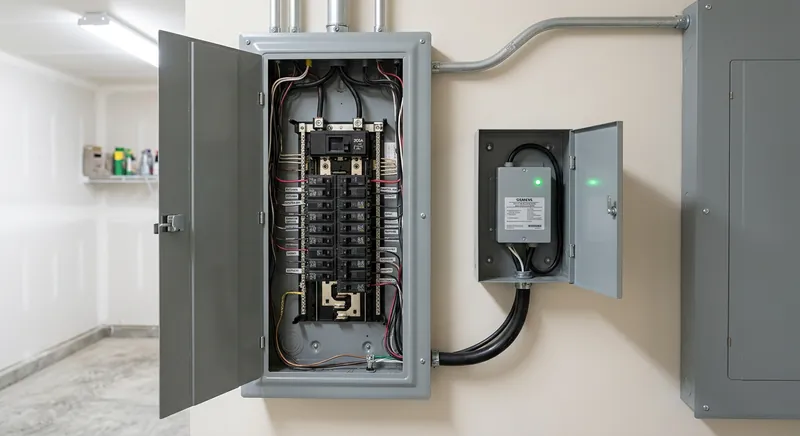
A whole-house surge protector is a device installed at your electrical panel that shields every circuit in your home from voltage spikes originating outside — lightning strikes, utility grid switching, and power restoration surges after an outage. Power strips with surge protection only protect what is plugged into them, and they do nothing for hardwired appliances like your furnace, air conditioner, well pump, or oven. A whole-house unit is the first line of defense, absorbing or diverting surges before they reach your panel. While no surge protector can guarantee complete protection against a direct lightning strike, a quality whole-house unit significantly reduces the risk of damage to expensive appliances and electronics from the far more common surges that enter through the power lines. Understanding joule ratings, surge current capacity, response time, and installation requirements helps you choose a unit that provides meaningful protection rather than a false sense of security.
Quick Answer
For most homeowners, a whole-house surge protector rated at 40,000 to 80,000 amps of surge current with a response time of less than 1 nanosecond and a UL 1449 Type 1 or Type 2 listing is the best choice because it protects all hardwired appliances and electronics from the most common and damaging surges that enter through the electrical service, including utility grid switching and nearby lightning strikes. A surge current rating of 40,000 amps or higher provides robust protection, while lower-rated units under 20,000 amps offer marginal defense. Type 1 units install before the main breaker and protect against external surges, while Type 2 units install after the breaker and are more common in retrofits. The main trade-off is protection level versus cost, as premium units with 80,000-plus amp ratings and LED status indicators cost 150 to 300 dollars versus 50 to 100 dollars for basic models. Professional installation at the panel is required and costs 150 to 300 dollars. Replace the unit every 5 to 10 years or after a major surge event.
Top Picks at a Glance
80kA Whole-House Surge Protector
50kA Surge Protector
100kA Heavy-Duty Surge Protector
Modular Surge Protector with Monitor
Product Comparison
| Product | Best For | Surge Current | Joule Rating | Response Time | Price Range | Details |
|---|---|---|---|---|---|---|
80kA Whole-House Surge Protector Best Overall | Strong all-around protection for most homes | 80,000A (80kA) | Varies — typically 1000–2000J | <1 nanosecond | $150–$300 | View Review ↓ |
50kA Surge Protector Best Value | Basic whole-house protection at a lower cost | 50,000A (50kA) | Varies — typically 600–1000J | <1 nanosecond | $80–$180 | View Review ↓ |
100kA Heavy-Duty Surge Protector Best for High Protection | Maximum protection for high-risk areas and valuable electronics | 100,000A (100kA) | Varies — typically 1500–2500J | <1 nanosecond | $200–$400 | View Review ↓ |
Modular Surge Protector with Monitor Best for Monitoring | Monitoring surge events and protection status | 80,000–100,000A (varies by model) | Digital display — surge count, voltage, status | <1 nanosecond | $250–$450 | View Review ↓ |
80kA Whole-House Surge Protector
Best Overall- Best For:
- Strong all-around protection for most homes
- Surge Current:
- 80,000A (80kA)
- Joule Rating:
- Varies — typically 1000–2000J
- Response Time:
- <1 nanosecond
- Price Range:
- $150–$300
50kA Surge Protector
Best Value- Best For:
- Basic whole-house protection at a lower cost
- Surge Current:
- 50,000A (50kA)
- Joule Rating:
- Varies — typically 600–1000J
- Response Time:
- <1 nanosecond
- Price Range:
- $80–$180
100kA Heavy-Duty Surge Protector
Best for High Protection- Best For:
- Maximum protection for high-risk areas and valuable electronics
- Surge Current:
- 100,000A (100kA)
- Joule Rating:
- Varies — typically 1500–2500J
- Response Time:
- <1 nanosecond
- Price Range:
- $200–$400
Modular Surge Protector with Monitor
Best for Monitoring- Best For:
- Monitoring surge events and protection status
- Surge Current:
- 80,000–100,000A (varies by model)
- Joule Rating:
- Digital display — surge count, voltage, status
- Response Time:
- <1 nanosecond
- Price Range:
- $250–$450
Detailed Product Reviews & Specifications
80kA Whole-House Surge Protector
An 80kA whole-house surge protector that mounts next to your electrical panel and provides robust protection against most external surges. The 80,000-amp surge current capacity handles significant transient voltage events, and LED status indicators confirm the unit is functioning. A solid middle ground between basic and heavy-duty protection.
Pros
- •80kA surge current capacity handles most common external surges
- •LED status indicators confirm protection is active
- •Thermal disconnect for safety if the unit is compromised
- •Compatible with most residential 200A electrical panels
Cons
- •Requires installation by a licensed electrician
- •Does not protect against direct lightning strikes to the home
- •Needs periodic replacement after absorbing major surges
Key Specifications
50kA Surge Protector
A 50kA whole-house surge protector that provides essential protection against common external surges at a more accessible price. Adequate for most homes in areas without frequent severe lightning activity. Includes LED status indicators and thermal protection, covering the fundamentals without the higher capacity of premium units.
Pros
- •Lower cost than high-capacity units
- •Covers common utility switching and minor surge events
- •LED indicator confirms operational status
- •Compact design fits beside most panels
Cons
- •50kA capacity may be insufficient in high-lightning areas
- •Lower joule rating than premium models
- •Less headroom for absorbing multiple large surges
Key Specifications
100kA Heavy-Duty Surge Protector
A 100kA heavy-duty whole-house surge protector designed for homes in high-lightning areas or with significant investments in sensitive electronics. The 100,000-amp surge current capacity provides the highest level of protection among residential units, with robust components designed to absorb and divert large transient voltage events.
Pros
- •Highest surge current capacity among residential units
- •Best choice for high-lightning or rural power line areas
- •Robust construction for repeated surge events
- •LED and audible alarm status on some models
Cons
- •Higher cost than standard-capacity units
- •May be more capacity than needed in low-risk areas
- •Still requires professional installation
Key Specifications
Modular Surge Protector with Monitor
A modular whole-house surge protector with a digital or LCD monitoring display that tracks surge events, voltage, and protection status. Allows homeowners to see when surges occur and when the protector needs replacement. Modular design means the protection module can be replaced without rewiring the unit.
Pros
- •Digital monitoring shows surge events and protection status in real time
- •Modular design allows replacing the protection module without rewiring
- •Alerts when the unit has absorbed its maximum surge capacity
- •Useful for diagnosing power quality issues
Cons
- •Higher cost than non-monitored units
- •Display adds complexity some homeowners may not need
- •Modular replacement modules are an ongoing cost
Key Specifications
Joule Rating and Surge Current: What the Numbers Mean
Two ratings define a whole-house surge protector's capacity: joule rating and surge current (measured in kA, or thousands of amps). The joule rating indicates how much total energy the unit can absorb over its lifetime before it needs replacement. Higher joule ratings mean the unit can absorb more or larger surges before wearing out.
Surge current capacity (kA) indicates the maximum single surge the unit can handle in one event. An 80kA unit can divert an 80,000-amp surge; a 100kA unit handles 100,000 amps. For most homes, 50–80kA is adequate. In high-lightning areas or on long rural power lines prone to large surges, 100kA provides additional headroom.
Both numbers matter but in different ways. Joule rating is about total lifespan capacity; surge current is about single-event capability. A unit with a high surge current but low joule rating can handle one large surge but may wear out sooner. A unit with high joule rating and moderate surge current lasts longer against smaller, frequent surges but may not survive a massive single event. Look for a balance appropriate to your risk level.
Response Time and Status Indicators
Response time is how quickly the surge protector reacts to a voltage spike. Quality whole-house surge protectors respond in less than one nanosecond, fast enough to divert a surge before it reaches your panel. This is a baseline spec — any reputable unit responds in under a nanosecond — so it is not a differentiator between models, but it is worth confirming.
More practically useful are status indicators. LED lights on the unit confirm that protection is active. If the LED changes color or turns off, the unit has absorbed its maximum surge capacity and needs replacement. Some models add an audible alarm. Without a status indicator, you have no way to know whether your surge protector is still protecting your home or has already worn out.
Premium models add digital monitoring that displays surge event counts, real-time voltage, and protection status. This is useful if you want to understand your home's power quality or track how often surges occur. For most homeowners, a simple LED indicator is sufficient, but monitoring adds peace of mind and diagnostic value.
Why Surge Protectors Wear Out
Surge protectors do not last forever. Every time the unit absorbs or diverts a surge, its internal metal oxide varistors (MOVs) degrade slightly. After enough surges — or one very large event — the MOVs can no longer function and the unit stops protecting. This is why status indicators and periodic replacement matter. A surge protector that has silently worn out provides no protection at all, which is worse than having no protector because you believe you are protected when you are not.
NEMA Ratings and Installation
The NEMA rating of a whole-house surge protector describes its enclosure's ability to withstand environmental conditions. NEMA 4 and 4X enclosures are weatherproof and can be installed indoors or outdoors, protecting the unit from rain, dust, and hose-directed water. NEMA 4X adds corrosion resistance, useful in coastal areas or where salt exposure is a concern.
Most whole-house surge protectors mount next to your electrical panel, either inside or outside the home. The location depends on where your panel is and the unit's enclosure rating. An outdoor-rated unit (NEMA 4 or 4X) can go anywhere; an indoor-only unit must be inside.
Installation requires a licensed electrician. The unit connects to your panel via a dedicated breaker and must be wired correctly to function. An improperly installed surge protector may not protect your home and can create a safety hazard. Installation typically takes an electrician 1–2 hours, and the total cost including the unit and labor is usually a few hundred dollars — a modest investment to protect appliances and electronics worth many times more.
Layered Protection: Whole-House Plus Point-of-Use
A whole-house surge protector is your first line of defense against external surges, but it does not catch everything. Smaller surges generated inside your home — when a large appliance like an air conditioner cycles on, or from devices on the same circuit — can still reach sensitive electronics. This is why a layered approach is recommended.
The first layer is the whole-house protector at the panel, which handles large external surges. The second layer is point-of-use surge protectors (quality power strips or surge-protected outlets) at the locations where sensitive electronics are plugged in. These handle smaller, residual surges that make it past the whole-house unit.
For the most sensitive and expensive electronics — computers, home theater equipment, and networking gear — a high-quality point-of-use surge protector with its own joule rating is worth the investment. Together, the two layers provide more complete protection than either alone. Neither layer can guarantee protection against a direct lightning strike, but both significantly reduce the risk of damage from the vast majority of surge events.
Safety & Compliance Notice
Whole-house surge protectors must be installed by a licensed electrician. Installation involves working inside an energized electrical panel, which is dangerous and requires proper training and tools. Most jurisdictions require a permit and inspection. Never attempt to install one yourself.
Frequently Asked Questions
Yes. Power strips only protect devices plugged into them and do nothing for hardwired appliances like your furnace, AC, oven, or well pump. A whole-house surge protector at the panel is the first line of defense against external surges from lightning, utility switching, and power restoration. The recommended approach is layered: a whole-house unit for large external surges plus quality power strips for sensitive electronics.
Final Verdict
For most homeowners, an 80kA whole-house surge protector strikes the best balance of protection and value — it handles the majority of external surges including indirect lightning and utility switching, with LED status indicators to confirm it is working. For budget-conscious buyers in moderate-risk areas, a 50kA unit covers the fundamentals at a lower cost. In high-lightning or rural areas, or for homes with significant electronics investments, a 100kA unit provides maximum residential protection. And for homeowners who want visibility into power quality and surge events, a modular unit with monitoring adds diagnostic value and easier replacement. Whatever you choose, have it installed by a licensed electrician, pair it with quality point-of-use surge protectors for sensitive electronics, and check the status indicator periodically to know when replacement is needed.
Emily Ross
Smart Home & Energy Writer
Emily researches smart home technology, home energy systems, and backup power solutions for HomeGear Guide. Her work focuses on helping homeowners understand how connected devices and energy products compare and what to look for before investing.
Related Articles & Buying Guides
 Home Energy & Backup Power
Best Portable Generators for Home Backup and Outdoor Use
Compare portable generators by running watts, surge capacity, dual-fuel options, and clean inverter power to keep your essential household circuits running during outages.
 Home Energy & Backup Power
Best Home Standby Generators for Automatic Whole-Home Backup
Compare automatic home standby generators by kW capacity, fuel supply, transfer equipment, and installation requirements to keep your whole home powered during outages.
 Home Energy & Backup Power
Best Solar Generators for Clean, Quiet Portable Power
Compare solar generators for clean, quiet portable power. Understand battery capacity in watt-hours, inverter output, solar input, charge time, and LiFePO4 vs NMC chemistry.
 Home Energy & Backup Power
Best Battery Power Stations for Home Backup and Portable Power
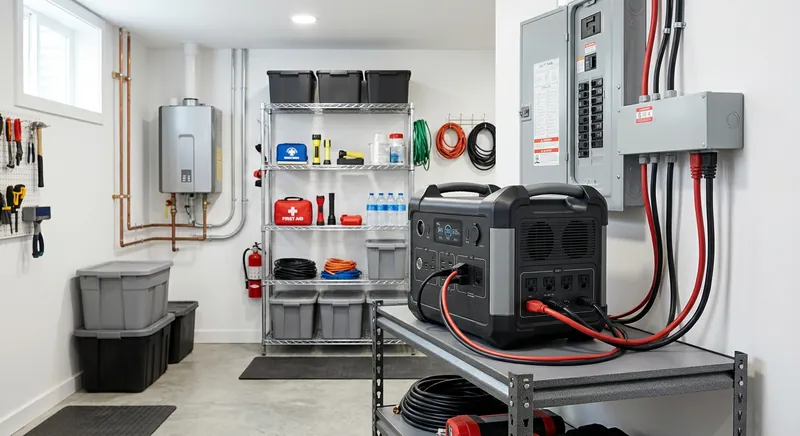
Compare battery power stations for home backup and portable use. Understand capacity in watt-hours, AC output, battery chemistry, charging options, and UPS functionality.
Get Smarter About Your Home
Receive practical buying guides, product comparisons, maintenance tips and home project ideas from HomeGear Guide.
You can unsubscribe at any time.