Best Home Standby Generators for Automatic Whole-Home Backup
Affiliate Disclosure: HomeGear Guide is reader-supported. When you buy through links on our site, we may earn an affiliate commission at no extra cost to you. We do not accept paid product placements or sponsor-biased reviews.
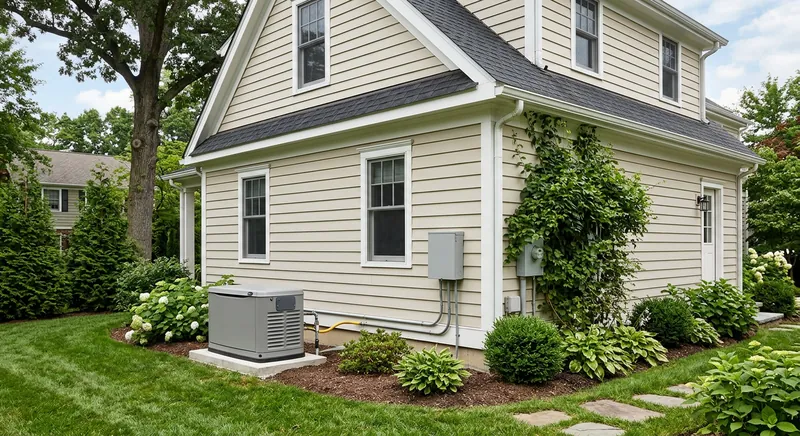
When power grids fail during severe hurricanes, ice storms, or summer heat waves, portable generators require dragging heavy equipment outside in torrential rain, pulling recoil cords, and managing volatile gasoline cans every few hours. By contrast, an automatic home standby generator is permanently installed on a composite pad outside your home, connected directly to your municipal natural gas or liquid propane supply, and wired to an Automatic Transfer Switch (ATS). When the power grid drops, the ATS senses utility failure, starts the generator engine, and automatically transfers your home's electrical load in 10 to 20 seconds—completely unattended. Emily Ross details kW sizing math, air vs liquid cooling engineering, ATS selection, and National Fire Protection Association (NFPA 37) installation clearances.
Quick Answer
Sizing a standby generator begins by choosing between essential-circuit backup (10 to 14 kW) and true whole-home backup (20 to 26 kW). For homes over 2,500 sq ft equipped with central air conditioning (3 to 5 tons), electric water heaters, and modern appliances, a 22 kW to 26 kW air-cooled standby generator paired with a 200-amp service disconnect ATS provides total hands-free operation without needing complex circuit load shedding. For expansive luxury estates (over 4,000 sq ft) or severe southern heat zones, commercial liquid-cooled generators (25 kW to 48 kW operating at a low 1,800 RPM) provide quieter continuous multi-week performance. Always verify municipal gas line meter capacity (minimum 250,000 to 390,000 BTU/hr demand) and maintain NFPA 37 fire clearances (5 ft from windows/doors, 18 inches from walls).
Top Picks at a Glance
24kW Premium Air-Cooled Standby Generator
Purpose-built 999cc V-Twin engine with 200A service-rated ATS and mobile Wi-Fi monitoring.
20kW Heavy-Duty Standby with Hydraulic Lifters
Commercial V-Twin with automotive hydraulic lifters delivering clean power (THD < 2.5%).
14kW Compact Air-Cooled Standby Generator
Handles up to 2 central AC units with smart power management modules on an ultra-compact footprint.
30kW Commercial Liquid-Cooled Generator
Low-speed 1,800 RPM 4-cylinder automotive engine engineered for severe continuous multi-week outages.
Product Comparison
| Product | Rated Capacity (LP / NG) | Engine Type & Speed | Automatic Transfer Switch | Sound Level (dBA) | Enclosure Material | Best Application | Details |
|---|---|---|---|---|---|---|---|
24kW Premium Air-Cooled Standby Generator Best Overall Whole-Home | 24kW (LP) / 21kW (NG) | 999cc Purpose-Built V-Twin | 200-Amp Whole-House Included | 65 dBA at 23 Ft (57 dBA Exercise) | Corrosion-Resistant Galvanneal Steel | Complete whole-home backup for homes up to 3,500 sq ft with central air conditioning | View Review ↓ |
20kW Heavy-Duty Standby with Hydraulic Lifters Best Commercial Reliability | 20kW (LP) / 18kW (NG) | Commercial V-Twin with Hydraulic Lifters | < 2.5% (Utility Grade) | 200-Amp Service Rated Switch | 66 dBA Normal Operation | Extreme reliability, cleaner harmonic power delivery, and low maintenance valve train | View Review ↓ |
14kW Compact Air-Cooled Standby Generator Best for Mid-Size Homes | 14kW (LP) / 12kW (NG) | 816cc Commercial V-Twin | Smart Power Management (Up to 2 ACs) | 65 dBA Normal / 58 dBA Exercise | 1.8 Gal / Hr LP at 50% Load | Homes up to 2,200 sq ft, essential circuits + single central AC, and compact property lots | View Review ↓ |
30kW Commercial Liquid-Cooled Generator Best for Large Luxury Estates | 30kW (Continuous NG or LP) | 1.8L 4-Cylinder Automotive In-Line | 1,800 RPM (Low Wear) | Closed-Loop Liquid Radiator | 58 dBA at 23 Feet | Large luxury estates (4,000+ sq ft), extreme hot climates, and multi-week severe grid failures | View Review ↓ |
24kW Premium Air-Cooled Standby Generator
Best Overall Whole-Home- Rated Capacity (LP / NG):
- 24kW (LP) / 21kW (NG)
- Engine Type & Speed:
- 999cc Purpose-Built V-Twin
- Automatic Transfer Switch:
- 200-Amp Whole-House Included
- Sound Level (dBA):
- 65 dBA at 23 Ft (57 dBA Exercise)
- Enclosure Material:
- Corrosion-Resistant Galvanneal Steel
- Best Application:
- Complete whole-home backup for homes up to 3,500 sq ft with central air conditioning
20kW Heavy-Duty Standby with Hydraulic Lifters
Best Commercial Reliability- Rated Capacity (LP / NG):
- 20kW (LP) / 18kW (NG)
- Engine Type & Speed:
- Commercial V-Twin with Hydraulic Lifters
- Automatic Transfer Switch:
- < 2.5% (Utility Grade)
- Sound Level (dBA):
- 200-Amp Service Rated Switch
- Enclosure Material:
- 66 dBA Normal Operation
- Best Application:
- Extreme reliability, cleaner harmonic power delivery, and low maintenance valve train
14kW Compact Air-Cooled Standby Generator
Best for Mid-Size Homes- Rated Capacity (LP / NG):
- 14kW (LP) / 12kW (NG)
- Engine Type & Speed:
- 816cc Commercial V-Twin
- Automatic Transfer Switch:
- Smart Power Management (Up to 2 ACs)
- Sound Level (dBA):
- 65 dBA Normal / 58 dBA Exercise
- Enclosure Material:
- 1.8 Gal / Hr LP at 50% Load
- Best Application:
- Homes up to 2,200 sq ft, essential circuits + single central AC, and compact property lots
30kW Commercial Liquid-Cooled Generator
Best for Large Luxury Estates- Rated Capacity (LP / NG):
- 30kW (Continuous NG or LP)
- Engine Type & Speed:
- 1.8L 4-Cylinder Automotive In-Line
- Automatic Transfer Switch:
- 1,800 RPM (Low Wear)
- Sound Level (dBA):
- Closed-Loop Liquid Radiator
- Enclosure Material:
- 58 dBA at 23 Feet
- Best Application:
- Large luxury estates (4,000+ sq ft), extreme hot climates, and multi-week severe grid failures
Detailed Product Reviews & Specifications
24kW Premium Air-Cooled Standby Generator
The benchmark residential standby generator engineered for complete whole-house electrical backup. Delivers 24kW on liquid propane and 21kW on natural gas, easily starting 5-ton air conditioner compressors while powering electric ovens, water heaters, and lighting.
Pros
- •Full 24kW capacity powers central AC, electric dryer, and kitchen appliances simultaneously
- •Includes 200-Amp service-rated indoor/outdoor Automatic Transfer Switch (ATS)
- •Quiet-Test weekly self-exercise mode runs at reduced RPM to save fuel and minimize sound
- •Smartphone app provides real-time monitoring of generator status and utility grid health
Cons
- •High fuel consumption during full electrical load (approx. 3.2 gal/hr LP)
- •Requires professional certified electrician and gas plumber installation
Key Specifications
20kW Heavy-Duty Standby with Hydraulic Lifters
A premium commercial-grade standby generator engineered with an industrial engine featuring automotive-style hydraulic valve lifters. Eliminates the need for expensive periodic valve lash adjustments and delivers exceptionally clean electricity.
Pros
- •Hydraulic valve lifters eliminate periodic valve clearance maintenance adjustments
- •Exceptional power quality with Total Harmonic Distortion under 2.5%
- •Commercial-grade aluminum enclosure resists coastal salt-spray corrosion
- •Fast 10-second response time from grid failure to electrical restoration
Cons
- •Slightly heavier unit requiring solid pre-cast concrete mounting pad
- •Requires authorized technician to activate factory warranty
Key Specifications
14kW Compact Air-Cooled Standby Generator
A compact, highly efficient air-cooled standby generator designed for mid-size residences. Equipped with smart power management modules, it can manage up to two 4-ton air conditioners by preventing them from starting at the exact same second.
Pros
- •Compact footprint takes up 30% less exterior yard space than large 24kW units
- •Smart power management controls up to two central AC units efficiently
- •Lower fuel consumption saves significant natural gas and propane costs during long outages
- •Lower equipment and electrical installation cost
Cons
- •14kW capacity requires managing simultaneous heavy electrical loads
- •Not sized for large homes with multiple electric heating appliances
Key Specifications
30kW Commercial Liquid-Cooled Generator
A heavy-duty commercial standby generator powered by an automotive 1.8-liter 4-cylinder engine running at a slow, quiet 1,800 RPM. Closed-loop liquid radiator cooling provides immense durability during sustained multi-week utility outages.
Pros
- •Low 1,800 RPM operating speed dramatically reduces engine wear and sound
- •Closed-loop liquid automotive radiator cooling prevents overheating in 110°F heat
- •Continuous commercial duty cycle engineered to run uninterrupted for weeks
- •Quiet whisper operation at just 58 dBA at 23 feet
Cons
- •Significant financial investment ($10,000+ equipment plus installation)
- •Requires 500-gallon dedicated propane tank or 2-inch high-pressure gas meter
Key Specifications
Sizing a Standby Generator: Whole-Home vs. Essential Circuits
Sizing a standby generator begins by assessing your home's total electrical service entrance. Most modern single-family homes have a 200-amp electrical panel (delivering up to 48,000 watts of potential utility power). However, a home rarely draws more than 15,000 to 22,000 watts simultaneously.
The largest electrical consumers are central air conditioners, electric heat pumps, electric water heaters, and electric clothes dryers. A 4-ton central air conditioner draws approximately 4,000 running watts, but requires up to 14,000 to 18,000 starting watts (Locked Rotor Amps) for 1 to 2 seconds to kick on the compressor.
For total whole-home protection where families can run central AC, wash dishes, and cook without manual power management, a 22kW to 26kW generator is required. For homes with gas heating, gas water heaters, and a single air conditioner, a 14kW to 18kW generator is thoroughly adequate.
Use our Generator Size Calculator to inventory your major circuits and verify kW capacity.
Air-Cooled (3600 RPM) vs. Liquid-Cooled (1800 RPM) Engines
Air-Cooled Engines (10kW – 26kW): Powered by 2-cylinder V-twin engines operating at 3,600 RPM. Air is drawn across cooling fins by a flywheel fan. These units are compact, highly cost-effective, and provide exceptional reliability for typical residential storm outages lasting 2 to 7 days.
Liquid-Cooled Engines (25kW – 60kW+): Powered by 4-cylinder or 8-cylinder automotive engines operating at a relaxed 1,800 RPM. They feature a closed-loop automotive radiator with coolant fluid. Because they operate at half the speed of air-cooled engines, they generate significantly less engine noise, consume less oil during extended multi-week runs, and perform reliably in extreme 115°F desert heat.
Fuel Supply Infrastructure: Natural Gas vs. Liquid Propane
Natural Gas (NG): Natural gas is the ultimate convenient fuel because it flows through underground utility pipes, providing an endless fuel supply that never runs out during a blizzard. However, a 22kW generator consumes approximately 250 to 300 cubic feet per hour of natural gas at full load (~280,000 BTU/hr). Your local gas utility may need to upgrade your residential gas meter from a standard 250 CFH meter to a 400+ CFH meter to ensure your furnace, water heater, and generator can operate simultaneously without fuel starvation.
Liquid Propane (LP): Propane offers higher energy density and is the primary fuel for rural homes. A 22kW standby generator consumes approximately 2.5 to 3.5 gallons of propane per hour under heavy electrical load. A dedicated 500-gallon underground or aboveground propane tank provides roughly 5 to 7 days of continuous full-time runtime.
National Fire Protection Association (NFPA 37) & Electrical Codes
Standby generator placement is strictly governed by NFPA 37 fire safety codes and local building ordinances. Key installation requirements include:
1. 5-Foot Clearance from Openings: The generator must be positioned at least 5 feet away from any operable door, window, vent, or air intake to prevent exhaust carbon monoxide from entering the living envelope.
2. 18-Inch Wall Clearance: Generators must be placed at least 18 inches away from non-combustible exterior home walls (brick, cement board), with clear overhead space (no roof overhangs or soffits).
3. Stable Mounting Pad: The generator must be bolted to an approved composite mounting pad resting on compacted pea gravel or a 4-inch reinforced concrete slab.
4. Emergency Shutoff Switch: National Electrical Code (NEC Article 445) requires an externally accessible emergency stop switch mounted on the outside of the generator cabinet.
Generator Size & Appliance Wattage Calculator
Tally running watts and surge starting watts across your home appliances to select the right generator size for emergency outages.
Safety & Compliance Notice
Standby generator installations involve dangerous high-voltage electrical services and high-pressure combustible gas piping. Installations must always be performed by licensed electricians and certified gas plumbers with local municipal permits.
Frequently Asked Questions
A complete turnkey installation typically costs between $8,000 and $15,000. Equipment costs range from $4,000 to $7,000, while professional labor, permits, 200A transfer switch wiring, gas line plumbing, and concrete pad preparation average $3,500 to $6,500 depending on distance to gas and electrical meters.
Final Verdict
For most suburban homes seeking true whole-house hands-free security, 24kW Premium Air-Cooled Standby Generator is our top recommendation due to its generous capacity, integrated 200A transfer switch, and proven commercial V-twin engine. For estates exceeding 4,000 square feet or homeowners wanting the quietest multi-week endurance, 30kW Commercial Liquid-Cooled Generator provides commercial-grade durability.
Emily Ross
Smart Home & Energy Writer
Emily researches smart home technology, home energy systems, and backup power solutions for HomeGear Guide. Her work focuses on helping homeowners understand how connected devices and energy products compare and what to look for before investing.
Related Articles & Buying Guides
 Home Energy & Backup Power
Best Portable Generators for Home Backup and Outdoor Use
Compare portable generators by running watts, surge capacity, dual-fuel options, and clean inverter power to keep your essential household circuits running during outages.
 Home Energy & Backup Power
Best Solar Generators for Clean, Quiet Portable Power
Compare solar generators for clean, quiet portable power. Understand battery capacity in watt-hours, inverter output, solar input, charge time, and LiFePO4 vs NMC chemistry.
Home Energy & Backup PowerPortable Generator Safety: Carbon Monoxide Risks and Safe Operation
Portable generators produce deadly carbon monoxide. Learn safe placement, transfer switch requirements, and the dangerous mistakes that cause carbon monoxide poisoning.
 Home Energy & Backup Power
Best Whole-House Surge Protectors to Safeguard Your Electronics
Compare whole-house surge protectors for your electrical panel. Understand joule ratings, kA surge current, response time, LED status, NEMA ratings, and installation.
 Home Energy & Backup Power
Best Battery Power Stations for Home Backup and Portable Power
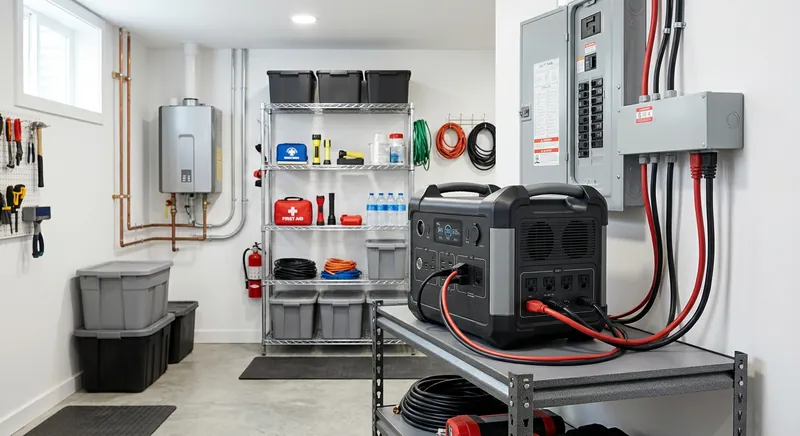
Compare battery power stations for home backup and portable use. Understand capacity in watt-hours, AC output, battery chemistry, charging options, and UPS functionality.
Get Smarter About Your Home
Receive practical buying guides, product comparisons, maintenance tips and home project ideas from HomeGear Guide.
You can unsubscribe at any time.