Best Outdoor Security Cameras for Home Monitoring
Affiliate Disclosure: HomeGear Guide is reader-supported. When you buy through links on our site, we may earn an affiliate commission at no extra cost to you. We do not accept paid product placements or sponsor-biased reviews.
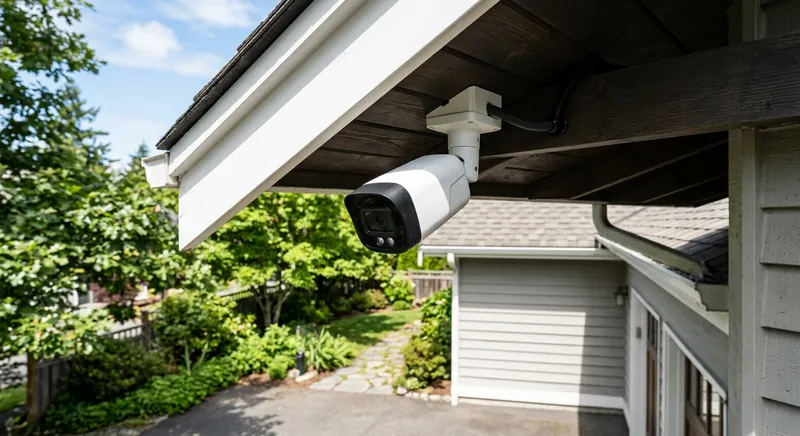
An outdoor security camera is one of the most effective deterrents against property crime, and it provides evidence if something does happen. Unlike a video doorbell, which covers your front porch, an outdoor camera can monitor your backyard, driveway, side yard, or any other area around your home. But choosing the right outdoor camera involves decisions that a doorbell does not — primarily around power source and weather resistance. A camera that needs to be plugged in is useless for a backyard with no outlet, and a camera that is not weather-rated will fail in its first winter. Understanding resolution, night vision, storage, and power options before you buy helps you choose a camera that actually works for the specific location you want to monitor.
Quick Answer
For most homeowners, a 1080p wireless outdoor security camera with battery power, IP65 or higher weather rating, and night vision is the best choice because it can be mounted anywhere without wiring, provides clear footage for identifying faces and vehicles, and withstands rain, dust, and temperature extremes. Battery-powered cameras with 3 to 6 months of runtime per charge are the most flexible option for locations without nearby outlets. Solar panel accessories extend battery life indefinitely for cameras mounted in sunny locations. IP65 or higher ensures the camera survives direct rain and dust exposure, while IP67 offers full immersion protection. The main trade-off is convenience versus continuous recording, as battery cameras use motion-activated recording to conserve power and cannot record 24-7. For continuous monitoring of critical areas like driveways, a wired camera with a NVR system is necessary. Color night vision is a valuable feature worth paying for.
Top Picks at a Glance
Wire-Free Security Camera
Wired PoE Camera
Floodlight Camera
Budget Outdoor Camera
Product Comparison
| Product | Best For | Resolution | Power Source | Weather Rating | Price Range | Details |
|---|---|---|---|---|---|---|
Wire-Free Security Camera Best Overall | Flexible placement without wiring | 1080p or 2K | Rechargeable battery (solar-compatible) | IP65 or higher | $100–$200 | View Review ↓ |
Wired PoE Camera Best for Constant Power | Continuous recording and constant power | 2K or 4K | Power-over-Ethernet (PoE) | IP66 or higher | $80–$180 per camera | View Review ↓ |
Floodlight Camera Best with Light | Motion-activated lighting and video in one | 1080p or 2K | Hardwired (existing junction box) | IP55 or higher | $100–$250 | View Review ↓ |
Budget Outdoor Camera Best Value | Basic outdoor monitoring at a low cost | 720p–1080p | Rechargeable battery or wired depending on model | IP65 (verify per model) | $30–$70 | View Review ↓ |
Wire-Free Security Camera
Best Overall- Best For:
- Flexible placement without wiring
- Resolution:
- 1080p or 2K
- Power Source:
- Rechargeable battery (solar-compatible)
- Weather Rating:
- IP65 or higher
- Price Range:
- $100–$200
Wired PoE Camera
Best for Constant Power- Best For:
- Continuous recording and constant power
- Resolution:
- 2K or 4K
- Power Source:
- Power-over-Ethernet (PoE)
- Weather Rating:
- IP66 or higher
- Price Range:
- $80–$180 per camera
Floodlight Camera
Best with Light- Best For:
- Motion-activated lighting and video in one
- Resolution:
- 1080p or 2K
- Power Source:
- Hardwired (existing junction box)
- Weather Rating:
- IP55 or higher
- Price Range:
- $100–$250
Budget Outdoor Camera
Best Value- Best For:
- Basic outdoor monitoring at a low cost
- Resolution:
- 720p–1080p
- Power Source:
- Rechargeable battery or wired depending on model
- Weather Rating:
- IP65 (verify per model)
- Price Range:
- $30–$70
Detailed Product Reviews & Specifications
Wire-Free Security Camera
A wire-free outdoor camera that runs on a rechargeable battery and connects via Wi-Fi. No power outlet or Ethernet cable needed, so it can be placed anywhere within Wi-Fi range. Most models include a base station or connect directly to the router.
Pros
- •No wiring required — install anywhere within Wi-Fi range
- •Rechargeable battery lasts 2–6 months per charge depending on activity
- •Quick installation with a magnetic or screw-in mount
- •Works with solar panels for continuous charging
Cons
- •Battery requires periodic charging without a solar panel
- •Recording may have a slight delay as the camera wakes from sleep
- •Some models require a base station for connectivity and storage
Key Specifications
Wired PoE Camera
A Power-over-Ethernet (PoE) camera that receives both power and data through a single Ethernet cable connected to a PoE switch or injector. Provides the most reliable connection for continuous recording with no battery to charge and no Wi-Fi dependency.
Pros
- •Constant power — no battery charging ever
- •Reliable wired connection with no Wi-Fi dropouts
- •Supports continuous 24/7 recording without power management
- •Single cable carries both power and data for cleaner installation
Cons
- •Requires running an Ethernet cable to the camera location
- •Needs a PoE switch or injector at the router end
- •Less flexible placement — cable must reach from camera to network equipment
Key Specifications
Floodlight Camera
A combination floodlight and security camera that replaces an existing exterior light fixture. When motion is detected, the bright floodlight illuminates and the camera records. Provides both a visual deterrent and clear color video of the triggered event.
Pros
- •Bright motion-activated light deters intruders and illuminates the area
- •Color night vision when the light is triggered
- •Replaces existing light fixture — uses existing wiring
- •Two-way audio to speak with visitors or warn intruders
Cons
- •Requires existing junction box with wiring
- •Larger and more visible than standard cameras
- •Light may trigger on animals or blowing debris if sensitivity is too high
Key Specifications
Budget Outdoor Camera
An affordable outdoor security camera that covers the essentials — motion detection, night vision, and app alerts — at the lowest price. Typically battery-powered with basic resolution and fewer smart detection features than mid-range or premium models.
Pros
- •Lowest upfront cost
- •Battery-powered for wire-free placement
- •Covers essential features — motion alerts, night vision, live view
- •Good for covering a secondary area without a large investment
Cons
- •Lower resolution than mid-range cameras
- •Fewer smart detection features — may alert on all motion
- •Build quality and weatherproofing may be less robust than premium models
Key Specifications
Resolution and Night Vision Quality
Outdoor camera resolution ranges from 1080p to 4K. 1080p is sufficient for identifying people and vehicles at typical outdoor distances — about 15 to 30 feet. 2K provides sharper detail and better digital zoom, which helps when reviewing footage to read a license plate or identify a face at the edge of the camera's range. 4K offers the highest detail but requires more storage and bandwidth.
Night vision is essential for outdoor cameras, since most property crime occurs after dark. Infrared (IR) night vision is standard and produces black-and-white footage by illuminating the area with IR LEDs that are invisible to the human eye. The effective range of IR night vision is typically 20–30 feet.
Color night vision is available on some cameras and uses a built-in spotlight or ambient light to capture color footage at night. Color video makes it easier to identify clothing and vehicle colors. Floodlight cameras naturally provide color night vision because their light illuminates the scene when motion is detected.
Field of View and Camera Placement
Field of view determines how much area the camera covers. A wider field of view (130–160 degrees) captures more of the scene but may distort edges slightly. A narrower field of view (90–110 degrees) captures less area but provides more detail per foot, which can be better for identifying faces or plates at a distance.
Consider what you want to monitor when choosing field of view. For a wide backyard, a 140-degree or wider FOV is ideal. For a narrow driveway where you want to capture license plates, a narrower FOV with higher resolution may work better.
Placement matters as much as the camera's specifications. Mount cameras 8–10 feet high to keep them out of reach and to get a good viewing angle. Angle them slightly downward to capture faces rather than the tops of heads. Avoid pointing cameras directly at the sun during peak hours, as this causes glare and washout.
Power Source and Storage Options
The power source is the most important decision for outdoor cameras because it determines where you can place them. Battery-powered cameras go anywhere but need periodic charging. Wired cameras provide constant power but require an outlet or cable run. Solar panels can keep battery cameras charged indefinitely in sunny locations.
Storage falls into two categories: cloud and local. Cloud storage keeps recordings on remote servers, so footage survives even if the camera is stolen or destroyed. However, cloud storage typically requires a monthly or annual subscription. Local storage saves recordings to a memory card or base station, with no subscription but with the risk of losing footage if the camera is taken.
For comprehensive coverage, a combination works well — cloud storage for critical events and local storage as a backup. When choosing, factor subscription costs into the total cost of ownership. A $100 camera with a $5 monthly subscription costs $220 over two years, while a $180 camera with free local storage costs $180 total.
Solar Panels for Battery Cameras
A solar panel can keep a battery-powered outdoor camera charged indefinitely, eliminating the need to climb a ladder every few months. Solar panels work best in locations with direct sun for most of the day. In shaded areas or regions with long winters, a solar panel may not generate enough power to keep the battery topped up, so check the panel's output rating against the camera's power consumption.
Weather Rating and Durability
Outdoor cameras carry an IP (Ingress Protection) rating that indicates their resistance to dust and water. For outdoor use, look for IP65 or higher. IP65 means the camera is dust-tight and protected against water jets from any direction. IP66 and IP67 offer even greater water resistance, with IP67 rated for temporary submersion.
A camera with an IP rating below IP65 is not suitable for permanent outdoor installation. Even cameras rated IP65 should be installed under an eave or overhang when possible, as prolonged direct rain exposure can degrade seals over time.
Temperature range is another consideration. Check the camera's operating temperature range if you live in a climate with extreme heat or cold. Some battery cameras stop charging or reduce functionality in freezing temperatures, which can be a significant limitation in northern climates.
Frequently Asked Questions
Most cloud-based outdoor cameras require a subscription for video recording and storage. Without a subscription, you typically get live view and real-time alerts but cannot review past recordings. Some cameras offer local storage via a memory card or base station, which eliminates the subscription. Factor subscription costs into your total cost of ownership when comparing cameras.
Final Verdict
For most homeowners, a wire-free security camera offers the best combination of easy installation and flexible placement, especially for backyards and areas without power outlets. Add a solar panel to eliminate battery maintenance if the location gets sun. For driveways or areas where you want continuous 24/7 recording, a wired PoE camera is the most reliable choice. Floodlight cameras are excellent for locations with existing light fixtures, combining deterrence and surveillance in one device. Budget cameras cover basic monitoring for low-traffic areas but expect more false alerts and verify the weather rating. Whatever you choose, prioritize an IP65 or higher rating, factor in subscription costs, and mount cameras high enough to capture faces and stay out of reach.
Emily Ross
Smart Home & Energy Writer
Emily researches smart home technology, home energy systems, and backup power solutions for HomeGear Guide. Her work focuses on helping homeowners understand how connected devices and energy products compare and what to look for before investing.
Related Articles & Buying Guides
 Smart Home
Best Video Doorbells for Home Security and Package Protection
Compare wired and battery-powered video doorbells. Understand resolution, field of view, storage fees, smart alerts, and which power source fits your home.
 Smart Home
Best Home Security Systems for DIY and Professional Monitoring
Compare DIY no-contract, professionally monitored, and self-monitored security systems. Understand sensor types, cellular backup, and smart home integration.
 Smart Home
Best Smart Locks for Keyless Home Entry
Compare Wi-Fi, Bluetooth, and Z-Wave smart locks with keypads and fingerprint readers. Understand deadbolt grades, battery life, and keyless entry options.
 Smart Home
Best Smart Thermostats for Energy Savings and Comfort
Compare learning and programmable smart thermostats with remote sensors. Understand C-wire requirements, HVAC compatibility, and which features actually save energy.
Get Smarter About Your Home
Receive practical buying guides, product comparisons, maintenance tips and home project ideas from HomeGear Guide.
You can unsubscribe at any time.