Solar vs Electric Attic Fans: Which Is Better for Your Home?
Affiliate Disclosure: HomeGear Guide is reader-supported. When you buy through links on our site, we may earn an affiliate commission at no extra cost to you. We do not accept paid product placements or sponsor-biased reviews.
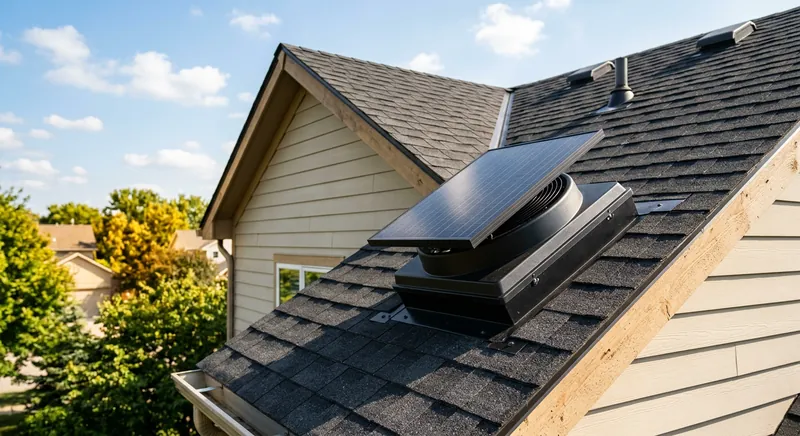
Solar and electric attic fans both serve the same purpose — exhausting hot air from your attic to reduce temperatures and protect your roof — but they differ significantly in cost, performance, and suitability for different climates. A solar attic fan runs on sunlight with zero operating cost but only operates during daylight hours and produces less airflow on cloudy days. An electric attic fan costs a few dollars per month to run but delivers consistent airflow regardless of weather or time of day. Based on our research comparing specifications, installation requirements, and owner feedback, the right choice depends on your climate, budget, and whether you need ventilation during humid nights or only during hot days.
Quick Answer
Based on our research, a solar attic fan is the better choice for homeowners in sunny climates who want zero operating cost and simpler installation, as it runs on a 10 to 25 watt solar panel that produces 800 to 1,400 CFM under direct sun with no electrical wiring required. An electric attic fan is the better choice for homeowners who need consistent airflow regardless of weather or time of day, as it delivers 1,200 to 1,600 CFM on demand via a thermostat that activates whenever the attic reaches a set temperature — day or night. Solar fans cost $150 to $400 upfront with no operating cost, while electric fans cost $80 to $250 upfront plus $2 to $8 per month in electricity. The main trade-off is reliability versus operating cost: electric fans run whenever needed but cost money to operate, while solar fans are free to run but only work when the sun is shining. In humid climates where nighttime moisture control matters, an electric fan with a humidistat is the better investment.
Cost Comparison: Upfront and Operating
Solar attic fans cost more upfront than electric fans. A quality solar attic fan with a 20 to 25 watt panel costs $200 to $400, while a comparable electric attic fan costs $80 to $250. The higher upfront cost of solar is offset by the absence of electrical wiring — most solar fans are a DIY installation if you are comfortable working on a roof, while electric fans typically require a licensed electrician to run wiring to a dedicated circuit, adding $150 to $300 in installation costs.
Operating costs favor solar dramatically. A solar fan has zero operating cost — it runs on sunlight with no electricity bill impact. An electric fan drawing 200 to 400 watts and running 6 to 10 hours per day during the cooling season costs roughly $2 to $8 per month, depending on local electricity rates and usage. Over a 10-year period, the operating cost difference adds up to $240 to $960 in favor of solar.
When comparing total cost of ownership, a solar fan at $300 with free installation and zero operating cost totals $300 over 10 years. An electric fan at $150 with $250 installation and $5 per month operating cost totals $1,000 over the same period. Solar fans also qualify for the federal solar tax credit in many cases, which can offset 30 percent of the equipment cost, further widening the gap.
Airflow and Performance Comparison
Electric attic fans deliver more consistent airflow. A typical electric fan produces 1,200 to 1,600 CFM whenever the thermostat triggers it, regardless of weather or time of day. This means the fan runs at full rated capacity whenever the attic is hot — including cloudy days and early mornings when attic heat can still build up.
Solar attic fans produce 800 to 1,400 CFM under direct sunlight, but real-world output is typically 20 to 40 percent lower than rated figures due to panel angle, shading, and atmospheric conditions. On a cloudy day, a solar fan may produce only 30 to 50 percent of its rated CFM. At night, it produces nothing. This means a solar fan is most effective during the hottest, sunniest part of the day — which is also when attic ventilation is most needed.
For sizing, electric fans have a clear advantage because their rated CFM is reliable. A 1,500 CFM electric fan will move 1,500 CFM whenever it runs. A solar fan rated at 1,200 CFM may deliver 800 to 900 CFM in real-world conditions. When choosing a solar fan, size up by 15 to 25 percent to account for real-world conditions — a fan rated at 1,400 CFM will deliver closer to 1,000 to 1,200 CFM in practice, which is adequate for attics up to 1,500 square feet.
Climate Suitability: When Each Type Shines
Solar attic fans are best suited for hot, sunny climates where attic heat peaks during the day and dissipates at night. In the Sun Belt — the Southwest, Texas, Florida, and the Southeast — a solar fan runs during the hottest part of the day and requires no operating cost, making it an excellent fit. The lack of nighttime operation is less of a concern in dry climates where nighttime moisture is not a problem.
Electric attic fans are better for humid climates where nighttime moisture control is as important as daytime heat reduction. In the Gulf Coast, Southeast, and Pacific Northwest, attic humidity can cause condensation, mold, and wood rot even when temperatures are not extreme. An electric fan with a humidistat activates when humidity exceeds 70 to 80 percent, regardless of whether the sun is shining. This dual-control approach — thermostat for heat, humidistat for moisture — is something a solar fan cannot provide.
In cold climates, neither type of attic fan is typically necessary. Attic ventilation in cold climates is primarily about preventing ice dams and moisture buildup, which passive ventilation (ridge vents and soffit vents) handles adequately. A powered fan in a cold climate can actually draw warm air from the living space into the attic, increasing heating costs and potentially causing condensation. If you live in a cold climate and are considering an attic fan, consult a ventilation professional first.
Installation Comparison
Solar attic fans are simpler to install because they require no electrical wiring. The fan mounts through the roof deck with integrated flashing, and the solar panel is either attached to the fan housing or mounted separately on the roof and connected with a cable. A homeowner with basic tools and roof comfort can install a solar fan in 1 to 2 hours. The main risk is the roof penetration — if the flashing is not done correctly, the installation can leak.
Electric attic fans require electrical wiring to a power source. Most installations involve running a circuit from the main panel or tapping into an existing attic circuit, then wiring the fan to a thermostat control. This work requires a licensed electrician in most jurisdictions and typically costs $150 to $300 in addition to the fan price. The advantage is that the fan can include a thermostat and humidistat for automatic operation, which a solar fan cannot match.
Both types require adequate intake ventilation to function properly. An exhaust fan without enough soffit or gable intake will create negative pressure that pulls conditioned air from the living space. Before installing either type, verify that your attic has at least 1 square foot of intake net free area for every 300 CFM of exhaust fan capacity. If intake is insufficient, add soffit vents before installing the fan.
Attic Ventilation Calculator & Code Sizing Tool
Calculate your attic's required Net Free Ventilating Area (NFVA) under IRC R806.2 building code formulas, balanced 50/50 between intake and exhaust.
Frequently Asked Questions
Solar attic fans do produce some airflow on cloudy days, but output drops significantly — typically to 30 to 50 percent of rated CFM under overcast conditions. If your region frequently has cloudy weather, an electric fan may be a more reliable choice. A higher-wattage solar panel (20 to 25 watts) will produce more airflow in low-light conditions than a 10 to 15 watt panel.
Final Verdict
For homeowners in sunny, hot climates who want zero operating cost and simpler installation, a solar attic fan is the better choice — it runs during the hottest part of the day at no cost and can be a DIY installation. For homeowners in humid climates where nighttime moisture control matters, or for those who need consistent airflow regardless of weather, an electric attic fan with a thermostat and humidistat is the more reliable investment. Solar fans cost more upfront but save on operating costs and installation. Electric fans cost less upfront but require professional wiring and a small monthly operating cost. Both types require adequate intake ventilation to function properly — verify your soffit vents are sufficient before installing either.
Michael Davies
Home Systems & Repair Editor
Michael writes about roofing, attic ventilation, insulation, and structural repair products for HomeGear Guide. His focus is on helping homeowners understand the materials and tools involved in protecting their home exterior and interior.
Related Articles & Buying Guides
 Attic & Insulation
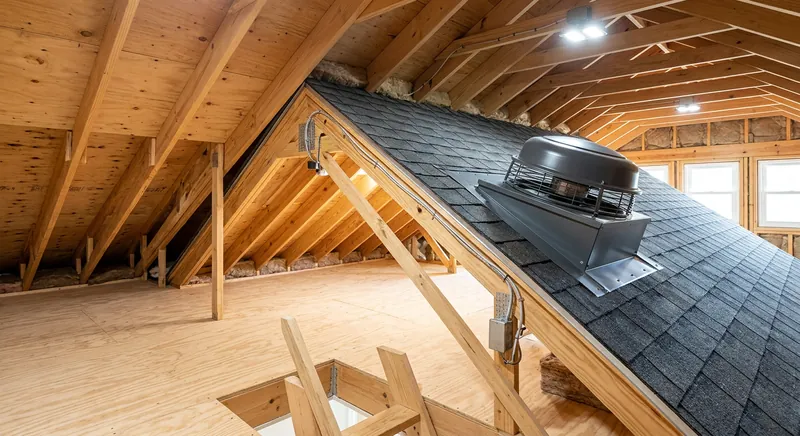
Best Attic Fans for Ventilation and Temperature Control
Compare solar and electric attic ventilation fans by airflow, thermostat controls, roof mounting, and IRC building codes to cool your attic and protect your roof.
Attic & InsulationSolar Attic Fan Reviews: Comparing Top Options
Solar attic fans promise zero-cost ventilation, but panel wattage, CFM, and warranty vary widely between models. This review compares the key features that matter.
 Attic & Insulation
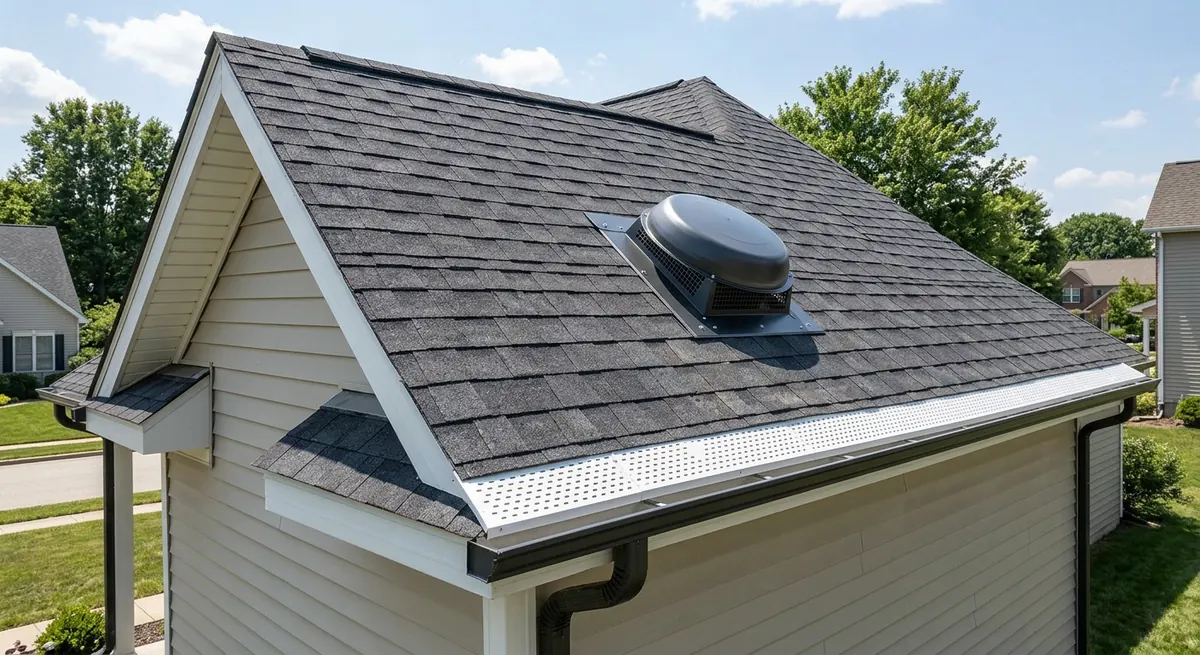
How to Size an Attic Fan: CFM Calculation Guide
Sizing an attic fan correctly is the difference between effective ventilation and wasted money. This guide walks through the CFM formula, a sizing chart by attic size, and intake ventilation checks.
 Attic & Insulation
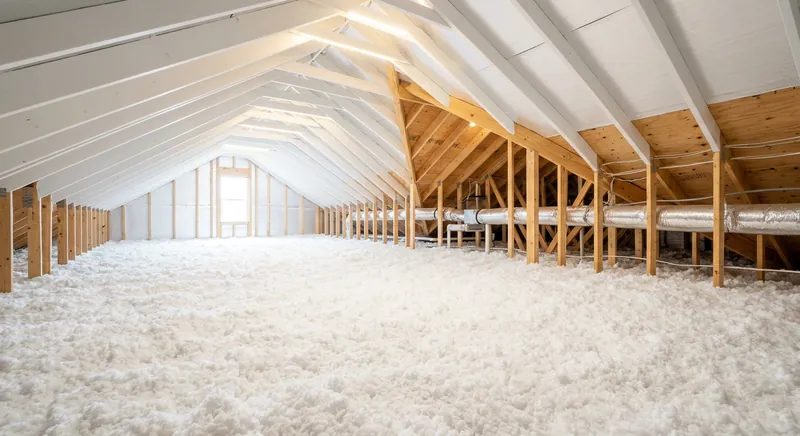
Best Attic Insulation for Hot Climates
Compare spray foam, radiant barriers, blown fiberglass, and cellulose attic insulation to stop intense radiant heat gain, lower cooling bills, and control humidity.
 Attic & Insulation
Best Radiant Barriers for Attic Heat Reduction
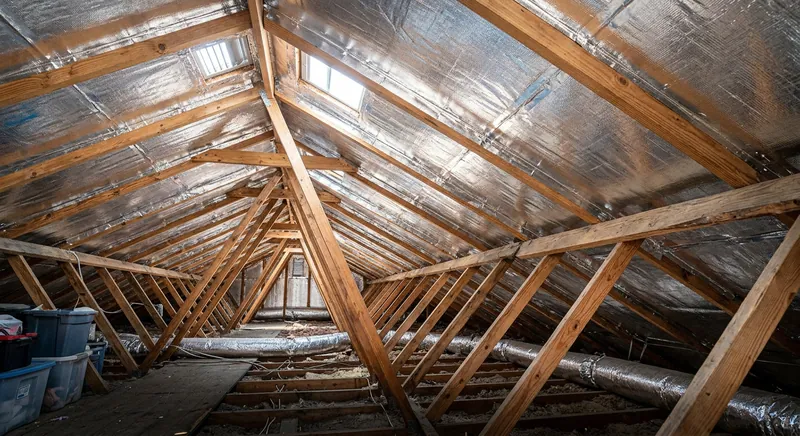
Radiant barriers reflect attic heat back toward the roof, reducing temperatures by 10–20°F. Here is how to compare foil barriers, radiant barrier paint, and installation methods.
Get Smarter About Your Home
Receive practical buying guides, product comparisons, maintenance tips and home project ideas from HomeGear Guide.
You can unsubscribe at any time.