Roof Repair Cost Guide: What to Expect for Common Repairs
Affiliate Disclosure: HomeGear Guide is reader-supported. When you buy through links on our site, we may earn an affiliate commission at no extra cost to you. We do not accept paid product placements or sponsor-biased reviews.
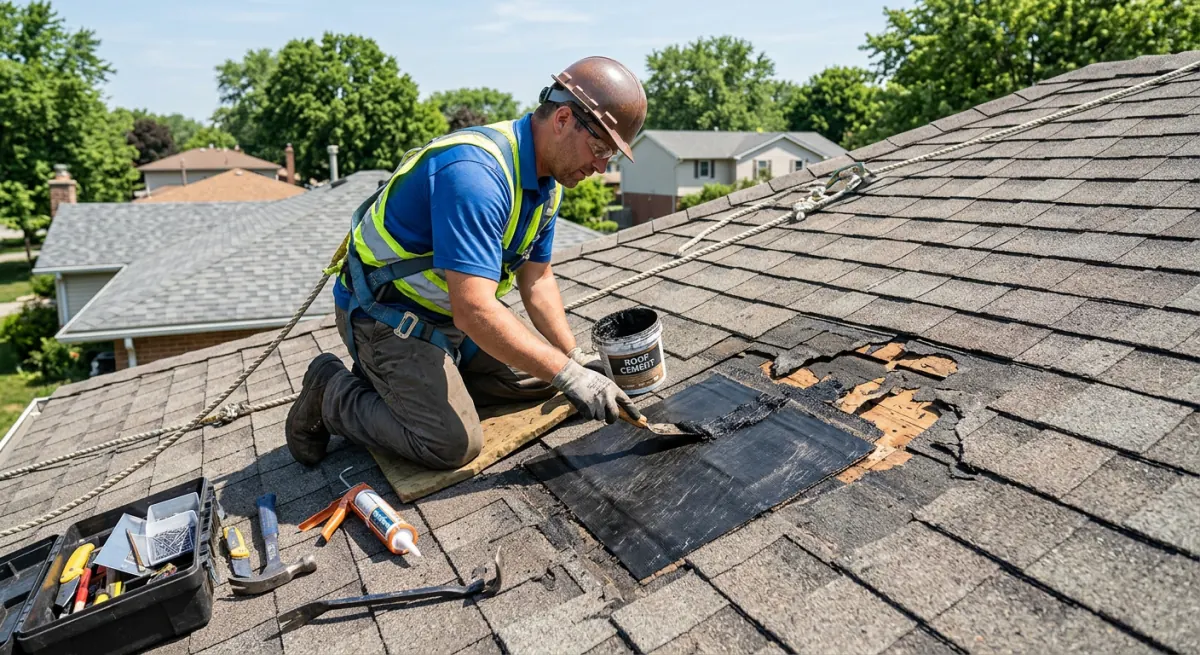
Roof repair costs vary widely depending on the type of damage, the roofing material, roof accessibility, and whether you hire a professional or do the work yourself. A small leak patch might cost $150 while a flashing repair around a chimney can run $600 or more. Understanding what drives these costs helps you budget realistically, compare quotes, and decide which repairs are within your DIY skill set and which require a professional. This guide breaks down the cost of common roof repairs, the factors that influence pricing, and the hidden costs that arise when leaks are left unaddressed.
Quick Answer
Common roof repair costs range from $150 for a simple vent boot replacement to $1,500 or more for roof coating or extensive flashing work. A typical leak patch costs $150 to $400, flashing repair runs $200 to $600, shingle replacement costs $200 to $500 per square (100 square feet), and roof coating runs $500 to $1,500. The main cost factors are roof type and material, accessibility (height, pitch, and obstacles), severity and extent of damage, and labor rates in your region. DIY is viable for small, accessible repairs like vent boot replacement or a single shingle patch, where materials cost $20 to $80 versus $150 to $400 for a professional. Hire a professional for steep or high roofs, flashing work around chimneys, any repair involving the roof deck, or leaks you cannot locate. Hidden costs of delayed repairs include water-damaged drywall ($300 to $1,200), mold remediation ($500 to $6,000), and structural deck replacement ($500 to $1,500 per section) — all of which far exceed the cost of a timely roof repair.
Factors That Affect Roof Repair Cost
No two roof repairs are priced exactly the same because multiple variables influence the final bill. Understanding these factors helps you interpret quotes and avoid overpaying for routine work.
Roof type and material is the first major factor. Asphalt shingle roofs are the most common and least expensive to repair because materials are affordable and widely available. Metal, tile, and slate roofs require specialized materials and skills, which drives up both material and labor costs. A repair that costs $250 on an asphalt roof might cost $600 to $1,200 on a tile or metal roof.
Accessibility has a significant impact on labor cost. A single-story roof with a low pitch and easy ladder access is straightforward for a roofer to work on. A two-story roof with a steep pitch, multiple dormers, or obstacles like skylights and chimneys requires more setup time, safety equipment, and sometimes scaffolding. Roofers factor this into their pricing — a difficult-access repair can cost 30 to 50 percent more than the same repair on an easy-access roof.
Severity and extent of damage determines how much material and labor are needed. A single cracked shingle is a 20-minute fix. A leak that has compromised a section of roof deck requires tearing off shingles, replacing decking, installing new underlayment, and re-shingling — a multi-hour job with significantly higher material costs.
Regional labor rates vary considerably. Roofing labor in a major metropolitan area may run $75 to $125 per hour, while the same work in a rural area might cost $50 to $80 per hour. Emergency or after-hours repairs typically carry a premium of 50 to 100 percent over standard rates.
The season also affects pricing. Roofers are busiest in late summer and fall, and quotes may be higher during peak demand. Late winter and early spring, when business is slower, can yield more competitive pricing for non-emergency repairs.
Common Roof Repair Costs
The following ranges reflect typical costs for common residential roof repairs on asphalt shingle roofs, which represent the majority of homes. Costs for other materials will be higher.
Leak patch — $150 to $400. This covers locating and sealing a localized leak, such as a small gap in flashing or a cracked shingle. The low end represents a straightforward patch accessible from a single-story roof. The high end reflects a leak on a two-story roof or one that requires some diagnostic time to locate.
Flashing repair — $200 to $600. Flashing repairs involve resealing or replacing metal flashing around chimneys, skylights, vents, or sidewalls. Simple resealing with new sealant falls at the low end. Full flashing replacement, which requires removing shingles and installing new step or counterflashing, falls at the high end. Chimney flashing is typically the most expensive because it involves both step flashing and counterflashing.
Shingle replacement — $200 to $500 per square. A square is 100 square feet of roof area. If a section of shingles is damaged by wind, hail, or impact and needs full replacement, expect to pay in this range. The cost includes new shingles, underlayment if needed, and labor. Matching older shingle colors can be difficult, and color mismatch may be a cosmetic issue even when the repair is functionally sound.
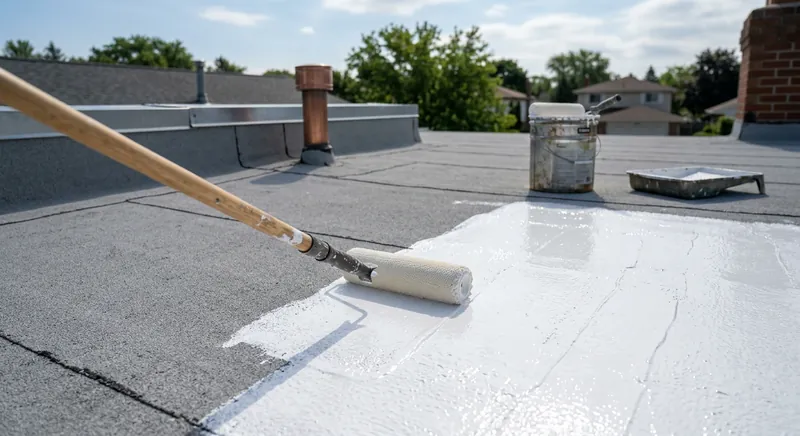
Roof coating — $500 to $1,500. Applying a protective coating over an existing roof surface is a larger job that involves cleaning the roof, making minor repairs, and rolling or spraying the coating material. Cost depends on roof size and the type of coating used. Elastomeric and silicone coatings fall at different price points, with silicone being more expensive but longer-lasting.
Vent boot replacement — $150 to $300. A plumbing vent boot that has cracked or degraded needs to be replaced to stop water from running down the pipe and into the attic. This is one of the most common and most affordable repairs. The boot itself costs $15 to $40; the rest is labor and service call minimums.
DIY vs. Professional Cost Comparison
The potential savings from DIY roof repair are real, but they come with trade-offs in safety, warranty coverage, and repair quality. Understanding the cost difference helps you decide which repairs make sense to tackle yourself.
For a vent boot replacement, DIY materials cost $20 to $50 (a new boot, some roofing sealant, and a few nails). A professional charges $150 to $300 for the same job. If your roof is single-story with safe ladder access and you are comfortable working at height, this is one of the most cost-effective DIY repairs.
For a leak patch involving sealant application, DIY materials cost $15 to $40 for a tube of silicone or asphalt sealant. A professional charges $150 to $400. The savings are significant, but the risk is applying sealant to the wrong spot — if you have not correctly identified the leak source, the repair will fail and you will pay for a professional anyway.
For shingle replacement, DIY materials cost $30 to $80 per square (shingles, nails, underlayment patch). A professional charges $200 to $500 per square. The savings are substantial for larger areas, but the work requires removing damaged shingles without damaging adjacent ones, properly installing underlayment, and correctly staggering and sealing new shingles. Mistakes can create new leaks.
For flashing repair, DIY materials cost $20 to $80 for flashing material and sealant. A professional charges $200 to $600. Flashing work is technically demanding — improperly installed flashing is a leading cause of recurring leaks. Most homeowners should hire a professional for flashing repairs, especially around chimneys.
Factor in the value of your time and the cost of tools you may need to purchase. If you do not own a roofing nailer, a harness, or a quality extension ladder, your effective DIY cost rises. For a one-time repair, these tool costs may erase the labor savings.
When DIY Is Safe vs. When to Hire a Professional
Cost is only one consideration. Safety and repair durability are equally important. Use these guidelines to determine which repairs are reasonable DIY projects and which require a professional.
DIY is generally safe for: single-story roofs with a pitch of 6:12 or less; vent boot replacement; applying sealant to a identified flashing gap; replacing a few damaged shingles on an accessible section of roof; and cleaning out valleys or gutters that are contributing to water backup. These repairs are low-risk, require basic tools, and have clear instructions.
Hire a professional for: any roof with a pitch steeper than 6:12 or higher than one story; all chimney flashing repairs and replacements; repairs involving the roof deck or structural components; skylight installation or replacement; any repair where you cannot identify the leak source; and any work on tile, slate, or metal roofs that requires specialized skills. These situations involve either significant safety risk, technical complexity, or both.
Consider the age of your roof. If your roof is near the end of its expected lifespan (20 to 25 years for asphalt shingles), a professional assessment is worthwhile even for a seemingly minor repair. Repeated repairs on an aging roof may cost more over time than a full replacement, and a roofer can advise on whether repair or replacement is the better investment.
Check your homeowners insurance policy. Some policies cover roof damage from sudden events like storms or fallen tree limbs, minus your deductible. If the damage is from a covered event, a professional repair with documentation may be reimbursable, while a DIY repair may complicate a claim.
Seasonal Home Maintenance Checklist
Customizable seasonal inspection checklist covering roof seals, flashing, gutter drainage, HVAC filters, and foundation protection.
Frequently Asked Questions
A typical roof leak repair costs $150 to $400 for a localized patch on an asphalt shingle roof. The price depends on roof accessibility, the type of repair needed, and whether diagnostic time is required to locate the source. Repairs on two-story or steep roofs cost more, and flashing repairs around chimneys can run $200 to $600 or higher.
Final Verdict
Roof repair costs are predictable once you understand the factors that drive them. For common asphalt shingle repairs, expect $150 to $400 for a leak patch, $200 to $600 for flashing work, $200 to $500 per square for shingle replacement, and $150 to $300 for vent boot replacement. DIY can save 50 to 80 percent on labor for safe, accessible, low-complexity repairs like vent boot replacement or sealant patches — but only if you have correctly identified the leak source and can work safely at height. For steep roofs, chimney flashing, structural damage, or any leak you cannot locate, a professional repair costing $200 to $600 is a worthwhile investment. The most important cost consideration is timing: every month a leak goes unrepaired, the risk of drywall damage, mold, and structural rot grows, and these hidden costs range from $300 to $6,000 — far more than the original repair. Find the leak, fix it promptly, and do not defer a repair to save money that you will spend many times over on water damage.
Michael Davies
Home Systems & Repair Editor
Michael writes about roofing, attic ventilation, insulation, and structural repair products for HomeGear Guide. His focus is on helping homeowners understand the materials and tools involved in protecting their home exterior and interior.
Related Articles & Buying Guides
 Roofing & Home Repair
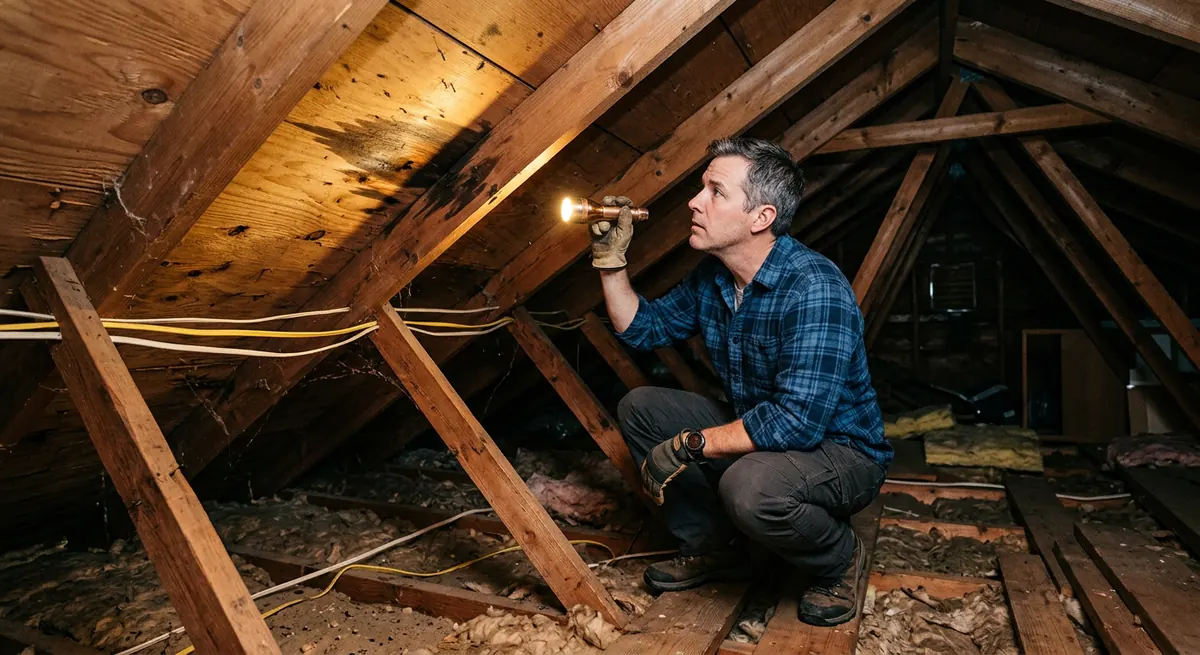
How to Find a Roof Leak Before It Causes Major Damage
A step-by-step guide to tracing a roof leak from interior water stains to the actual entry point on the roof, including attic inspection, exterior checks, and a garden hose test.
 Roofing & Home Repair
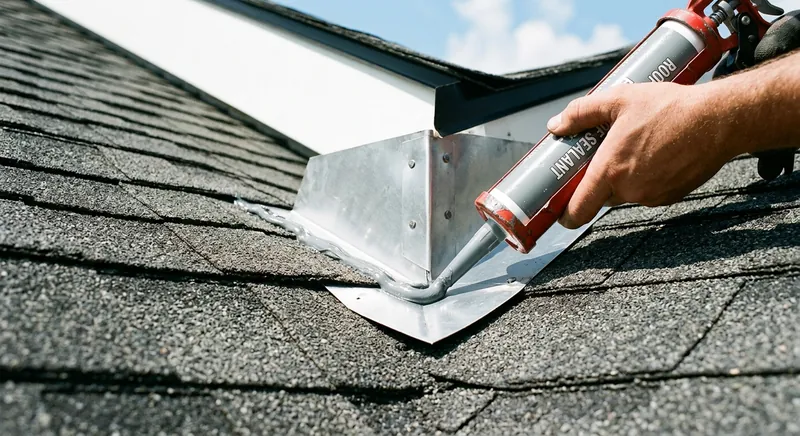
Best Roof Sealants for Reliable Leak Protection
Compare elastomeric, silicone, asphalt, and rubber roof sealants to find the right formula for your specific repair, roof material, and climate.
 Roofing & Home Repair
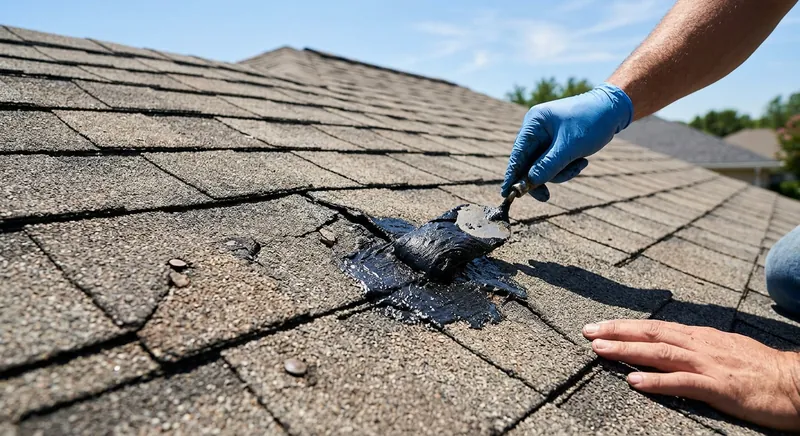
Best Roof Leak Repair Products for Quick Fixes
From emergency patch tape to permanent elastomeric sealant, compare roof leak repair products for different leak types, roof materials, and urgency.
Roofing & Home RepairBest Roof Patches for Stopping Leaks Fast
Asphalt, rubberized, and epoxy roof patches each handle different leak scenarios. Compare products for emergency and permanent leak repairs.
 Roofing & Home Repair
Best Roof Coatings for Flat Roofs
Compare silicone, elastomeric acrylic, polyurethane, and liquid rubber roof coatings for flat roofs to prevent leaks, lower cooling costs, and resist ponding water.
Get Smarter About Your Home
Receive practical buying guides, product comparisons, maintenance tips and home project ideas from HomeGear Guide.
You can unsubscribe at any time.