Best Roof Sealants for Reliable Leak Protection
Affiliate Disclosure: HomeGear Guide is reader-supported. When you buy through links on our site, we may earn an affiliate commission at no extra cost to you. We do not accept paid product placements or sponsor-biased reviews.
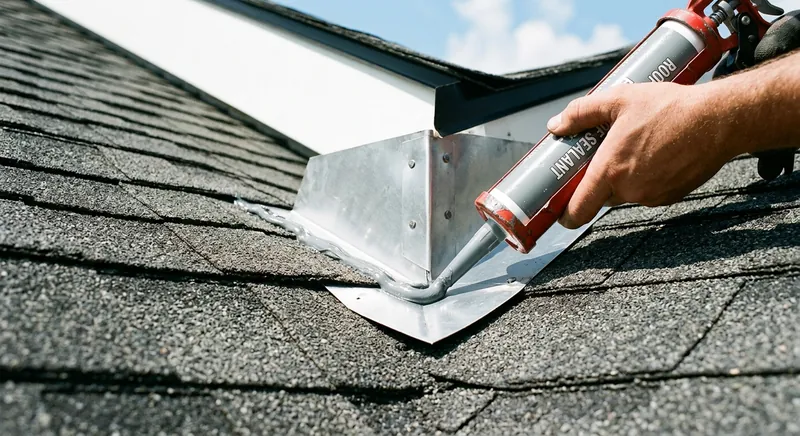
A roof leak does not always demand a costly full-deck tear-off. For localized failures—such as cracked step flashing, deteriorating plumbing vent boots, split chimney counterflashing, or lifted shingle seams—a high-grade roof sealant provides a durable barrier against moisture infiltration. However, selecting the wrong chemical formulation is the leading cause of premature repair failures. Roof sealants must accommodate continuous thermal expansion and contraction, ultraviolet degradation, and chemical compatibility with specific roofing substrates like asphalt shingles, galvanized steel, aluminum, modified bitumen, and single-ply membranes.
Quick Answer
For roof penetrations, plumbing boots, and metal flashing joints, high-solids 100% silicone sealant is the superior choice because it offers ASTM C920 Class 50 movement capability, withstands continuous ponding water, and remains permanently flexible across a -40°F to 160°F temperature range for 10 to 15 years. For covering large sloped roof areas and reflecting solar heat, elastomeric acrylic coatings provide excellent 300% elongation and high UV reflectivity. For emergency patches on asphalt shingles during wet weather, a polymer-modified asphalt mastic is cost-effective and adheres directly to damp bitumen. Low-slope seams and gutters benefit most from synthetic liquid EPDM rubber sealants. Always verify surface compatibility and calculate required volume using our Roof Sealant Coverage Calculator before purchasing.
Top Picks at a Glance
High-Solids Silicone Roof Sealant
100% silicone chemistry with ASTM C920 Class 50 movement and permanent ponding water resistance.
Elastomeric Acrylic Roof Coating
High-solids acrylic providing 300% elongation and 85% initial solar reflectance on pitched roofs.
Polymer-Modified Asphalt Roof Patch
Heavy-bodied bituminous mastic designed for immediate emergency patching on asphalt shingles and wet valleys.
Commercial Liquid Rubber Sealant
Synthetic liquid EPDM rubber delivering 500% elongation for gutter seams, flashings, and TPO transitions.
Product Comparison
| Product | Chemical Base | Solids by Volume | Elongation | Cure / Skin Time | Best Application | Details |
|---|---|---|---|---|---|---|
High-Solids Silicone Roof Sealant Best Overall | 100% Silicone Polymer | 95% | 350% | 1–2 Hours | Flashing penetrations, vent collars, skylight curbs, and ponding water areas | View Review ↓ |
Elastomeric Roof Coating Best for Broad Slopes | Elastomeric Acrylic | 60% | 300% | 4–8 Hours | Broad roof slope protection, UV reflection, and extending roof service life | View Review ↓ |
Asphalt Roof Patch Best Value | Polymer-Modified Asphalt | 70% | 12–24 Hours | 0°F to 120°F (All-Weather) | Quick shingle tab repairs, asphalt valley seams, and damp-weather emergency sealing | View Review ↓ |
Rubber Roof Sealant Best for Flat Roofs | Synthetic Liquid EPDM Rubber | 78% | 500% | 350 PSI | Low-slope seams, gutter lines, parapet transitions, and mobile roofing joints | View Review ↓ |
High-Solids Silicone Roof Sealant
Best Overall- Chemical Base:
- 100% Silicone Polymer
- Solids by Volume:
- 95%
- Elongation:
- 350%
- Cure / Skin Time:
- 1–2 Hours
- Best Application:
- Flashing penetrations, vent collars, skylight curbs, and ponding water areas
Elastomeric Roof Coating
Best for Broad Slopes- Chemical Base:
- Elastomeric Acrylic
- Solids by Volume:
- 60%
- Elongation:
- 300%
- Cure / Skin Time:
- 4–8 Hours
- Best Application:
- Broad roof slope protection, UV reflection, and extending roof service life
Asphalt Roof Patch
Best Value- Chemical Base:
- Polymer-Modified Asphalt
- Solids by Volume:
- 70%
- Elongation:
- 12–24 Hours
- Cure / Skin Time:
- 0°F to 120°F (All-Weather)
- Best Application:
- Quick shingle tab repairs, asphalt valley seams, and damp-weather emergency sealing
Rubber Roof Sealant
Best for Flat Roofs- Chemical Base:
- Synthetic Liquid EPDM Rubber
- Solids by Volume:
- 78%
- Elongation:
- 500%
- Cure / Skin Time:
- 350 PSI
- Best Application:
- Low-slope seams, gutter lines, parapet transitions, and mobile roofing joints
Detailed Product Reviews & Specifications
High-Solids Silicone Roof Sealant
A professional-grade 100% silicone moisture-cure sealant designed for roof penetrations where movement and ponding water cause standard caulks to fail. Forms an inorganic chemical barrier that does not degrade under intense ultraviolet radiation.
Pros
- •Unaffected by standing ponding water and intense UV exposure
- •Exceptional ASTM C920 Class 50 movement capability (50% expansion and contraction)
- •Rapid skin-over time of 1 to 2 hours; rain-ready significantly faster than acrylics
- •Maintains elasticity from -40°F to 160°F without brittleness or slump
Cons
- •Cannot be painted over; silicone residue repels future non-silicone topcoats
- •Higher initial material cost per tube compared to asphalt mastic
Key Specifications
Elastomeric Roof Coating
A flexible, waterborne elastomeric acrylic coating engineered to form a thick, rubberized monolithic membrane across large roof expanses. Formulated with high-grade acrylic polymers that reflect solar heat and bridge minor hairline fractures.
Pros
- •High solar reflectance (Initial SRI ~85) lowers attic temperatures and cooling demand
- •Water-based formula cleans up easily with soap and water before curing
- •Bridges dynamic hairline fractures up to 1/16 inch with 300% elongation
- •Cost-effective coverage for broad surface square footage
Cons
- •Not formulated for flat roof ponding water conditions
- •Requires dry weather above 50°F for a minimum of 24 hours to cure properly
Key Specifications
Asphalt Roof Patch
A heavy-bodied bituminous mastic reinforced with polymer fibers. Specially compounded to bond tenaciously to wet or dry asphalt roofing materials, making it the premier choice for urgent storm-damage patching.
Pros
- •Formulated to adhere directly to wet or dry asphalt substrates during emergencies
- •Excellent thick consistency that bridges gaps up to 1/4 inch without sagging
- •Color-matches dark architectural and 3-tab asphalt shingles seamlessly
- •Lowest material cost per repair tube or trowel-grade can
Cons
- •Petroleum solvent base releases strong odors during curing
- •Becomes brittle more quickly than silicone or liquid rubber under extreme UV
Key Specifications
Rubber Roof Sealant
A heavy-duty synthetic liquid rubber sealant designed for multi-surface flashing, seam sealing, and transition repairs. Cures to a high-tensile, elastomeric vulcanized rubber gasket that withstands structural vibration and severe temperature swings.
Pros
- •Impressive 500% elongation absorbs heavy building movement and structural settling
- •Creates an airtight, watertight monolithic gasket over seams and rivets
- •High tensile strength resists mechanical tearing and hail impact
- •Low-VOC and safe for applications near air intake vents
Cons
- •Slower full-depth cure time in cold, high-humidity environments
- •Requires reinforcing mesh tape on joints wider than 1/8 inch
Key Specifications
What to Look for in a Roof Sealant
Selecting a high-performance roof sealant requires evaluating how the product interacts with your specific roof material, local weather patterns, and the joint's movement profile. Roofs undergo continuous thermal cycles; a dark asphalt roof can swing from 40°F at night to over 150°F under peak midday sun, producing substantial expansion and contraction across dissimilar materials like aluminum flashing and asphalt shingles.
Building codes and roofing industry standards (including ASTM C920 for elastomeric joint sealants and ASTM D4586 for asphalt roof cement) categorize sealants by movement capability, tensile strength, and solids content. A sealant with inadequate elongation will tear within months as metal flashing expands at twice the rate of wood sheathing.
Material Compatibility Across Roof Substrates
Substrate compatibility is non-negotiable. Applying an asphalt-based mastic to a single-ply TPO or EPDM rubber membrane will result in chemical degradation, as the petroleum solvents in asphalt attack synthetic rubber polymers. Conversely, silicone sealants require a clean, non-oily surface and will not adhere properly to fresh asphalt compounds without an appropriate barrier primer.
For metal roofing systems, look for sealants rated for non-corrosive adhesion to galvanized steel, copper, or painted aluminum. Acid-curing silicone sealants that release acetic acid during curing can corrode raw metal surfaces; neutral-cure silicones or synthetic liquid rubbers should always be specified.
Elongation and ASTM C920 Movement Class
Elongation measures how far a cured sealant can stretch relative to its original dimensions before rupturing. For static hairline cracks in masonry or parapet walls, 150% elongation is sufficient. However, for dynamic flashing joints, roof valleys, and gutter seams, choose a product with at least 300% to 500% elongation conforming to ASTM C920 Class 25 or Class 50 standards.
Solids content by volume indicates how much protective material remains after volatile solvents evaporate. High-solids sealants (90%+ solids, common in premium silicones) exhibit negligible shrinkage, ensuring the sealant does not pull away from joint edges as it cures.
Weather Resistance, UV Stability, and Cure Times
Ultraviolet (UV) radiation breaks down organic chemical bonds in standard caulks, leading to surface chalking, micro-fissuring, and embrittlement. Inorganic silicones and UV-stabilized liquid rubber polymers remain impervious to solar radiation, offering service lives exceeding 10 to 15 years.
Be mindful of cure windows before approaching rain events. Waterborne acrylic sealants require at least 24 to 48 hours of warm, dry weather above 50°F to cure fully. If rain hits an uncured acrylic coating, it can wash off into gutters. Moisture-cure silicones and solvent-based asphalt mastics skin over within 1 to 2 hours, offering far greater safety when unexpected storms threaten.
Surface Preparation and Application Protocol
More than 80% of roof sealant failures stem from improper surface preparation rather than product defects. Even the most advanced silicone or liquid rubber cannot bond to moss, loose mineral granules, oxidized rust, or residual silicone film.
Follow this structured preparation protocol: First, use a stiff wire brush and scraper to remove all flaking coating, rust, and dirt. Second, degrease metal flashing with an approved solvent (such as acetone or denatured alcohol) and allow it to dry completely. Third, for gaps wider than 1/4 inch, insert a closed-cell polyethylene backer rod into the joint before caulking to ensure proper two-sided adhesion and prevent sealant tearing from the bottom of the joint.
When sealing seams on low-slope roofs, embed a polyester reinforcement fabric into a base coat of sealant before applying the topcoat, creating an engineered composite membrane.
Estimating Sealant Quantity and Coverage
Accurately calculating the required gallons or tubes prevents costly mid-project supply runs and reduces excess material waste. Standard 10.1 oz caulk tubes yield approximately 24 to 28 linear feet of a 1/4-inch bead. For liquid coatings applied across roof slopes, coverage typically ranges from 1.5 to 2.5 gallons per 100 square feet (one roofing square) depending on substrate porosity.
Use our interactive Roof Sealant Coverage Calculator below to determine exact volumes based on your roof's pitch, square footage, and selected coating chemistry.
Roof Sealant Coverage Calculator
Calculate the exact gallons or tubes needed for your roof's square footage, pitch, and coating type.
Roof Sealant Coverage Calculator
Estimate the exact gallons or tubes required based on your roof's square footage, pitch, and coating chemistry (elastomeric, silicone, or acrylic).
Safety & Compliance Notice
Working on roofs carries significant fall hazards. Always use proper fall protection equipment, inspect ladder footings, and avoid walking on steep or wet roof surfaces. If structural roof decking is spongy or rotting, sealants cannot remedy the issue and professional roof deck replacement is required.
Frequently Asked Questions
Most waterborne acrylic sealants require temperatures above 50°F and dry conditions for at least 24 hours. However, polymer-modified asphalt mastics and specialized solvent-based wet-dry rubber sealants can be applied in freezing temperatures and directly onto wet surfaces during emergency leak repairs.
Final Verdict
For targeted roof leak repairs around flashing, pipe boots, and chimney curbs, High-Solids Silicone Roof Sealant is our top recommendation due to its permanent flexibility, ASTM C920 Class 50 movement rating, and ability to withstand ponding water without degrading. If you need to coat broader roof sections to reflect solar heat, Elastomeric Acrylic Roof Coating offers the best balance of coverage, cost, and energy savings on sloped roofs. For quick emergency shingle repairs during wet storms, keep a tube of Polymer-Modified Asphalt Roof Patch on hand.
Michael Davies
Home Systems & Repair Editor
Michael writes about roofing, attic ventilation, insulation, and structural repair products for HomeGear Guide. His focus is on helping homeowners understand the materials and tools involved in protecting their home exterior and interior.
Related Articles & Buying Guides
 Roofing & Home Repair
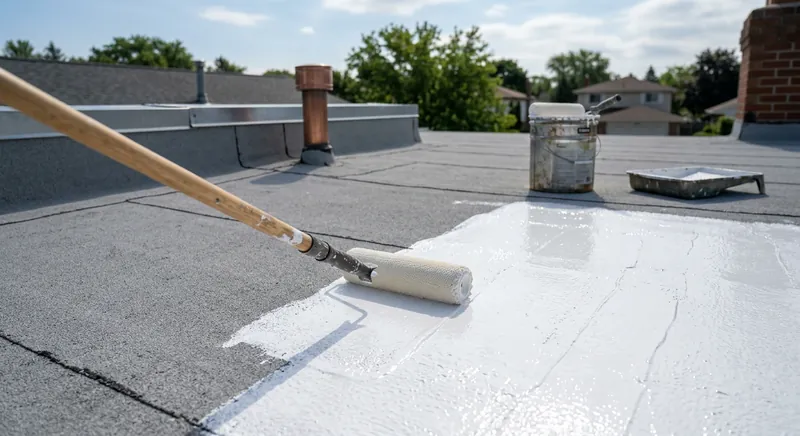
Best Roof Coatings for Flat Roofs
Compare silicone, elastomeric acrylic, polyurethane, and liquid rubber roof coatings for flat roofs to prevent leaks, lower cooling costs, and resist ponding water.
 Roofing & Home Repair
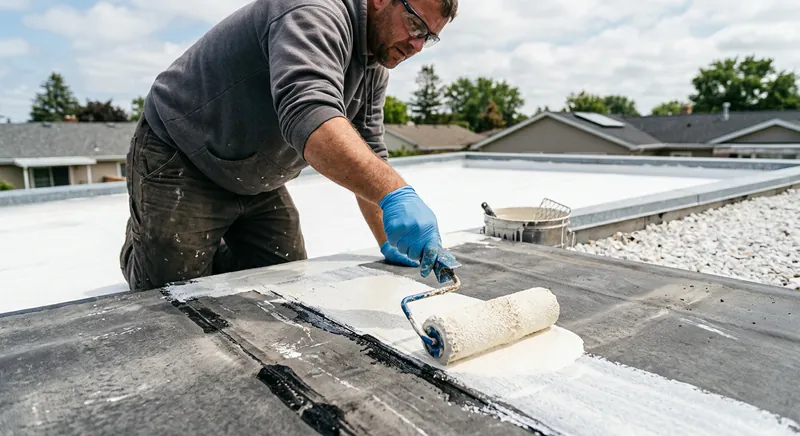
Best Rubber Roof Coatings for Weatherproof Protection
Compare liquid EPDM, butyl rubber, neoprene, and synthetic elastomeric coatings for flat and low-slope roofs to restore aged membranes and stop leaks.
 Roofing & Home Repair
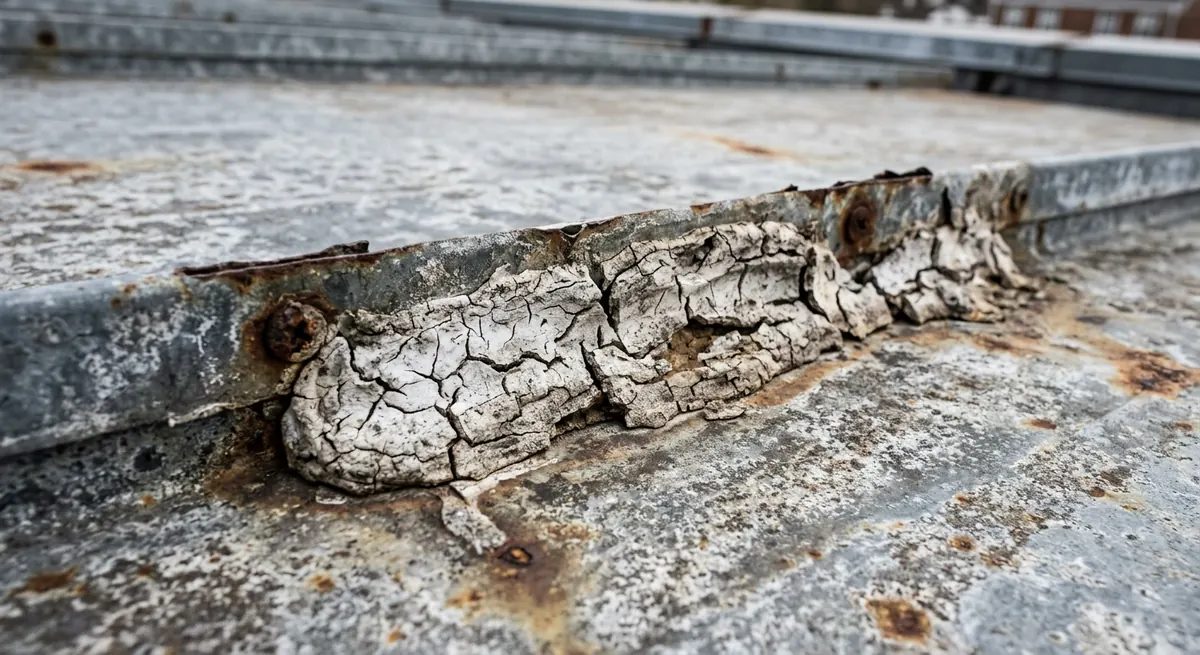
Roof Sealant vs Roof Coating: What Is the Difference?
Roof sealants and roof coatings serve different purposes. Learn the material, application, and roof-type differences to choose the right product for your repair.
 Roofing & Home Repair
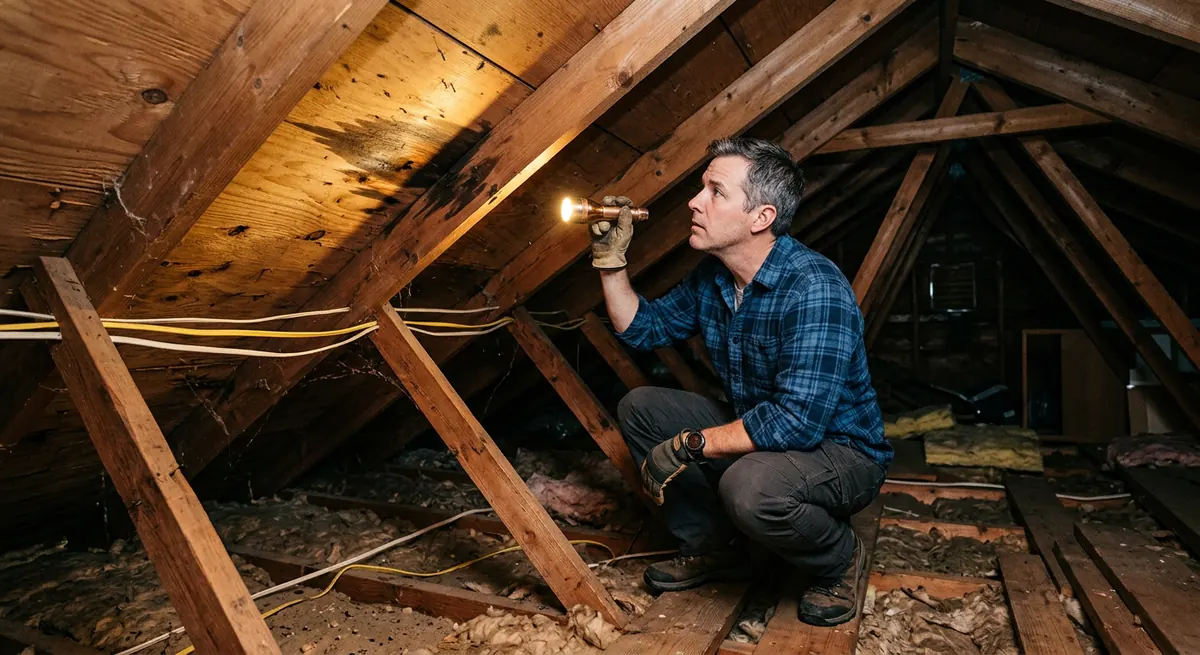
How to Find a Roof Leak Before It Causes Major Damage
A step-by-step guide to tracing a roof leak from interior water stains to the actual entry point on the roof, including attic inspection, exterior checks, and a garden hose test.
 Roofing & Home Repair
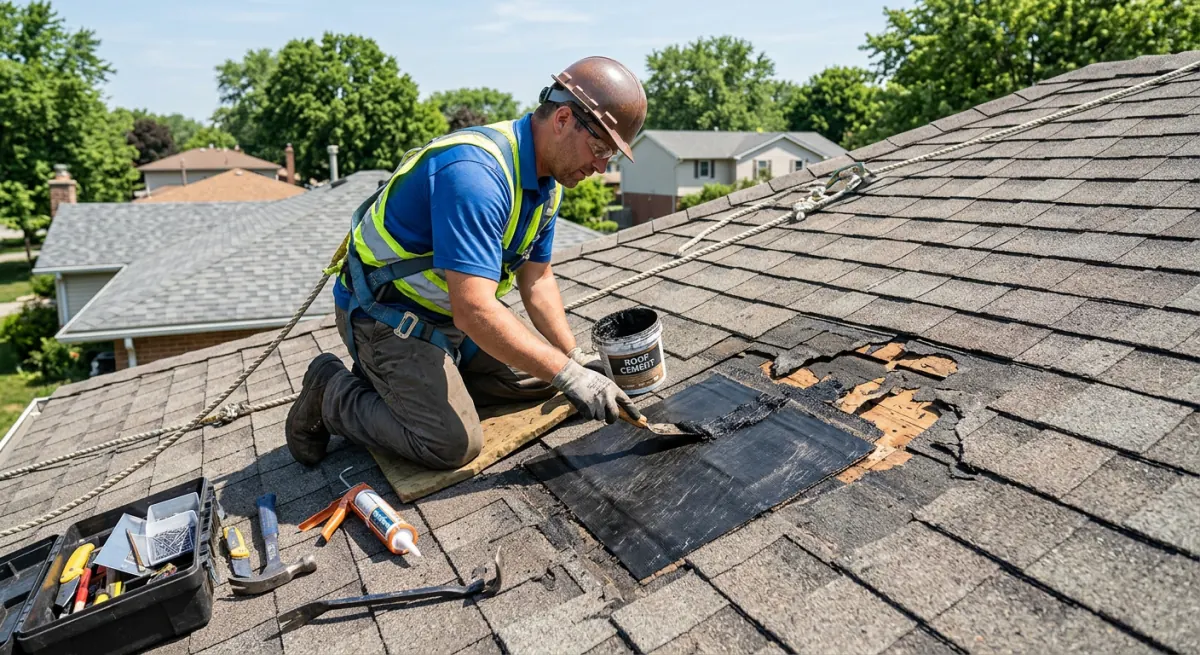
Roof Repair Cost Guide: What to Expect for Common Repairs
Understand what common roof repairs cost, the factors that drive pricing, when DIY is safe versus when to hire a professional, and the hidden costs of delaying repairs.
Get Smarter About Your Home
Receive practical buying guides, product comparisons, maintenance tips and home project ideas from HomeGear Guide.
You can unsubscribe at any time.