Best Rubber Roof Coatings for Weatherproof Protection
Affiliate Disclosure: HomeGear Guide is reader-supported. When you buy through links on our site, we may earn an affiliate commission at no extra cost to you. We do not accept paid product placements or sponsor-biased reviews.
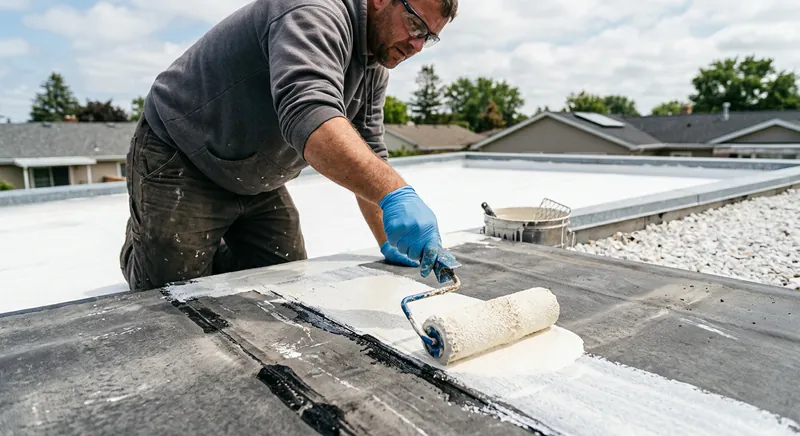
Synthetic rubber roofing systems—most notably EPDM (Ethylene Propylene Diene Monomer)—have protected commercial and residential low-slope roofs for over half a century. While sheet rubber membranes are remarkably resilient, decades of ultraviolet radiation, ozone attack, and building movement eventually degrade factory seams, cause surface chalking, and induce micro-cracking around flashings. Liquid rubber roof coatings represent an engineering breakthrough: unlike surface paints, true liquid rubber chemically vulcanizes and cross-links with the existing membrane, creating a seamless, monolithic protective barrier with 400% to 500%+ elongation capability.
Quick Answer
For aged black EPDM sheet roofs, 100% Liquid EPDM Rubber Coating is the optimal choice because it chemically cross-links and bonds directly to the rubber substrate, forming a single vulcanized layer that never peels or separates. For metal roofs, box gutters, and dynamic joints, Butyl Liquid Rubber provides the highest tensile strength (650 PSI per ASTM D412) and an impermeable moisture-vapor barrier (0.02 perms). For budget-conscious DIY residential applications and concrete parapet walls, Commercial Synthetic Liquid Rubber offers safe, water-based application with low VOCs. For RVs, campers, and vibration-prone roofs, High-Flex RV Liquid Rubber prevents cracking down to -40°F. Always scrub away surface oxidation before applying.
Top Picks at a Glance
100% Liquid EPDM Rubber Coating
True vulcanizing liquid EPDM that chemically cross-links to aged rubber sheet membranes.
High-Tensile Butyl Liquid Rubber
High-strength 650 PSI butyl polymer delivering near-zero vapor permeance and superior metal adhesion.
Commercial Synthetic Liquid Rubber
User-friendly waterborne elastomer with 500% elongation for gutters, foundations, and low slopes.
High-Flex RV Liquid Rubber Coating
Vibration-proof elastomeric formula designed for mobile roofs and severe thermal contraction.
Product Comparison
| Product | Polymer Chemistry | Solids by Volume | Elongation | Tensile Strength | Service Temperature | Best Application | Details |
|---|---|---|---|---|---|---|---|
100% Liquid EPDM Rubber Coating Best for EPDM Restoration | Pure Liquid EPDM Polymer | 72% | 350% | 420 PSI | Catalytic Cross-Linking | Restoring weathered black EPDM membranes, ponding water resistance, and seam renewal | View Review ↓ |
High-Tensile Butyl Liquid Rubber Best for Metal Roofs & Seams | Isobutylene-Isoprene (Butyl) | 68% | 650 PSI (ASTM D412) | 450% | 0.02 Perms | Metal roof seams, box gutters, parapet terminations, and vapor barrier requirements | View Review ↓ |
Commercial Synthetic Liquid Rubber Best Multi-Surface DIY | Modified Synthetic Elastomer | 62% | 500%+ | 320 PSI | <10 g/L | General low-slope residential transitions, concrete planter boxes, and DIY friendly sealing | View Review ↓ |
High-Flex RV Liquid Rubber Coating Best for RVs & Campers | UV-Stabilized Liquid Elastomer | 65% | 600% | Pass (Zero Crack) | 84% Initial | Recreational vehicles, camper roofs, trailers, and mobile structures subject to severe road vibration | View Review ↓ |
100% Liquid EPDM Rubber Coating
Best for EPDM Restoration- Polymer Chemistry:
- Pure Liquid EPDM Polymer
- Solids by Volume:
- 72%
- Elongation:
- 350%
- Tensile Strength:
- 420 PSI
- Service Temperature:
- Catalytic Cross-Linking
- Best Application:
- Restoring weathered black EPDM membranes, ponding water resistance, and seam renewal
High-Tensile Butyl Liquid Rubber
Best for Metal Roofs & Seams- Polymer Chemistry:
- Isobutylene-Isoprene (Butyl)
- Solids by Volume:
- 68%
- Elongation:
- 650 PSI (ASTM D412)
- Tensile Strength:
- 450%
- Service Temperature:
- 0.02 Perms
- Best Application:
- Metal roof seams, box gutters, parapet terminations, and vapor barrier requirements
Commercial Synthetic Liquid Rubber
Best Multi-Surface DIY- Polymer Chemistry:
- Modified Synthetic Elastomer
- Solids by Volume:
- 62%
- Elongation:
- 500%+
- Tensile Strength:
- 320 PSI
- Service Temperature:
- <10 g/L
- Best Application:
- General low-slope residential transitions, concrete planter boxes, and DIY friendly sealing
High-Flex RV Liquid Rubber Coating
Best for RVs & Campers- Polymer Chemistry:
- UV-Stabilized Liquid Elastomer
- Solids by Volume:
- 65%
- Elongation:
- 600%
- Tensile Strength:
- Pass (Zero Crack)
- Service Temperature:
- 84% Initial
- Best Application:
- Recreational vehicles, camper roofs, trailers, and mobile structures subject to severe road vibration
Detailed Product Reviews & Specifications
100% Liquid EPDM Rubber Coating
The only true liquid EPDM polymer on the market. Unlike acrylics that merely sit on the surface, this coating uses a catalytic curing process that chemically vulcanizes directly into aged EPDM sheet roofing, creating a single unified rubber shield.
Pros
- •True chemical cross-linking bond to aged EPDM sheet membranes
- •Can withstand freezing temperatures down to -60°F and extreme heat up to 300°F
- •Permanent ponding water resistance; will not hydrolyze or re-emulsify
- •Single-coat application achieves full 20-mil dry film thickness
Cons
- •Two-part catalytically cured formula requires careful mixing before application
- •Solvent smell requires exterior application with adequate ventilation
Key Specifications
High-Tensile Butyl Liquid Rubber
A heavy-duty isobutylene-isoprene liquid rubber engineered for extreme waterproofing, low vapor permeance, and aggressive metal adhesion. Forms an exceptionally dense, puncture-resistant rubber skin that resists standing water and acid rain.
Pros
- •Exceptionally high tensile strength (650 PSI per ASTM D412) bridges wide joint movements without splitting
- •Near-zero moisture vapor transmission (0.02 perms) prevents condensation beneath metal panels
- •Excellent chemical resistance to industrial pollutants and airborne acids
- •Maintains high flexibility through decades of thermal cycling
Cons
- •Heavy viscous liquid requires more elbow grease to spread evenly by hand
- •Higher price point reflecting industrial polymer formulation
Key Specifications
Commercial Synthetic Liquid Rubber
A water-based modified synthetic elastomeric emulsion that cures into a continuous rubber membrane. Free from harmful solvents and toxic fumes, making it ideal for residential homeowners working near windows and living quarters.
Pros
- •Remarkable 500%+ elongation accommodates shifting substrates and settling
- •Non-toxic, ultra-low VOC (<10 g/L) formula with zero solvent odor
- •Bonds to wood, concrete, metal, aged asphalt, and fiberglass
- •Cleans up effortlessly with warm water and soap prior to curing
Cons
- •Cannot be applied below 50°F or in damp, rainy conditions
- •Requires multiple coats to achieve commercial mil thickness
Key Specifications
High-Flex RV Liquid Rubber Coating
A specialized elastomeric liquid rubber coating formulated specifically to absorb constant chassis flex, road vibration, and extreme temperature changes experienced by RVs and campers. Resists tree branch abrasion and road salt.
Pros
- •Superb 600% elongation absorbs continuous highway flex and wind buffeting
- •Zero-crack flexibility certified down to -40°F in winter storage conditions
- •High solar reflectivity lowers interior camper temperatures during summer camping
- •Resists road grime, diesel soot, and bird droppings
Cons
- •Formulated specifically for flexible substrates; higher cost for broad architectural roofs
- •Requires lap sealant around all roof vents and air conditioners prior to coating
Key Specifications
Synthetic Rubber vs Acrylic vs Silicone: Understanding the Polymers
The term 'rubber roof coating' is frequently misused in home improvement marketing to describe any flexible white paint. True rubber coatings are fundamentally different: they are synthesized from elastomeric hydrocarbon polymers like EPDM (ethylene propylene diene monomer), butyl rubber (isobutylene-isoprene), or neoprene.
Unlike waterborne acrylics that dry purely by water evaporation and can soften under standing water, synthetic rubber coatings form cross-linked polymeric chains that resist water molecules completely. When compared to silicone, rubber coatings offer superior mechanical tensile strength (up to 650 PSI per ASTM D412 vs 200–300 PSI for silicone) and much higher tear resistance (ASTM D624), making them far better suited for roofs that experience physical movement, hail, or maintenance traffic.
When to Choose a Rubber Roof Coating
Liquid rubber coatings are the ideal engineering solution in several distinct roofing scenarios:
1. Restoring Aged EPDM Membranes: Black EPDM sheet roofs naturally chalk and oxidize after 15 to 20 years. Rather than removing the intact membrane, applying a liquid EPDM coating cross-links with the substrate, essentially adding 15 to 20 years of renewed service life for a fraction of replacement cost.
2. Sealing Dynamic Metal Roof Joints: Metal buildings experience high thermal expansion rates. The 450% to 500% elongation of butyl liquid rubber absorbs panel movement around screw fasteners and standing seams without splitting.
3. Waterproofing Transitions and Box Gutters: Complex geometric flashing points, parapet corners, and internal box gutters are difficult to flash with rigid sheets. Liquid rubber can be painted directly into complex curves, creating a continuous waterproof basin.
Application Guide and Surface Preparation
Proper surface preparation is mandatory when working with liquid rubber. EPDM membranes accumulate an oily carbon black residue as they age. Before coating, the roof must be scrubbed with a specialized cleaner or mild detergent, rinsed thoroughly, and dried completely. On heavily oxidized rubber, a light solvent wipe with acetone or xylene promotes optimal bonding.
Always reinforce all field seams, flashings, skylight curbs, and pipe boots with heavy-duty polyester fabric embedded into a wet foundation coat of rubber. Allow this detail work to set before rolling out the full field coats. Measure wet mil thickness using a mil gauge to confirm you achieve a minimum of 20 to 30 dry mils across the entire roof plane.
Use our Roof Sealant Coverage Calculator to calculate exact gallons needed based on your roof's square footage and surface roughness.
Choosing Rubber Coating for Different Roof Scenarios
When deciding between liquid rubber formulas, match the product to the primary mechanical demand: Choose pure Liquid EPDM for black commercial sheets, Butyl Rubber for metal panels and critical vapor barriers, Synthetic Waterborne Rubber for low-odor residential projects, and RV Elastomer for mobile campers and trailers.
By matching the chemical base to your specific structure, you ensure seamless adhesion and prevent the costly water intrusion that ruins roof decking and ceiling insulation.
Roof Sealant Coverage Calculator
Estimate the exact gallons or tubes required based on your roof's square footage, pitch, and coating chemistry (elastomeric, silicone, or acrylic).
Safety & Compliance Notice
Always check for trapped moisture within underlying insulation board before sealing flat rubber roofs. Never apply rubber coatings over wet substrates, as trapped steam will cause large blisters to form under hot summer sunlight.
Frequently Asked Questions
Yes. True liquid EPDM coatings are chemically designed to bond and vulcanize directly to aged black EPDM sheet membranes. The surface must be thoroughly cleaned of all carbon black dust and grease prior to application.
Final Verdict
For restoring aged commercial or residential EPDM sheet roofs, 100% Liquid EPDM Rubber Coating is our premier recommendation because of its unique chemical cross-linking capability. For metal roof seams, box gutters, and projects requiring high tensile strength, High-Tensile Butyl Liquid Rubber delivers the highest durability and lowest vapor permeability.
Michael Davies
Home Systems & Repair Editor
Michael writes about roofing, attic ventilation, insulation, and structural repair products for HomeGear Guide. His focus is on helping homeowners understand the materials and tools involved in protecting their home exterior and interior.
Related Articles & Buying Guides
 Roofing & Home Repair
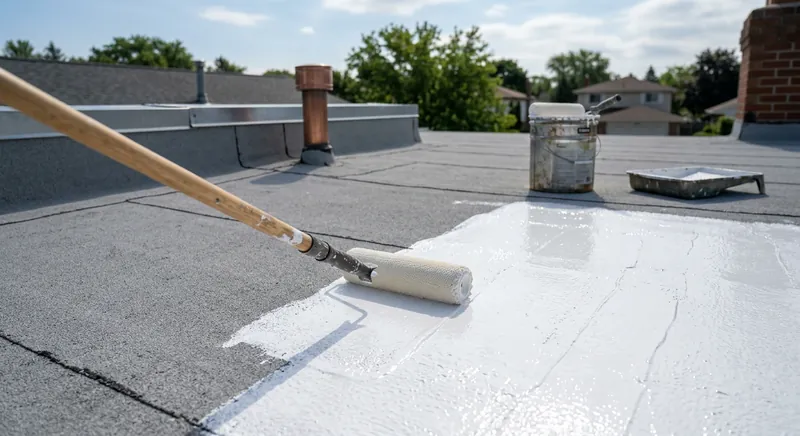
Best Roof Coatings for Flat Roofs
Compare silicone, elastomeric acrylic, polyurethane, and liquid rubber roof coatings for flat roofs to prevent leaks, lower cooling costs, and resist ponding water.
 Roofing & Home Repair
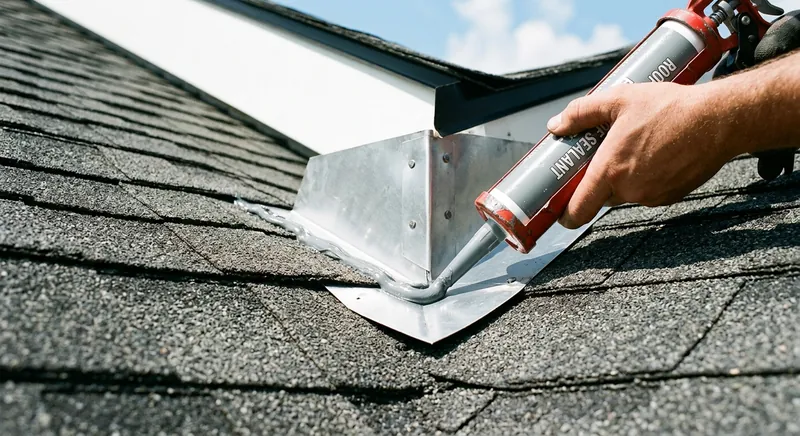
Best Roof Sealants for Reliable Leak Protection
Compare elastomeric, silicone, asphalt, and rubber roof sealants to find the right formula for your specific repair, roof material, and climate.
 Roofing & Home Repair
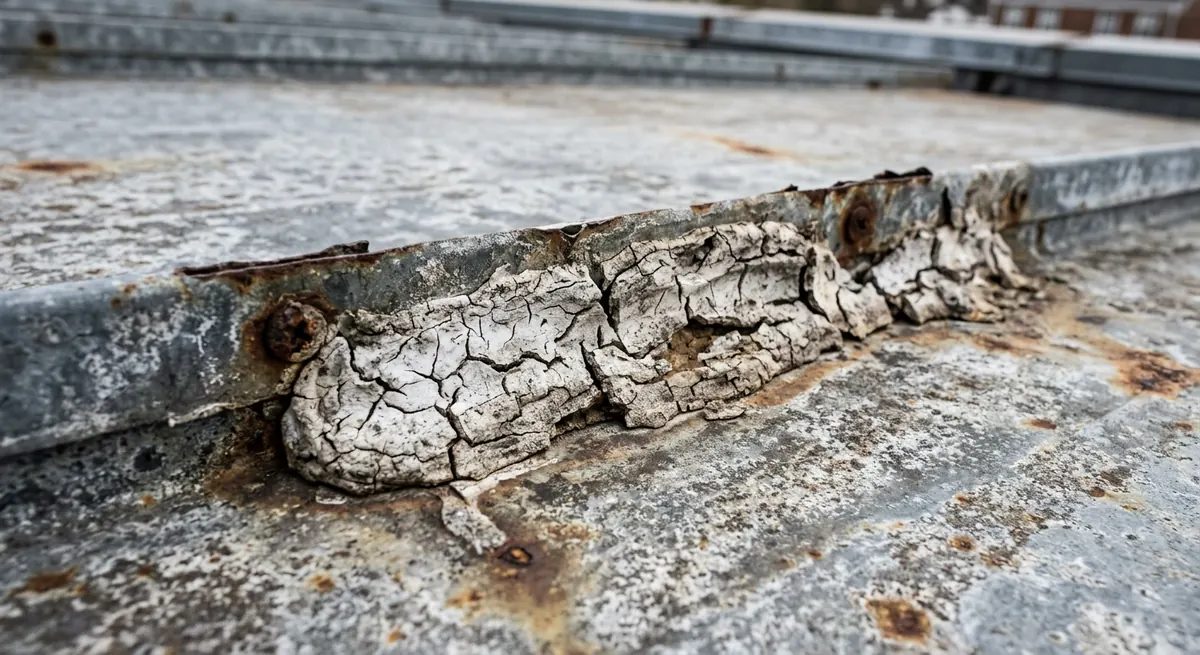
Roof Sealant vs Roof Coating: What Is the Difference?
Roof sealants and roof coatings serve different purposes. Learn the material, application, and roof-type differences to choose the right product for your repair.
 Roofing & Home Repair
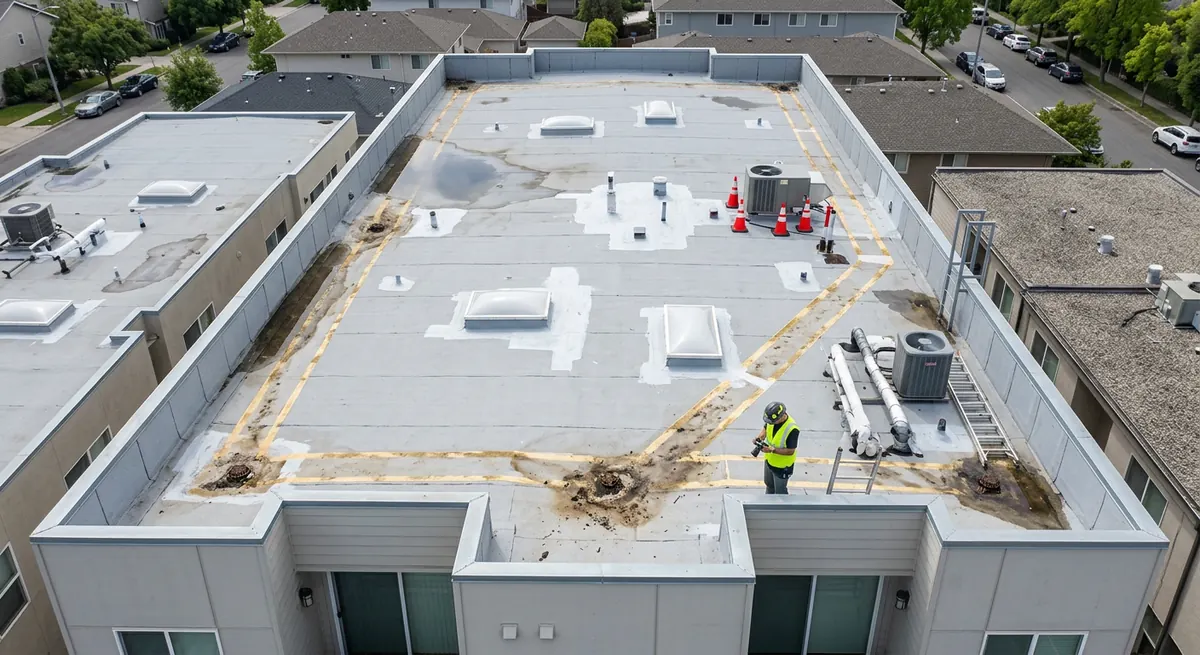
Flat Roof Maintenance Guide: Seasonal Checklist
Flat roofs require more maintenance than pitched roofs. This seasonal checklist covers drainage, coating inspection, seam checks, and debris removal to prevent leaks and extend roof life.
 Roofing & Home Repair
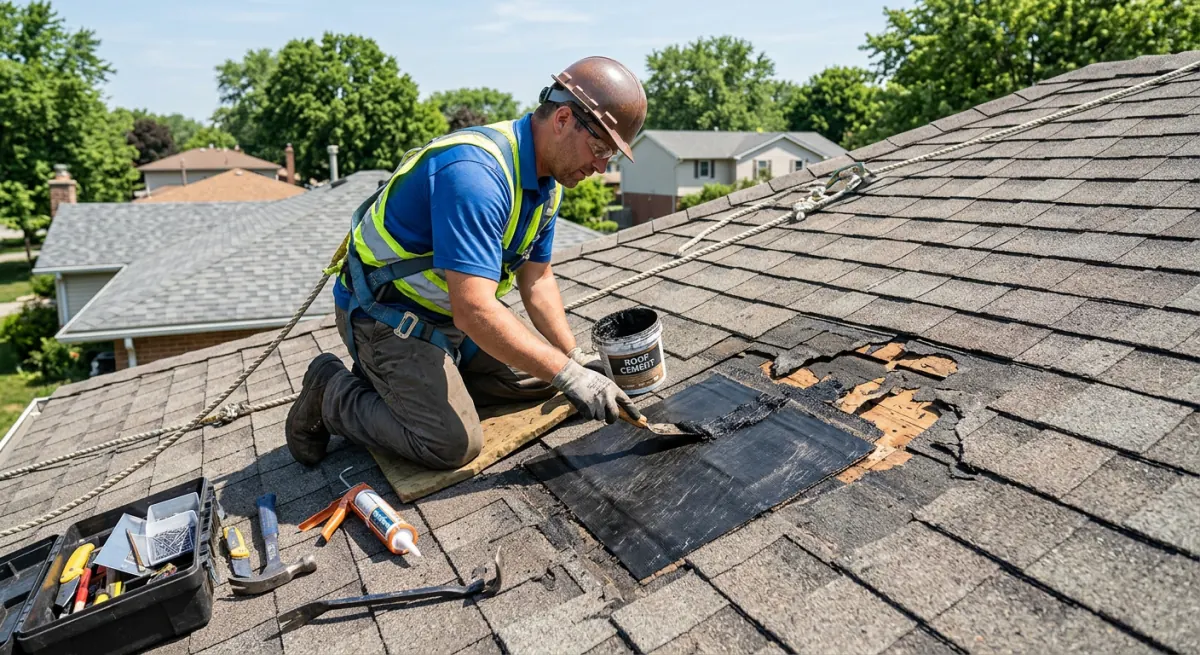
Roof Repair Cost Guide: What to Expect for Common Repairs
Understand what common roof repairs cost, the factors that drive pricing, when DIY is safe versus when to hire a professional, and the hidden costs of delaying repairs.
Get Smarter About Your Home
Receive practical buying guides, product comparisons, maintenance tips and home project ideas from HomeGear Guide.
You can unsubscribe at any time.