Matter, Zigbee, Z-Wave, and Wi-Fi: Smart Home Protocols Compared
Affiliate Disclosure: HomeGear Guide is reader-supported. When you buy through links on our site, we may earn an affiliate commission at no extra cost to you. We do not accept paid product placements or sponsor-biased reviews.
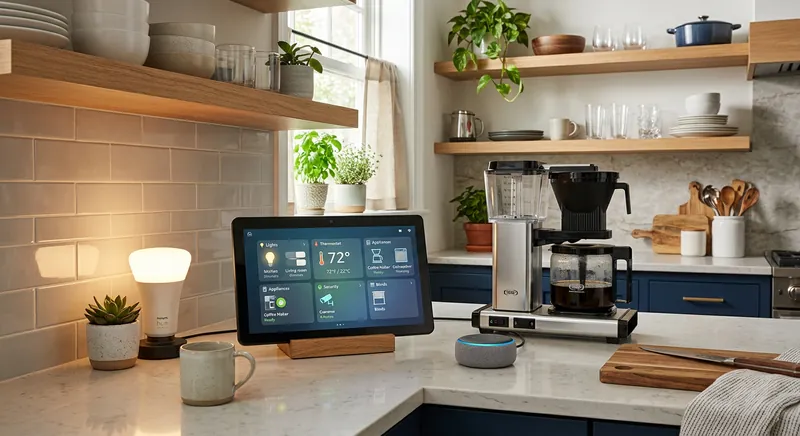
The smart home protocol landscape has changed dramatically with the arrival of Matter, a universal standard backed by Apple, Google, Amazon, and Samsung. For years, the biggest barrier to a cohesive smart home was fragmentation — Zigbee devices would not talk to Z-Wave devices, Wi-Fi devices needed separate apps, and Apple HomeKit compatibility was limited. Matter aims to solve this by providing a common language that certified devices speak regardless of manufacturer. But Matter has not replaced Zigbee, Z-Wave, or Wi-Fi — it coexists with them, and understanding the strengths and limitations of each protocol helps you choose devices and a hub that will work together now and in the future. Based on our research into protocol specifications and manufacturer documentation, the four protocols each serve a distinct role in a modern smart home.
Quick Answer
Based on our research, Matter is the best protocol for future-proofing a smart home because it is a cross-platform standard certified by all major tech companies, meaning any Matter-certified device works with any Matter-compatible hub regardless of brand. Zigbee is the best choice for low-power mesh devices like sensors, bulbs, and buttons, offering years of battery life and self-healing mesh networking through a hub. Z-Wave is the best choice for security-focused devices like locks, thermostats, and garage door openers, operating on a dedicated frequency that avoids Wi-Fi congestion. Wi-Fi is the best choice for high-bandwidth devices like cameras and video doorbells that need to stream video, but it consumes more power and can congest your network. The main trade-off is compatibility versus specialization: Matter offers the broadest compatibility but is still growing, while Zigbee and Z-Wave offer mature ecosystems with proven reliability but require a compatible hub. For most homeowners, a hub that supports Matter, Zigbee, and Wi-Fi covers the widest range of current and future devices.
Matter Explained: The New Universal Standard
Matter is a smart home connectivity standard launched in 2022 by the Connectivity Standards Alliance, backed by Apple, Google, Amazon, Samsung, and other major tech companies. Its goal is to solve the fragmentation problem: a Matter-certified device works with any Matter-compatible ecosystem — Apple Home, Google Home, Amazon Alexa, Samsung SmartThings — regardless of who manufactured the device. This means a Matter-certified smart bulb from one brand works with an Apple HomeKit setup, a Google Home setup, or an Amazon Alexa setup without needing separate apps or bridges.
Matter uses Thread as its primary transport protocol, with Wi-Fi as a fallback. Thread is a low-power, self-healing mesh networking protocol that provides reliable, low-latency communication between devices. Matter over Thread offers the power efficiency of Zigbee and Z-Wave with the cross-platform compatibility that those protocols lack. However, Matter also supports Wi-Fi and Ethernet for devices that need higher bandwidth or are already Wi-Fi-enabled.
The limitation of Matter is that it is still growing. Not all device categories are supported yet — cameras, for example, were added in later specification updates. And not all existing devices will receive Matter updates. When choosing devices today, Matter support is a strong future-proofing feature, but it should not be the only factor — verify that the device also supports a protocol your current hub can use.
Zigbee vs Z-Wave: The Established Mesh Protocols
Zigbee and Z-Wave are both low-power mesh networking protocols that have been used in smart homes for over a decade. In a mesh network, each device acts as a node that relays signals from other devices, extending the network range and providing redundancy — if one device goes offline, the network reroutes around it. Both protocols require a hub to connect to your home network and communicate with your phone.
Zigbee operates on the 2.4 GHz frequency — the same band as Wi-Fi and Bluetooth — which means it can experience interference in homes with many Wi-Fi devices. However, 2.4 GHz is available globally, so Zigbee devices work in any country. Zigbee is used by many smart bulbs (Philips Hue, IKEA Tradfri), sensors, and smart buttons. It supports up to 65,000 devices on a single network, though practical limits are lower.
Z-Wave operates on a lower frequency (around 900 MHz in the U.S.), which avoids Wi-Fi congestion and provides better range through walls and floors. Z-Wave is commonly used for smart locks, thermostats, garage door openers, and security sensors. It supports up to 232 devices per network. Z-Wave and Zigbee are not interchangeable — a Zigbee hub cannot control Z-Wave devices and vice versa. If you have devices using both protocols, you need a hub that supports both, or two separate hubs.
The Role of Wi-Fi in a Smart Home
Wi-Fi is the protocol most homeowners already have, and many smart home devices connect directly to it without requiring a hub. Smart cameras, video doorbells, smart thermostats, and smart plugs commonly use Wi-Fi because it provides the bandwidth needed for video streaming and direct internet connectivity. The advantage of Wi-Fi is simplicity — no hub required, and devices connect directly to your router.
The disadvantage is that Wi-Fi consumes more power than Zigbee, Z-Wave, or Thread, which means battery-powered Wi-Fi devices (like battery cameras and doorbells) need more frequent charging. Wi-Fi also adds load to your home network — a home with 20 Wi-Fi smart devices can experience congestion and reduced performance, especially on older routers. Each Wi-Fi device also typically requires its own app and cloud account, which is the fragmentation problem that Matter aims to solve.
For high-bandwidth devices like cameras and video doorbells, Wi-Fi is the right choice — no other protocol can match its bandwidth for video streaming. For low-power devices like sensors, buttons, and battery-powered locks, Zigbee, Z-Wave, or Thread are better choices. A balanced smart home uses Wi-Fi for cameras and doorbells, and a mesh protocol (Zigbee, Z-Wave, or Thread/Matter) for sensors, locks, and lighting.
Choosing the Right Protocol for Your Setup
For most homeowners starting or expanding a smart home, the best approach is a hub that supports multiple protocols. A Matter-compatible hub that also supports Zigbee and Wi-Fi covers the widest range of current and future devices. This lets you buy Matter-certified devices for future-proofing while still using existing Zigbee devices that may not receive Matter updates.
If you already have a significant investment in Z-Wave devices — smart locks, thermostats, and sensors — choose a hub that supports Z-Wave alongside Matter and Zigbee. Some hubs, like Home Assistant or Samsung SmartThings, support multiple protocols in a single device, which simplifies management.
For a simple smart home with only a few devices, Wi-Fi may be sufficient. A smart thermostat, a video doorbell, and a smart plug can all connect directly to Wi-Fi without a hub. The trade-off is that each device lives in its own app, and automations that involve multiple devices from different brands are difficult to set up. As your smart home grows, a hub with multi-protocol support becomes increasingly valuable for centralizing control and enabling cross-device automations.
Frequently Asked Questions
Matter is a cross-platform smart home standard that lets certified devices work with any Matter-compatible ecosystem — Apple Home, Google Home, Amazon Alexa, or Samsung SmartThings — regardless of manufacturer. If you are buying new smart home devices, Matter support is a strong future-proofing feature. You do not need Matter for all devices, but choosing Matter-certified products when available ensures the broadest compatibility as the standard grows.
Final Verdict
For most homeowners, Matter is the best protocol for future-proofing a smart home because it provides cross-platform compatibility that no other protocol offers. However, Matter is still growing, and a hub that supports Matter alongside Zigbee and Wi-Fi covers the widest range of current and future devices. Zigbee is the best choice for low-power mesh devices like bulbs and sensors. Z-Wave is the best choice for security devices like locks and thermostats, operating on a frequency that avoids Wi-Fi congestion. Wi-Fi is the right choice for high-bandwidth devices like cameras and video doorbells. A balanced smart home uses multiple protocols, each for the device type it serves best, connected through a multi-protocol hub that centralizes control and enables cross-device automations.
Emily Ross
Smart Home & Energy Writer
Emily researches smart home technology, home energy systems, and backup power solutions for HomeGear Guide. Her work focuses on helping homeowners understand how connected devices and energy products compare and what to look for before investing.
Related Articles & Buying Guides
Smart HomeBest Smart Home Hubs for Device Control and Automation
Compare Matter-compatible, Z-Wave, voice assistant, and budget smart home hubs. Understand protocol support, voice integration, automation, and local vs cloud processing.
 Smart Home
Best Smart Thermostats for Energy Savings and Comfort
Compare learning and programmable smart thermostats with remote sensors. Understand C-wire requirements, HVAC compatibility, and which features actually save energy.
 Smart Home
Best Smart Locks for Keyless Home Entry
Compare Wi-Fi, Bluetooth, and Z-Wave smart locks with keypads and fingerprint readers. Understand deadbolt grades, battery life, and keyless entry options.
 Smart Home
Best Video Doorbells for Home Security and Package Protection
Compare wired and battery-powered video doorbells. Understand resolution, field of view, storage fees, smart alerts, and which power source fits your home.
 Smart Home
Best Outdoor Security Cameras for Home Monitoring
Compare wire-free, wired PoE, floodlight, and budget outdoor cameras. Understand resolution, night vision, power source, storage options, and IP weather ratings.
Get Smarter About Your Home
Receive practical buying guides, product comparisons, maintenance tips and home project ideas from HomeGear Guide.
You can unsubscribe at any time.